

Fifth-generation warfare is among the most complex because it involves the simultaneous use of unconventional and conventional threats. When used by an aggressor, it diverts the capabilities and resources of the targeted country with the aim of weakening defenses and sowing confusion.
This type of attack cannot be repulsed by a single country, regardless of its combat capabilities and strategic reserves. The Ferocious Falcon 6 exercise, hosted by Qatar in November 2025, demonstrated the benefits of countries training as partners to fortify themselves against this form of aggression.
Ferocious Falcon brought together the Qatari Armed Forces and their counterparts from the United States, United Kingdom, Türkiye, Italy and France to counter multidimensional threats through the establishment of a joint operations center. More than 1,400 personnel from air, land and naval forces participated in the exercise.
Exercise scenarios began with a border provocation by a hostile country set on seizing territory from a neighboring country endowed with plentiful natural resources. The aggressor launched a widespread media campaign — on television, radio and social media — falsely asserting a historical claim to its neighbor’s land.
Friendly and allied countries intervened to resolve the crisis through diplomacy. The aggressor, however, interpreted that response as a sign of weakness and escalated the conflict. It severed diplomatic relations, threatened invasion and mobilized troops on the border.
Faced with this imminent threat, the high command of the opposing military forces formed a coalition to defend the country’s sovereignty and repel any aggression.
Qatari Armed Forces Brig. Gen. Khalifa Al-Amari, the exercise director, described Ferocious Falcon as a venue to address potential security shortfalls in the military and civilian sectors while sending a message of deterrence to would-be aggressors.
“All countries conduct exercises to raise combat readiness in light of their security threats. Of course, the Middle East may be the only region in the world that has been experiencing ongoing crises for such an extended period of time, with numerous geopolitical, geo-economic and military challenges, in addition to proxy wars,” Brig. Gen. Al-Amari said.
“Through this exercise, we are sending messages to reassure our friends and warn our enemies of our capabilities and allies.”
The multinational training audience at Ferocious Falcon combined forces to thwart the simulated invasion. When satellites and reconnaissance aircraft showed the aggressor nation massing land and sea forces, the allies set up three joint operations rooms for the land, air and sea components to defend the other nation’s sovereignty.
TECH. SGT. NICHOLAS MONTELEONE/U.S. AIR FORCE
Compounding the difficulties for defensive forces, the attacking country didn’t limit itself to conventional attacks. It activated sleeper terrorist cells that kidnapped civilians and posted hostage videos online. It planted explosives on roads, launched cyberattacks on military and government computer networks and flooded airspace with small drones. It planted alarmist news stories designed to create panic in the civilian population and divert security forces.
The cyberattacks targeting ports, airports, transportation companies and security institutions shared the same hallmarks. Once cybersecurity teams traced the lines of attack and identified the perpetrators, it became clear that the attack originated from within the attacking country. Cybersecurity personnel fortified networks against further attacks.
At dawn on the ninth day, the crisis escalated. Sensors and radars detected the enemy launching a ballistic missile attack toward the main port and supply depots of the defending country. Some missiles were intercepted but others caused damage. First responders rushed to put out the fires and transport the injured to hospitals.
As a result of the ground offensive and shelling near the border, a wave of displaced persons engulfed the border areas. The Qatar Red Crescent Society, civil society organizations and state institutions rushed to find shelter for the displaced by building camps and setting up committees to oversee their management.
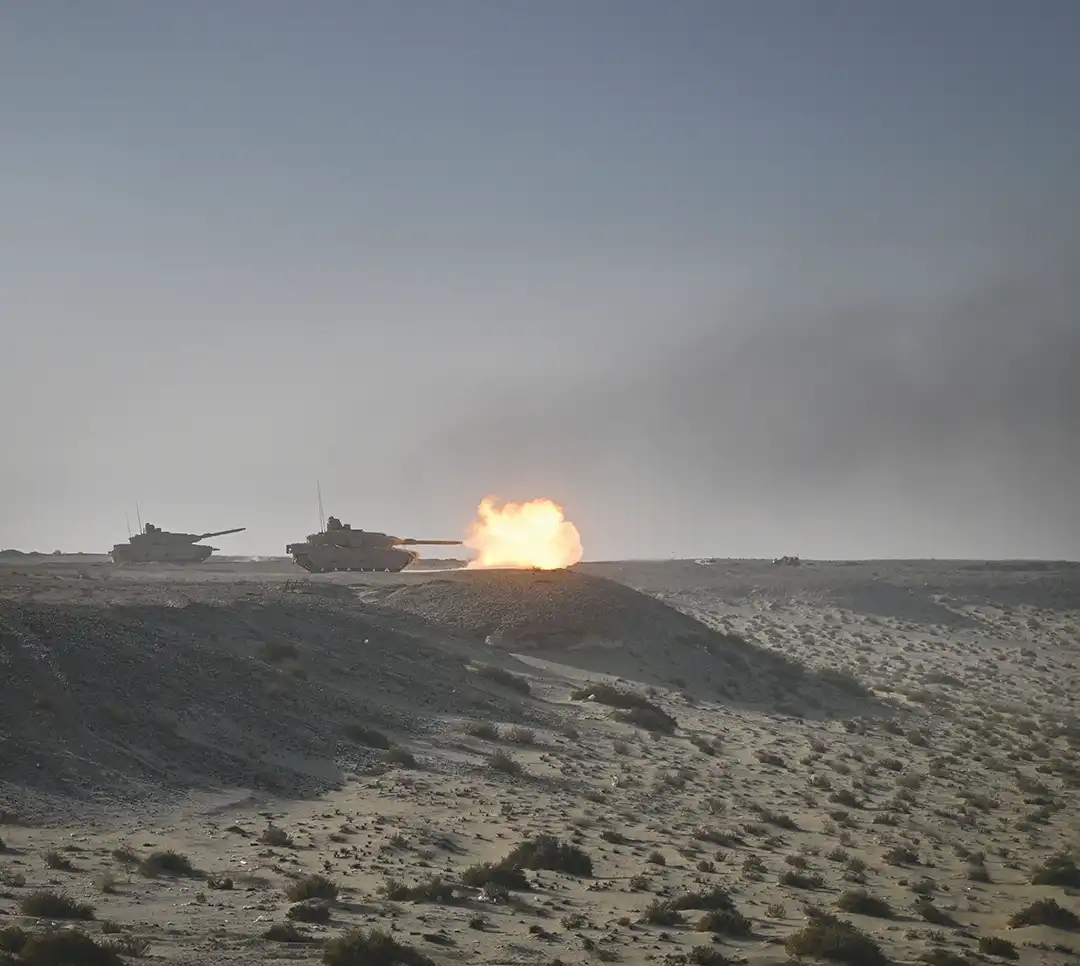
The joint forces managed to contain the enemy attack and prepared a plan to expel the hostile forces that had gained a foothold in the border area. Joint forces from Türkiye, Italy, and the U.S. participated in the attack, destroying enemy vehicles and forcing the enemy back onto its own territory.
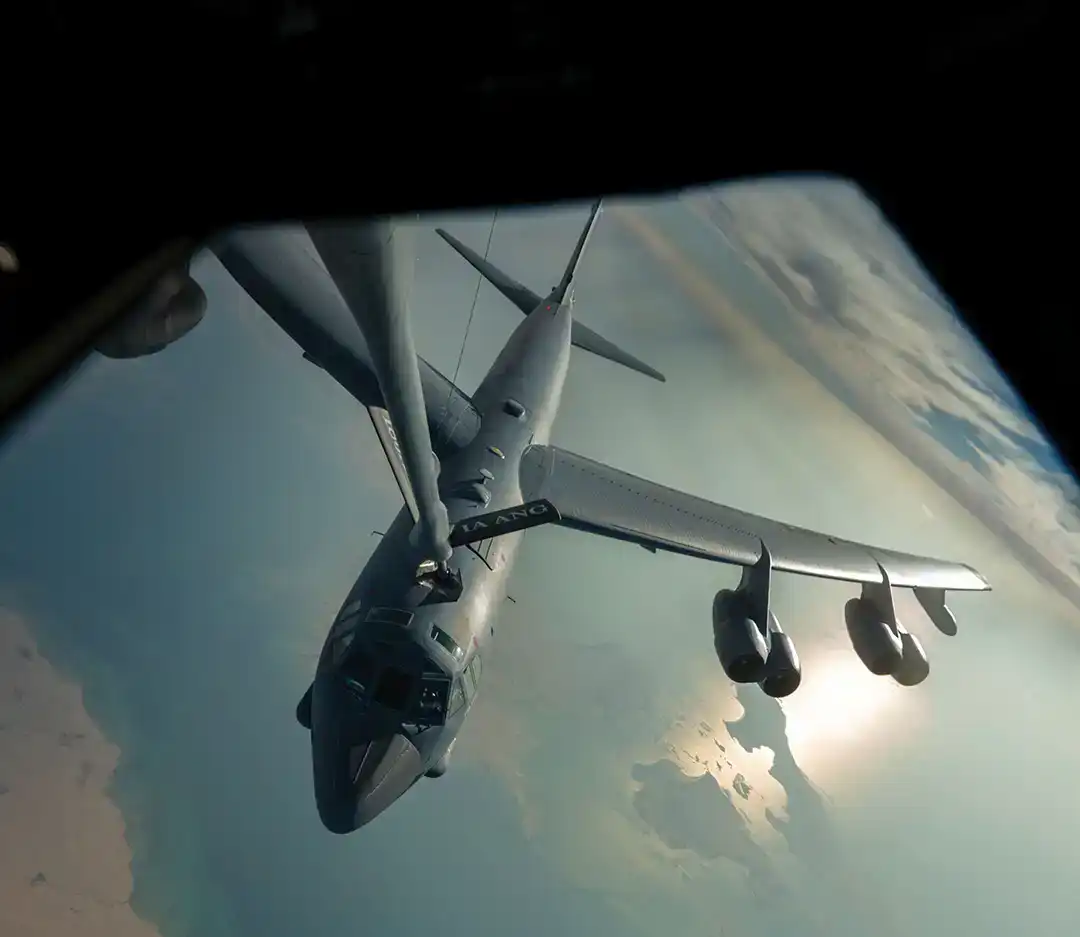
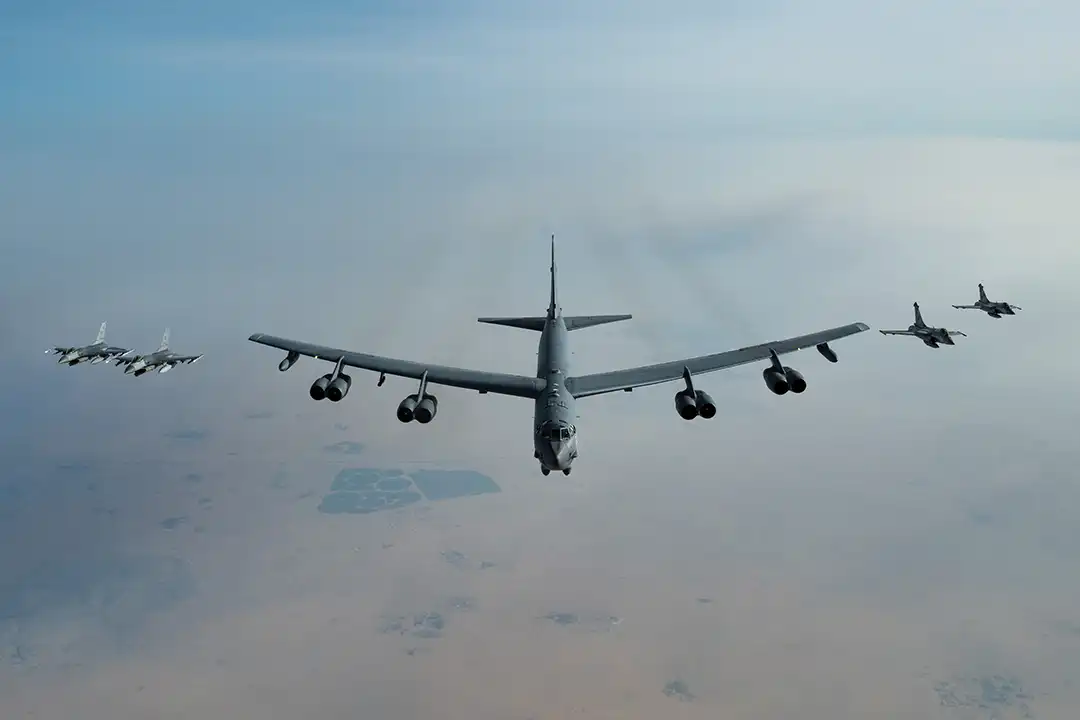
A U.S. Air Force Expeditionary Air Refueling squadron offloaded more than 83,900 kilograms of fuel in-flight to 35 fighter aircraft from the Qatar Emiri, Turkish and U.S. air forces. The U.S. dispatched B-52 bombers from bases in North America that flew nonstop to the theater of operations to complete their mission. They refueled in the air over the Gulf region and were accompanied by Qatari Air Force Rafale and U.S. F-16 fighter jets.
PETTY OFFICER 2ND CLASS IAIN PAGE/U.S. NAVY
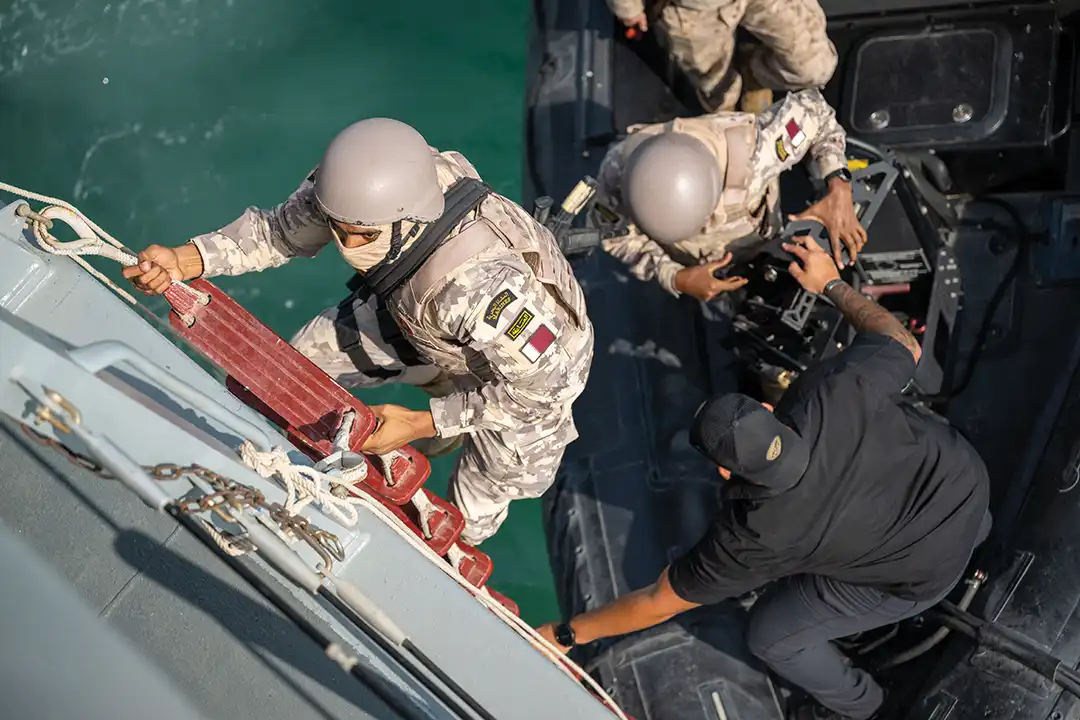
U.S. naval vessels such as the USS Tesla, the Coast Guard cutter Clarence Sutphin Jr., and a P-8 Poseidon maritime patrol aircraft held sway in the Arabian Gulf, joined by vessels from partner nations.
Türkiye supplied 200 personnel, six F-16 fighter jets, two naval patrol boats, an armored regiment and an artillery battery to Ferocious Falcon, Brig. Gen. Katin Kaya, deputy commander of the Qatar-Türkiye Joint Forces, noted.
“The scenario was well prepared and planned from the outset and managed with great professionalism,” Brig. Gen. Kaya said. “Türkiye and Qatar have historical ties, and we always stand together. Our relationship with Qatar goes back many years.”
Col. Steve Bell of the Royal Air Force, the senior British officer at the exercise, praised Ferocious Falcon for duplicating real-world threats. He specifically cited ballistic missile and drone attacks.
“The United Kingdom has a long history in the region, and Qatar is a very important partner for us. In terms of our international commitments, the U.K. classifies countries in tiers. It is clear that the U.S., for example, is a Tier 1 partner. Qatar is also considered a Tier 1 partner, which highlights its strategic importance,” Col. Bell said.
U.S. commanders stressed the need for holding exercises like Ferocious Falcon to promote stability in the Middle East and reinforce the principles of peace and cooperation.
“Exercise Ferocious Falcon 6 sends a clear message about our military capabilities to act as a destructive force against any threat,” U.S. Naval Forces Central Command Public Affairs Officer Joe Hontz said.
“Our commanders and staff officers received valuable training on the critical aspects of planning, management, and the use of integrated command and control systems for effective joint operations to enhance our joint combat readiness and build strong multidimensional partnerships across the Middle East, whether air, land or sea.”
On the sidelines of the exercise, senior commanders from participating countries held a symposium that took a broader view of overcoming regional security challenges. Among the attendees was Vice Adm. Curt Renshaw, Commander of the U.S. Naval Forces Central Command and Combined Maritime Forces.
The Qatari Armed Forces have benefited from their multinational partnerships. It hosts U.S. Air Forces Central at Al Udeid Air Base. Qatar also sends officers to military and staff colleges in Europe, the U.S. and other countries. Perhaps the most important experiences are those gained by commanders in joint operations environments with friendly forces. Despite different languages and military culture, these partners in arms gel as a warfighting team.
“We have the utmost respect and appreciation for Central Command and NATO countries participating in the exercise,” Brig. Gen. Al-Amari said. “With the challenges in our region and the length and complexity of supply lines, the way our forces responded so quickly at the exercise is a major achievement.”