

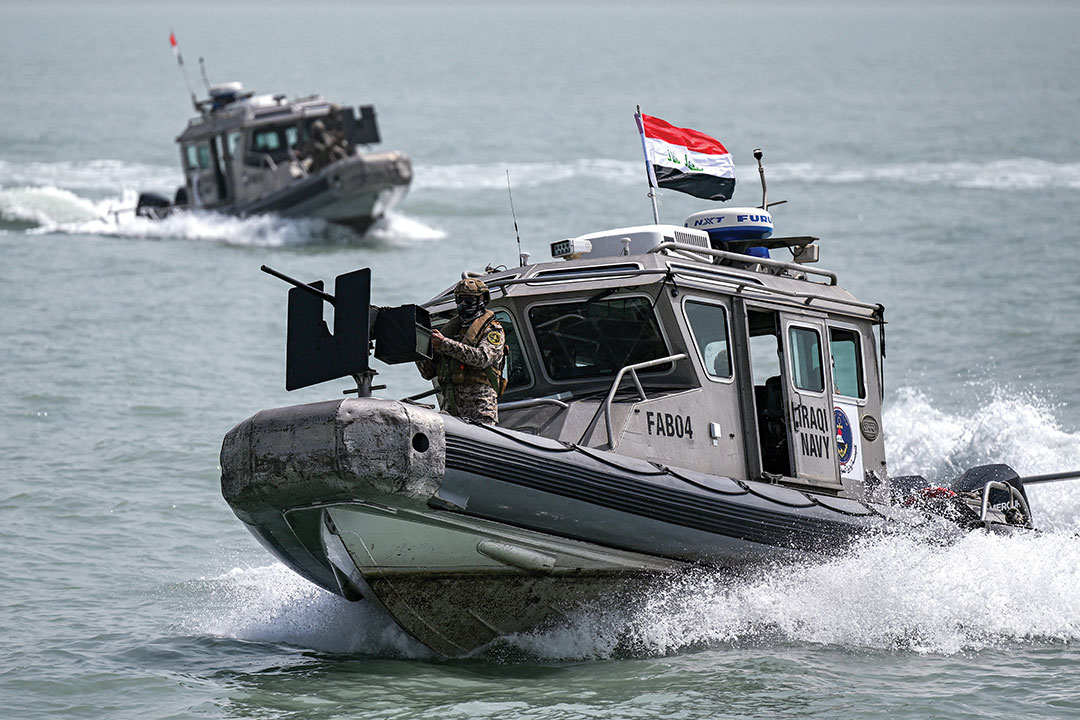
Since the 1990s, Iraq has suffered from numerous violations at its border crossings because of rampant corruption and control by organized criminal gangs and smugglers on both sides of the border. After 2003, the situation became more complicated as security forces became preoccupied with combating terrorist attacks within the country. Armed militias used the opportunity to open alternative crossings to smuggle weapons and drugs and collect illegal taxes on goods.
With several government agencies involved with border security, there was a lack of clarity about which agency was responsible for border crossings, which complicated coordination and management and facilitated the spread of corruption and organized crime. During this period, contaminated medicines and meat unfit for human consumption entered the country, with disastrous results.
To resolve this dilemma, the government decided in 2016 to form the Border Ports Commission, which would report directly to the prime minister. This authority would be responsible for the operation and management of the crossings and prevent smuggling gangs, terrorists and corrupt individuals from entering the country.
Unipath met with Lt. Gen. Omar Adnan Al-Waeli, chairman of the Border Ports Commission, who spoke about achievements, challenges and international cooperation in supporting this important body.
Unipath: What is the role of the Iraqi Border Ports Commission?
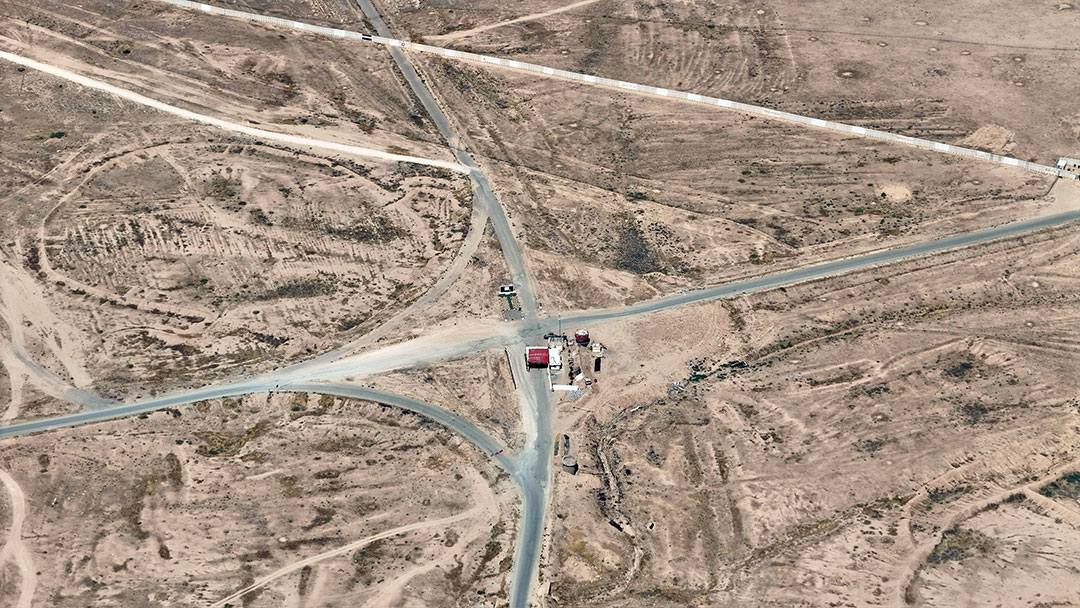
Lt. Gen. Al-Waeli: The Border Ports Commission was established in accordance with Law No. 30 of 2016 and began operations on July 1, 2017. It is an independent body with military and civilian operations. The commission is responsible for monitoring and supervising all departments at border crossings to tighten control and ensure personnel are properly scrutinizing and inspecting people crossing the border. The establishment of this commission has helped maximize revenue, control borders and crossings and fight corruption. It operates in accordance with the law and the instructions and decisions issued by the Council of Ministers. It operates 24 hours a day, liaising with ministries, agencies and security services to tighten control, provide information and offer advice. The commission operates at land, sea and air ports.
Unipath: How many crossing points does Iraq maintain?
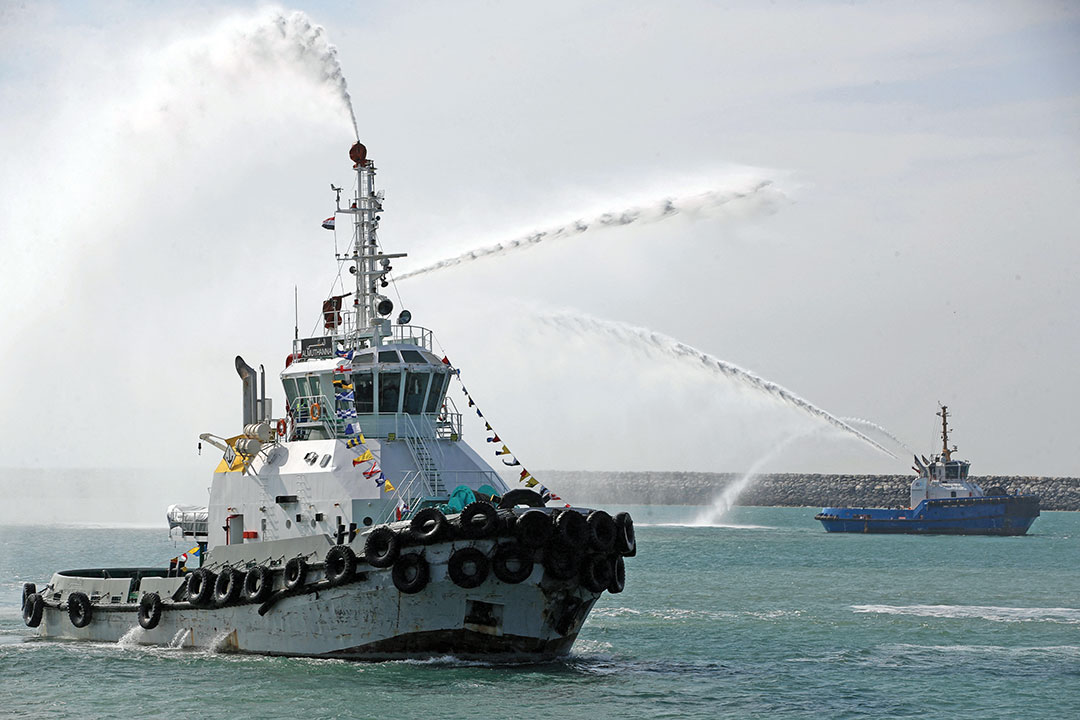
Lt. Gen. Al-Waeli: There are a total of 22 border crossings, including six airports and six seaports; the rest are land crossings with Iran, Kuwait, Saudi Arabia, Jordan and Syria.
Unipath: How many people do you have in the field and which crossings are the most challenging?
Lt. Gen. Al-Waeli: The commission has a total of 2,649 personnel, 70% of whom are military personnel and the rest civilian. Many officers serve various specializations. One of the successes of the Border Ports Commission has been the full adoption of e-governance in regulatory operations, as well as the use of scanning systems at all border crossings to identify the type of goods crossing and prevent the entry of contraband, weapons or drugs. The commission has become one of Iraq’s most important government institutions because it is involved in maximizing import taxes and enforcing sovereignty in commerce, as well as enforcing the authority of the state, preventing tampering with state resources, combatting organized crime, and preventing militias and outlaws from encroaching on or benefiting from the revenues of these ports.
Unipath: Why was the commission created? Was it a question of disorganization and lawlessness at borders?
Lt. Gen. Al-Waeli: We faced a major challenge from a lack of central authority to manage all crossings because of the large number of security and government agencies involved. This prompted the government to establish the Border Ports Commission to coordinate and manage the work of all personnel. There are about 15 different departments operating at each border crossing, and each department is linked to various ministries and independent bodies. These large numbers made it difficult to ensure smooth operations and management of these departments. In accordance with the principle of unity under one command, the Border Ports Commission was established to be the controlling, organizing, monitoring, supervising and regulating body for the work of these multiple departments with different specializations and jurisdictions to achieve unity of control and centralized command. Previously, we had the General Directorate of Border Crossings within the Ministry of Interior, but because of the importance of border crossings and their role in generating non-oil revenue, it was broken up and the independent Border Crossings Commission was formed under the auspices of the Prime Minister’s Office. This separation has led to faster communication, enforcement and decision-making. During our presidency of the Border Ports Commission, which is now in its fifth year, we have made many decisions and achieved many goals, including the seizure of weapons, drugs and counterfeit medicines that traffickers had attempted to smuggle into the country. Another notable achievement directly attributed to the Border Ports Commission is the crackdown on fictitious financial transfers, thereby preventing the illegal outflow of dollars from Iraq. Banks, companies and individuals who were involved in this corruption were identified and a program established in close coordination with courts and judges. The commission enjoys government support as well as considerable judicial support from the Presidency of the Supreme Judicial Council and judges in all governorates. During this period, the commission was able to establish itself and lay down strong and solid roots in the fight against corruption. We are now working at an increasing pace, in coordination with the Office for Combating Money Laundering and Terrorist Financing, to identify corrupt companies and follow up on suspicious financial transfers and monitor the work of these companies. Not a single day passes without the commission dealing painful blows to traffickers and those who manipulate public funds.
Is the number employees you mentioned strictly affiliated with the commission or does it include personnel from other government agencies?
Lt. Gen. Al-Waeli: The 2,649 personnel I referred to is the total number of civilian and military people attached to the Border Ports Commission. As for personnel affiliated with other agencies, they are administratively, technically and operationally linked to the commission.
Unipath: You mentioned the commission’s role in monitoring bank transfers leaving Iraq. Does your work go beyond the physical movement of people and goods across borders?
Lt. Gen. Al-Waeli: The government’s standing directives are to move towards e-governance and automation. We have taken it upon ourselves to computerize and develop e-governance so that any commercial invoice received from the country of origin is intercepted and inspected. Simply put, we prevent the manipulation of commercial invoicing. For example, let’s say somebody imports 100 cars and submits an invoice to the bank for approximately $2 million to buy these 100 cars. But when the cars arrive at the port, the person submits an invoice to the border crossing for $50,000 to evade paying customs duties on the true value of the cars. Through our audit procedures, however, and by cross-checking invoice numbers, this person would be caught. Other auditing and monitoring procedures also help to curb illegal smuggling of hard currencies out of Iraq.
Unipath: How do you see the commission’s role in the future?
Lt. Gen. Al-Waeli: The most important development project is the construction of model border crossings that befit Iraq’s international standing and important geographical location. These projects will be the responsibility of the provinces, with each province benefiting from 50% of the revenue generated by the crossing. Consequently, the Council of Ministers issued a decision obliging the provinces to rebuild, develop and construct model crossings. Today, we have the Safwan border crossing, which is a model crossing, and the Zarbatiya border crossing in Hilla Al-Jadida, which is about to open. Work has also begun in Basra province at the Shalamjah border crossing. In addition, the governor of Diyala is building and developing the infrastructure of the Mandali and Munthiriya border crossings. Similarly, Anbar province has begun enlarging the Al-Qaim crossing on a scale suited to the importance of this border crossing with Syria, which reopened in June 2025. There are also plans and directives from the government to open another border crossing with Syria, namely the Al-Waleed border crossing.
Unipath: What challenges do you face in your daily work?
Lt. Gen. Al-Waeli: Frankly speaking, the challenges we face are related to e-governance. We need specialized personnel and government support in this regard. We need logistics in terms of infrastructure, computers, fiber-optic cables and the internet, but we are working with what we have and, thanks be to God, we have been able to accomplish the task.
Unipath: How do international organizations support Iraq in modernizing and acquiring new technologies and improving the capabilities of the commission?
Lt. Gen. Al-Waeli: The commission is open to all international organizations. We coordinate directly with the United Nations Development Programme and the National Center for Migration Policy. We coordinate with U.N. headquarters, with all nongovernmental organizations supported by the United States and the U.S. Embassy, and we work with entities supported by European and neighboring countries. We have joint projects with the United Nations Office on Drugs and Crime by setting up a container and package monitoring facility at Baghdad International Airport, and we hope to expand this project to other sea and land crossings.
Unipath: How much does the commission benefit from intelligence sharing with other countries and other agencies in Iraq?
Lt. Gen. Al-Waeli: We have direct communication with Interpol and coordinate and integrate with other countries. We also use the Personal Identification Secure Comparison and Evaluation System (PISCES), which is affiliated with the intelligence service, and we communicate with Arab and international police forces, as well as border control agencies in neighboring countries and across the world. In terms of combating drug smuggling, we coordinate with other countries in the region and security agencies share information about suspects subject to travel bans. Our work is integrated with other competent agencies and we coordinate closely with international organizations.
Unipath: What international training is available for employees of the commission?
Lt. Gen. Al-Waeli: Many of our personnel have been sent to take courses in and outside Iraq for capacity building and to raise their level of readiness. We attend courses in the U.S., Cyprus and other Arab countries. We believe that progress can be made only through developing skills.
Unipath: How are personnel selected and monitored to prevent corruption?
Lt. Gen. Al-Waeli: We have an office affiliated with the Security Clearance Office that conducts regular security checks on all employees before and after their appointments, in addition to personal follow-ups by the head of the commission. We do not hire employees or officers without first clearing them through the Integrity Commission, the Financial Control Authority, the Criminal Evidence Authority, and the Accountability and Justice Commission. We also check criminal records to ensure that the employee is not wanted or convicted. We routinely conduct security checks to monitor the activities of officers and employees, in addition to monitoring their assets and bank accounts annually. Employees are also required to submit financial disclosure statements to the Integrity Commission. We will not allow any employee or officer covered by this financial disclosure requirement to avoid submitting it, and we will continue to monitor this closely. To be frank, many employees and officers within and outside the commission have been taken to court for integrity and accountability issues. The Border Ports Commission, with its staff, president and employees, has proven to the government and observers that it is an effective and serious deterrent in the fight against corruption, and that it is serious about generating revenue and being a model institution.