

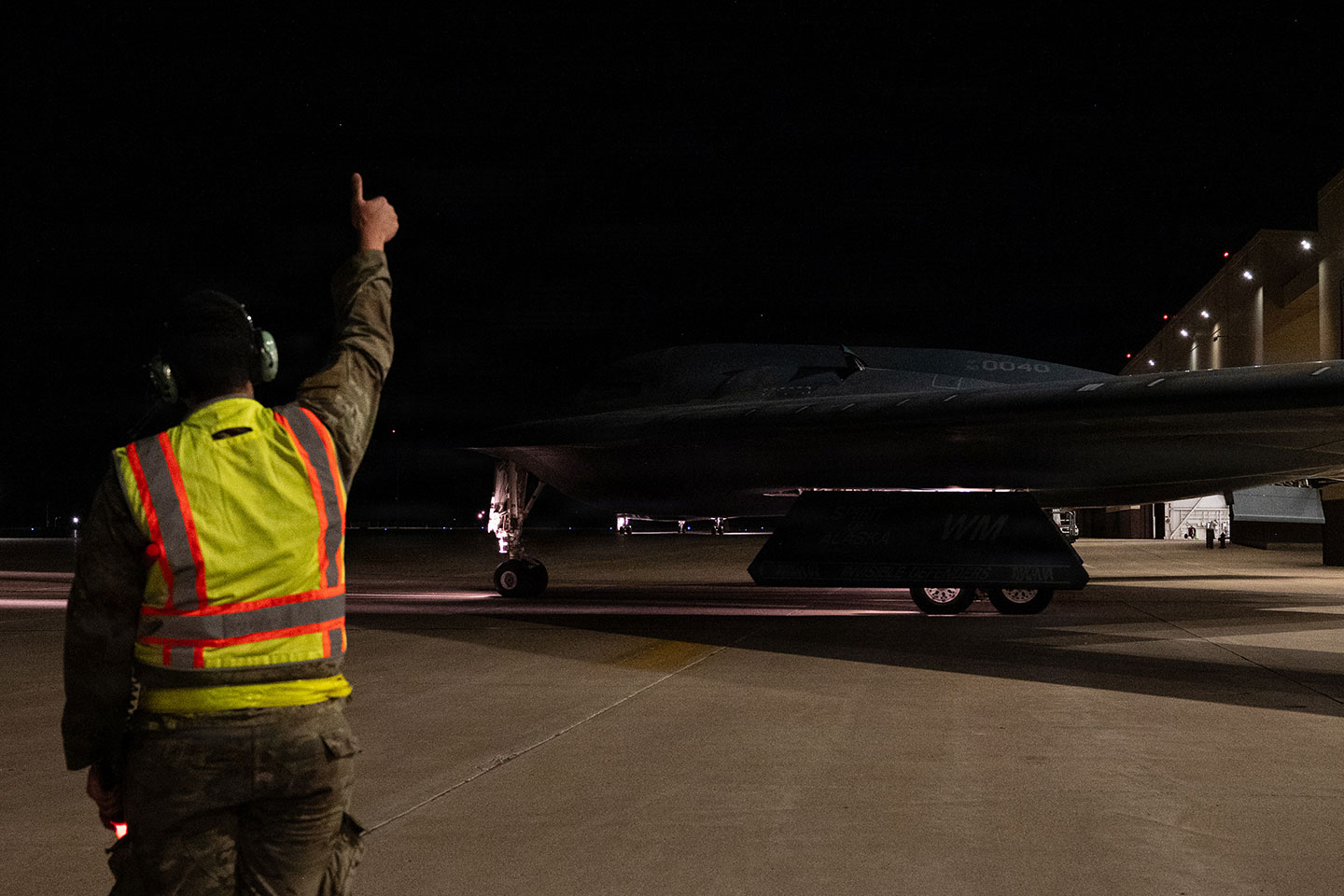
While advanced technology remains central to airpower, the skill and professionalism of air and ground crews provide the foundation of success in demanding environments such as Operation Epic Fury. This human element, forged through intense training and deep-seated dedication, ensures that allies and partners and strategic competitors alike see United States service members as formidable experts.
A bomber sortie’s mission begins long before takeoff with the crew chiefs and maintenance teams. These highly skilled technicians have responsibility over the nose-to-tail readiness of complex aircraft like the B-52 Stratofortress. “We’re the first ones to touch the aircraft when it lands, and we’re the last to touch it when it takes off,” said U.S. Airman 1st Class Jabari Coner. “Their lives are in our hands.” This sense of responsibility drives ground crews to work through challenging conditions, from extreme weather to the complexities of deploying with a smaller-than-usual footprint, to ensure every aircraft is mission-ready.
This professionalism extends into the cockpit and across the entire aircrew. The B-52 includes flying crew chiefs who provide an essential link between the operations and maintenance teams by troubleshooting issues in flight. This integration is crucial for long-duration missions where the aircraft may be far from established support bases. Pilots and ground crews rely on and respect each other, demonstrated by their use of simple hand signals to communicate readiness and trust.
The U.S. Air Force’s Military Personnel Exchange Program embeds U.S. pilots with partner squadrons and embeds partner pilots with U.S. units. These exchanges foster deep understanding and interoperability.
While advanced bombers are a potent symbol of power, the unwavering expertise of the people who fly and maintain them give that symbol its meaning. The combination of ground-level dedication, in-flight skill and deep-seated relationships projects an image of controlled, expert capability.