

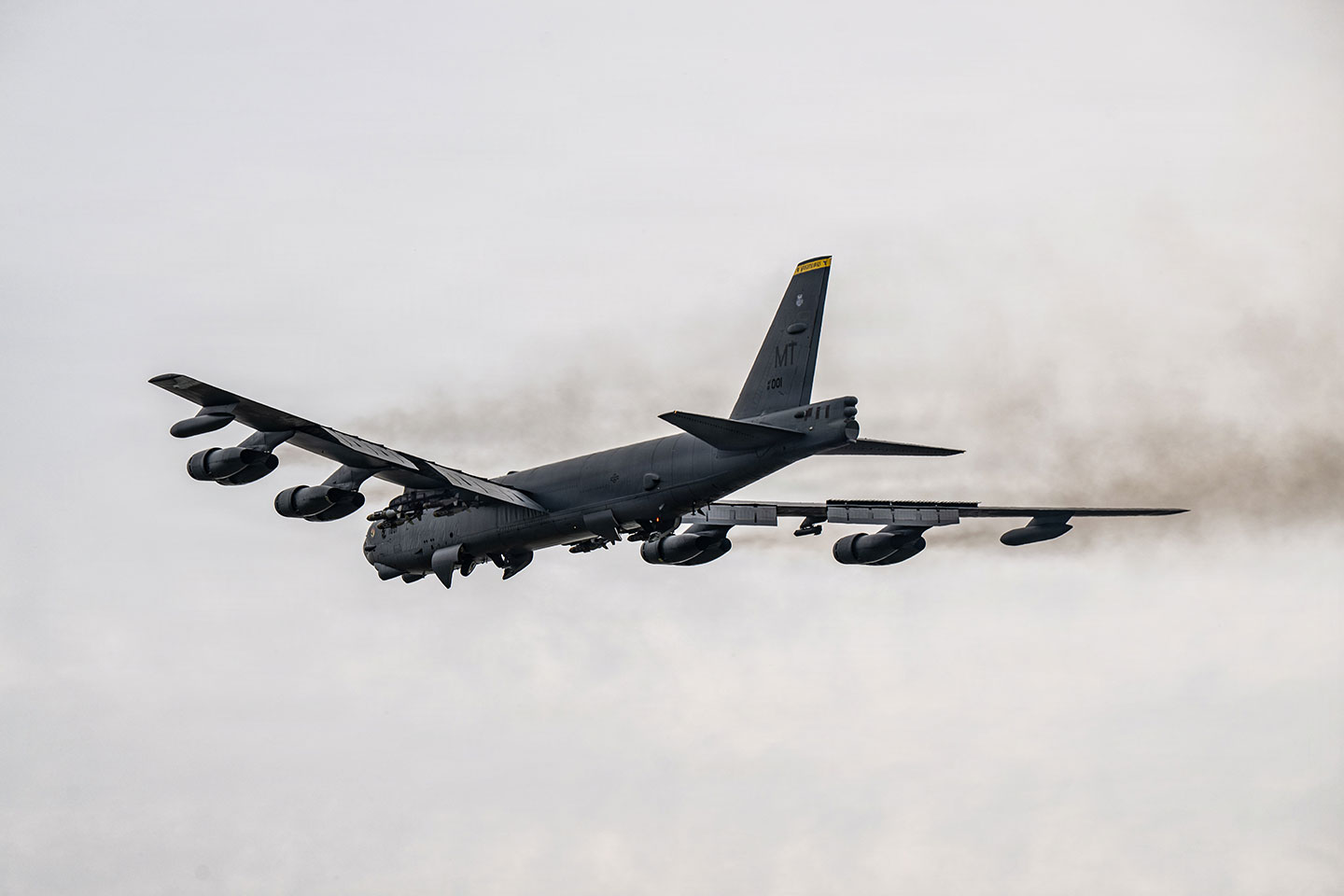
The U.S. Air Force’s advanced bomber fleet has been central to the United States’ conduct of Operation Epic Fury, the large-scale air and sea campaign that began in February 2026 targeting Iran.
With the aim of dismantling Iran’s military infrastructure and preventing it from acquiring nuclear weapons, the operation has included B-1, B-2 and B-52 bombers, which have struck more than 13,000 targets. The B-1 Lancer carries the largest payload of both guided and unguided munitions in the U.S. Air Force. The B-2 Spirit, a stealth bomber, can penetrate defended airspace to strike hardened targets, such as underground ballistic missile facilities. As Iran’s air defenses have been degraded, B-52 Stratofortress bombers have conducted overland missions using precision-guided weapons like the Joint Direct Attack Munition.
The U.S. Department of War has emphasized the surgical nature of these missions, designed to minimize unintended consequences. One such mission involved bombers striking military targets on Iran’s Kharg Island while avoiding damage to adjacent crude oil infrastructure. In another, B-2 bombers struck Islamic Revolutionary Guard Corps headquarters deep underground. The bombers used GBU (ground bomber unit)-57 Massive Ordnance Penetrators that can reach subterranean targets.
During a news conference in March 2026, U.S. Air Force Gen. Dan Caine, chairman of the Joint Chiefs of Staff, described the use of the 2,268-kilogram GBU-72 penetrator weapons against coastal defense cruise missile sites near the Strait of Hormuz. Officials also have highlighted the use of dynamic striking, where pilots are redirected during a flight to new targets based on real-time intelligence.
Underpinning these complex operations is a rigorous training protocol for U.S. aircrews. This multiphase training stresses individual specialty skills, crew teamwork and large-scale unit operations, including simulated combat missions and long-range navigation. A significant component of this training is instruction on the law of armed conflict, which requires pilots to make distinctions between military and civilian targets and limit collateral damage. These protocols ensure accuracy and the responsible application of force.