

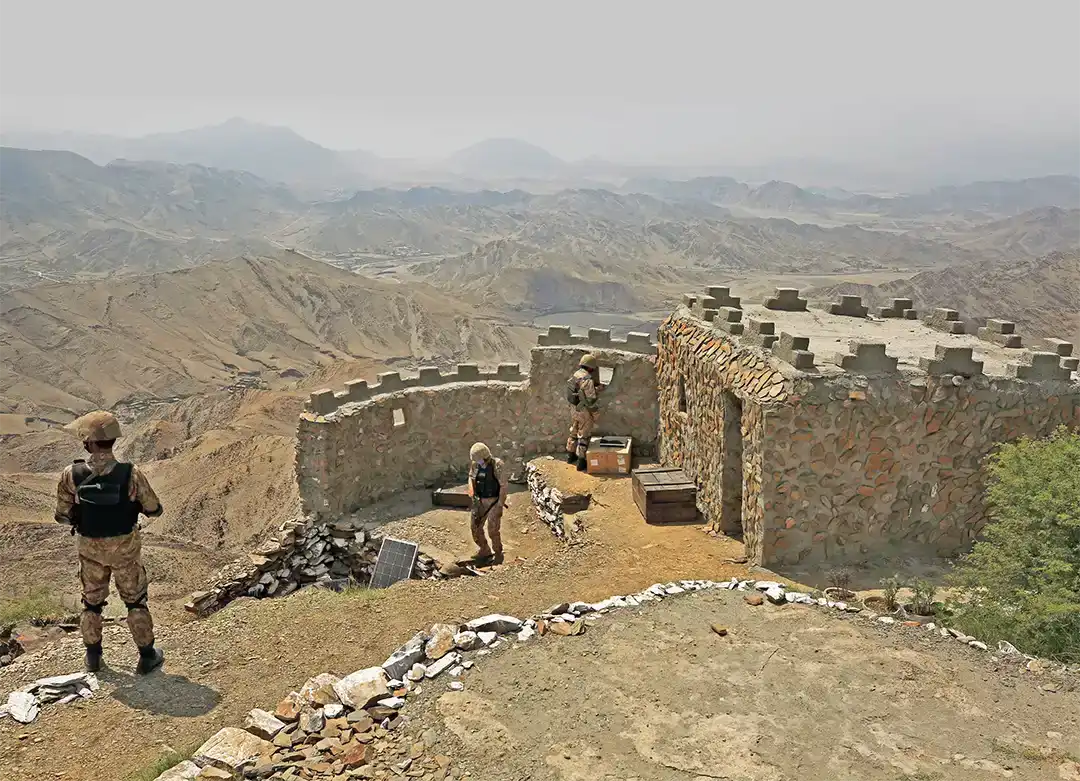
Pakistani counterterrorism forces have ramped up the frequency and lethality of counterterrorism operations in areas along the country’s western border with Afghanistan. This mountainous region of Khyber Pakhtunkhwa and Balochistan provinces and neighboring Afghanistan is inhabited by terrorist groups such as ISIS-Khorasan, Tehrik-e-Taliban Pakistan (TTP) and al-Qaida.
Terrorist attacks intensified in 2024 and 2025 against Pakistani civilians and security personnel alike. Pakistan’s Armed Forces, led by Chief of Army Staff Field Marshal Asim Munir, is determined to restore security to the region.
In late 2025, two senior TTP commanders and two others were killed by Pakistani forces in Khyber Pakhtunkhwa. One, called Mufti Muzahim, was also “a key architect behind al-Qaeda’s operational plot against the U.S. homeland,” according to U.S. security analyst Sarah Adams, as reported by the Homeland Security Today website. The South Asia Times compared Muzahim to former al-Qaida leader Ayman al-Zawahiri, calling him the “ideological architect” of TTP.
Successes like this emphasize Pakistan’s critical leadership role in the fight against terrorism in South Asia. In June 2025, Gen. Michael Kurilla, then commander of U.S. Central Command, told the U.S. House Armed Services Committee that Pakistan’s cooperation and contribution on counterterrorism are “phenomenal.”
Pakistan credits its successes to “intelligence-driven” operations that rely on speed and interagency coordination.
As terrorist attacks in Pakistan increased, it became clear that porous borders and weak governance have made parts of Afghanistan into a haven and staging ground for ISIS and TTP.
In December 2025, Field Marshal Munir criticized Afghanistan’s Taliban government, announcing that Afghanistan must choose between maintaining ties with Pakistan or supporting the TTP. In early 2026,
the dispute escalated into cross-border military action.
Sources: The Associated Press, The Economist, Eurasia Review, Homeland Security Today, Arab News