
True security, whether for the Arabian Gulf, the Middle East or globally, is multilayered and requires sustained and genuine collaboration among nations. Security must be built on a vision aligned with the aspirations of our region’s peoples, a vision where diverse religions, cultures and beliefs coexist in peace, where differences do not mean division and where our shared humanity compels us to ensure equality, dignity and opportunity for all.
Bahrain firmly believes that conflicts are best resolved through understanding and dialogue by fostering an environment where communities unite to confront common challenges. Education and cultural exchange are vital. They foster tolerance, nurture trust and ensure that every voice contributes to shaping the future.
Fundamentally, security means protecting national territory, safeguarding citizens and infrastructure, and preserving our global connectivity through freedom of navigation, cyber security and the unhindered flow of trade and information.
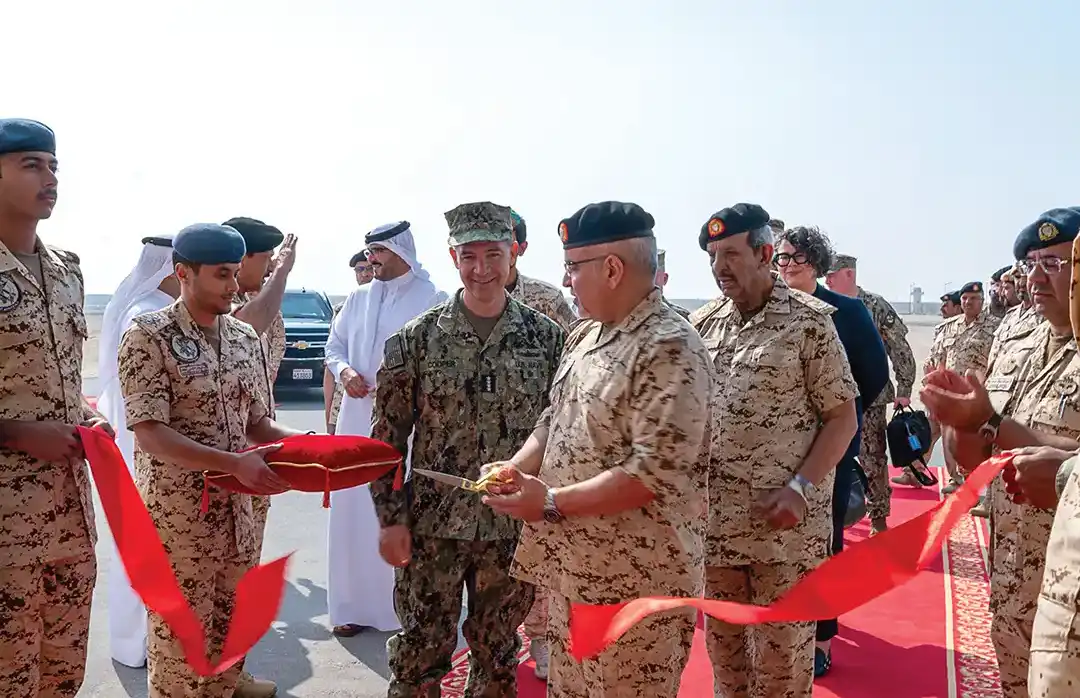
In Bahrain, we are convinced that enduring security depends on genuine cooperation with our regional and international partners. We take pride in defense cooperation with our Gulf Cooperation Council (GCC) brothers and international partners through coalitions to counter terrorism and piracy, enhance maritime security and build capacity.
Bahrain’s role as host of the Combined Maritime Forces, a coalition of 47 nations, securing vital maritime routes in the Arabian Gulf, the Red Sea and the Gulf of Aden, exemplifies this commitment. Additionally, the recent establishment of the Arab League Council of Cybersecurity Ministers highlights our proactive approach to emerging threats.
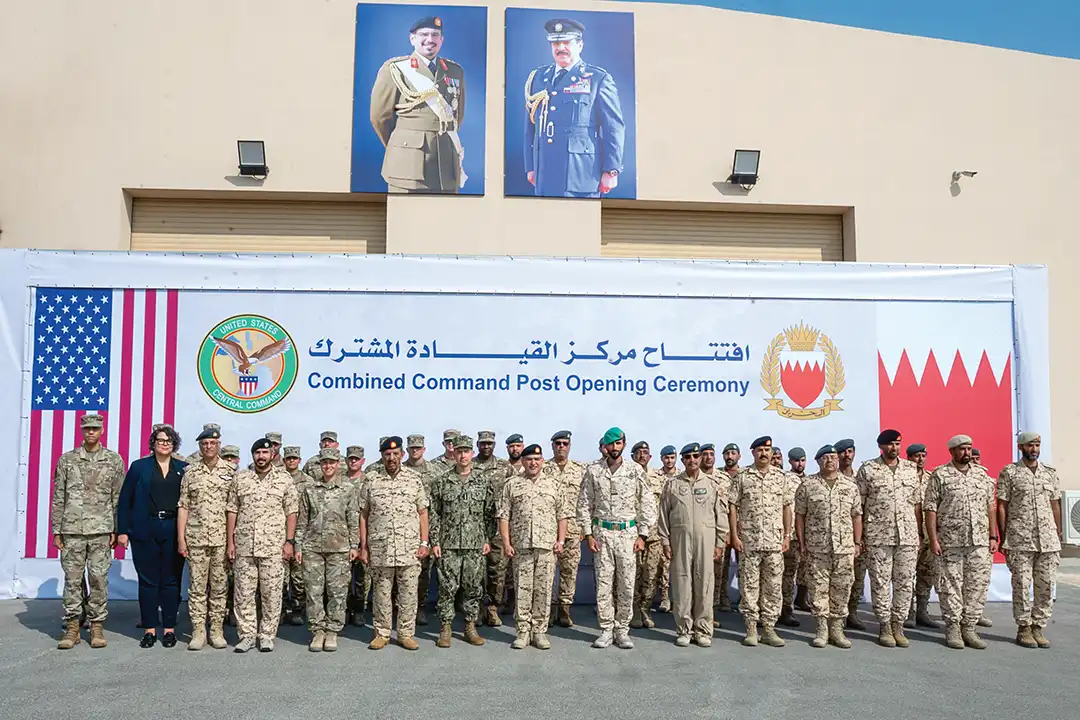
Such cooperation is further reinforced by agreements such as the GCC Joint Defence Agreement, which states that an attack on one is an attack on all, making our collaboration the cornerstone of regional stability.
True security cannot be achieved by a single nation. Economic development and integration are essential for achieving true security. A fragmented region beset by economic instability, in which people’s aspirations remain unfulfilled, can never be fully secure. But by fostering economic interdependence, we can provide immediate benefits for our citizens, while reinforcing trust and cooperation, and make conflicts less likely.
This is clear within the GCC, where we are advancing toward completing the Customs Union and establishing a Common Market, laying the foundation for full GCC citizenship, while deepening global trade and investment ties, including the conclusion of a free-trade agreement with international partners.
Another practical example of this interconnection between prosperity and security is the Comprehensive Security Integration and Prosperity Agreement, C-SIPA, signed between Bahrain and the United States, and subsequently joined by the United Kingdom. C-SIPA embodies a simple but enduring truth: Our shared security is inseparable from our shared prosperity. And we hope this framework will include more partners who share our vision for a rules-based cooperative order in the Gulf.
Drawing all these threads together is the role of effective diplomacy: diplomacy that respects sovereignty, advocates for noninterference, promotes peaceful settlement of disputes and fosters good neighborly relations. This vision, upheld and advanced by Bahrain’s leadership, will continue to guide our foreign policy as we look to build coalitions for peace through which we can work collectively to achieve a more secure and stable region.
At the heart of the Middle East’s enduring instability lies the Palestinian-Israeli conflict. Without a just and lasting resolution, it will continue to undermine all efforts to achieve genuine security. We are therefore greatly encouraged by international diplomacy on Gaza, and the adoption of the peace plan presented by President Donald Trump and supported by the work of regional mediators.
This could represent a pivotal moment, as the first phase produced a ceasefire, the release of hostages and detainees, and the delivery of humanitarian aid to Gazan civilians. The plan can form the foundation for a peaceful, stable and prosperous Gaza, which could facilitate a broader regional peace.
What is needed now is a renewed commitment to diplomacy to ensure that all parties fulfill their obligations comprehensively and in good faith, supported by all those countries who yearn for peace in the Middle East. Because, ultimately, a secure and prosperous Gulf and Middle East will remain an elusive goal unless the Palestinian people embark on a credible pathway to self-determination and statehood, living in peace and security alongside Israel.
We must also support Lebanon in implementing United Nations Security Council Resolution 1701 and the Taif Agreement, assist Syria on its path toward stability and back the efforts of Saudi Arabia and Oman to advance peace in Yemen.
The concept of securing the Gulf encompasses a complex and interdependent web of factors, from the physical defense of our nations and the protection of our sea lanes to economic diversification to the exercise of responsible and principled diplomacy. As Bahrain assumes its nonpermanent seat on the United Nations Security Council in 2026, these considerations will be at the forefront of our minds while collaborating with global partners not only to ensure physical security but to foster lasting trust, cooperation and peace.
This article originated from a speech delivered at the Manama Dialogue 2025.
Cybersecurity as Strategic Priority
As malicious cyberattacks threaten global security, several countries have come together to form the Council of Arab Cybersecurity Ministers to combat this emerging risk.
Based in Riyadh, Saudi Arabia, the council, affiliated with the Arab League, aims to coordinate cyber defense among member states and with international organizations. Its executive team consists of representatives from Saudi Arabia, the United Arab Emirates, Bahrain, Egypt, Iraq, Jordan and Tunisia.
The council has met several times since its establishment in 2024, one of the latest leading to the approval of an Arab Cybersecurity Strategy and the council’s accession to the United Nations Convention on Cybercrime.
Dr. Mohamed Al Kuwaiti, head of cybersecurity for the United Arab Emirates, vouched for the value of a united front when it comes to defending vital computer systems.
“The rapid developments and transformations we are witnessing across geopolitical, economic, developmental and technological domains underscore the crucial role of cybersecurity in defending collective Arab security and safeguarding the economies and assets of Arab nations,” Dr. Al Kuwaiti said at a September 2025 council meeting.
“A strong economy or society cannot be built without a robust cybersecurity framework that protects our region from the growing daily threats targeting the stability, security and prosperity of Arab countries.”
Middle Eastern countries have focused on cybersecurity after a series of attacks targeted the region’s petroleum industry, which anchors their economies and supplies energy to much of the world.
The United Arab Emirates and Saudi Arabia, with their growing international economic clout, have led the cybersecurity sector.
Majed Al-Mazyed, governor of Saudi Arabia’s National Cybersecurity Authority, placed cyber security among the top strategic priorities for his country and the region.
“The Kingdom has been at the forefront of fostering collective action on cybersecurity,” he said.
Sources: Emirates News Agency, Saudi Press Agency, Council of Arab Cybersecurity Ministers