

The recent war in the Middle East was not merely a passing military confrontation; it was a strategic test that revealed the nature of Iranian behavior and the mindset of the regime in Tehran when facing military, political or economic pressure.
Events have proven that Iran does not view international maritime corridors as arteries serving the global economy, but as tools of extortion and bargaining to be used against the international community whenever needed.
For many years, the Strait of Hormuz was the most important card in the hands of the Iranian regime. However, what happened during the recent war elevated this card from the level of political threat to the level of practical action. Iran did not merely threaten to close the strait; it turned the threat into reality, disrupted navigation and energy flows, and forced the world to confront the cost of leaving international waterways at the mercy of a regime that uses geography as a weapon.
This precedent must be carefully examined in Washington and other Western capitals. The closure of Hormuz was not an impulsive decision, but rather the result of years of military, security and intelligence preparation. The Iranian Revolutionary Guard assembled a system to threaten navigation by integrating naval mines, suicide boats, guided missiles, drones, coastal surveillance networks, and the ability to trigger chaos that disrupts markets and doubles the cost of insurance, transport and energy.
More dangerous still, Iran has attempted to impose a new reality in the strait by controlling navigation routes and seeking to enforce passage arrangements that serve its political influence, including talk of alternative routes, fees and security arrangements that grant Tehran illegitimate control over one of the most important arteries of global trade.
Even after the signing of the memorandum of understanding and the beginning of discussions about reopening the strait, Iran continued to assert pressure. It continued to threaten closure and retained its ability to disrupt navigation whenever it wished to alter negotiating terms. This confirms that the problem is not a passing crisis, but created by a political doctrine that sees blackmailing the world as a legitimate means of achieving gains.
This important lesson about Iranian behavior is not limited to the Strait of Hormuz. The real danger is that the Iranian regime may seek to replicate the same experience in the Bab el‑Mandeb strait through its Houthi proxy in Yemen.
During the war, the Iranian regime and revolutionary guard threatened more than once to close Bab el‑Mandeb and expand the confrontation to the Red Sea. This was not merely a threat confined to the media, but an expression of a strategic vision that sees control over maritime choke points as granting Tehran the ability to strangle the global economy in multiple locations.
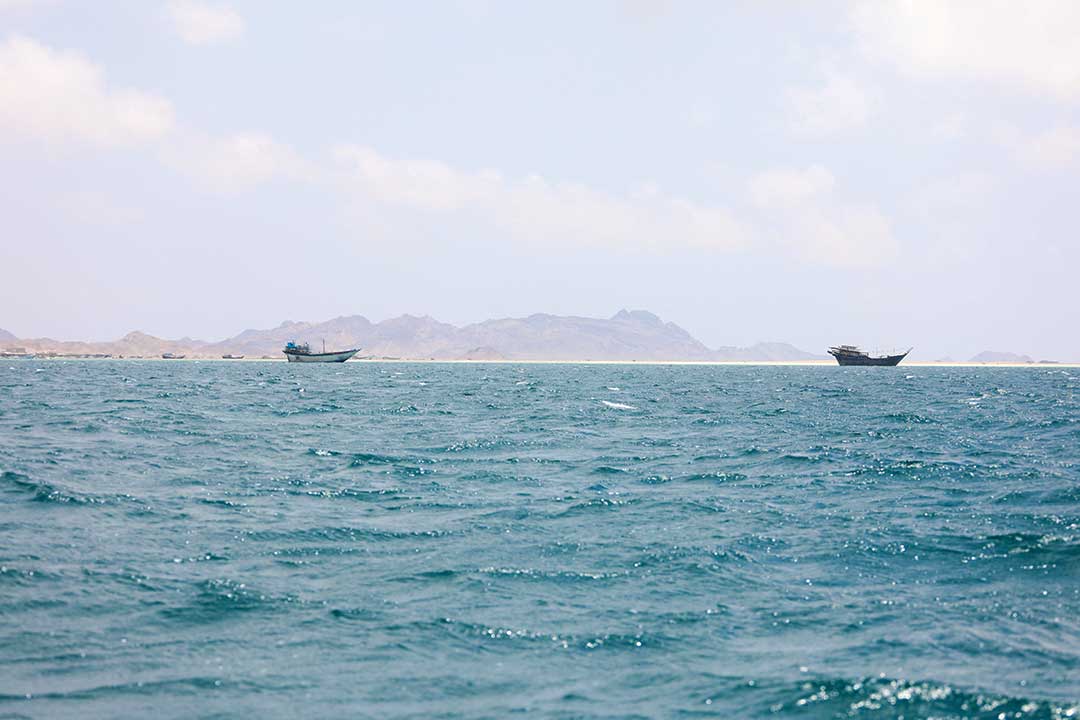
What prevented the Houthi militia from taking a similar step during the war is a geopolitical fact of great importance: the Bab el‑Mandeb, most of the Red Sea coastline, and the entire coastline of the Gulf of Aden and the Arabian Sea are under the control of the legitimate Yemeni government. This fact protected not only Yemen but also international trade from a catastrophic scenario that could have linked Hormuz and Bab el‑Mandeb in a single crisis.
If Iran were able to impose direct or indirect influence over Bab el‑Mandeb, the world would face an unprecedented threat. Closing Hormuz strikes energy supplies coming from the Gulf, while disrupting Bab el‑Mandeb disrupts trade between Asia and Europe, including the movement of food and energy, and threatens the Suez Canal. If both straits were threatened at the same time, the consequences would not be regional, but global in every sense of the word.
The security of the Red Sea, Bab el‑Mandeb and Gulf of Aden is not an internal Yemeni matter, but a vital international interest. Any leniency toward the Iranian project in Yemen means allowing Tehran to repeat the Hormuz experience, this time at the gateway to the Red Sea.
Experience has shown that temporary naval coalitions are rarely enough. Warships may reduce the danger, but they do not address its roots. The real root of the danger is the continued existence of the Houthi militia as an armed Iranian proxy outside the authority of the state, possessing missiles, drones and explosive boats, and receiving support, money and technology from the Revolutionary Guard.
More dangerously, any international leniency toward the Houthi militia will not be interpreted in Tehran and Sanaa as a desire for de‑escalation, but as a green light for further escalation. The Houthis are no longer merely a local threat that led a coup inside Yemen; they have become an imminent danger to international navigation and Iran’s most ready tool to replicate the Hormuz experience in Bab el‑Mandeb and the Red Sea.
Turning a blind eye to Houthi armament, treating them as a normal political actor, or rewarding them with negotiation paths that do not oblige them to disarm and stop threatening navigation would grant them time and space to develop naval and missile capabilities. At that point, the question would not be whether they would threaten Bab el‑Mandeb, but when would they use it to extort the world.
Leniency toward the Houthi militia is not a realistic policy, but a costly postponement of confronting an expanding threat. Every day this Iranian proxy remains outside the authority of the Yemeni state is an additional day for building the coming danger to one of the world’s most important maritime corridors.
The most effective path to protect international navigation starts with restoring the Yemeni state. The international community must support the Yemeni government’s efforts to extend its sovereignty over all Yemeni territory, dry up the sources of Houthi funding and armament, stop the flow of Iranian weapons, and treat the Houthis as a direct threat to maritime security and the global economy.
The Hormuz closure offered the world a warning. If Iran used the strait as a premeditated weapon of global extortion, then the Houthi militia threatens to turn Bab el‑Mandeb into a new Hormuz. It would be a mistake for the world to wait for the same scenario to repeat itself.
Maritime security policy is not built on reopening straits after they are closed, but on preventing their closure in the first place. If the world paid a heavy price to test Iranian behavior in Hormuz, it must not allow Bab el‑Mandeb to repeat the ordeal.