
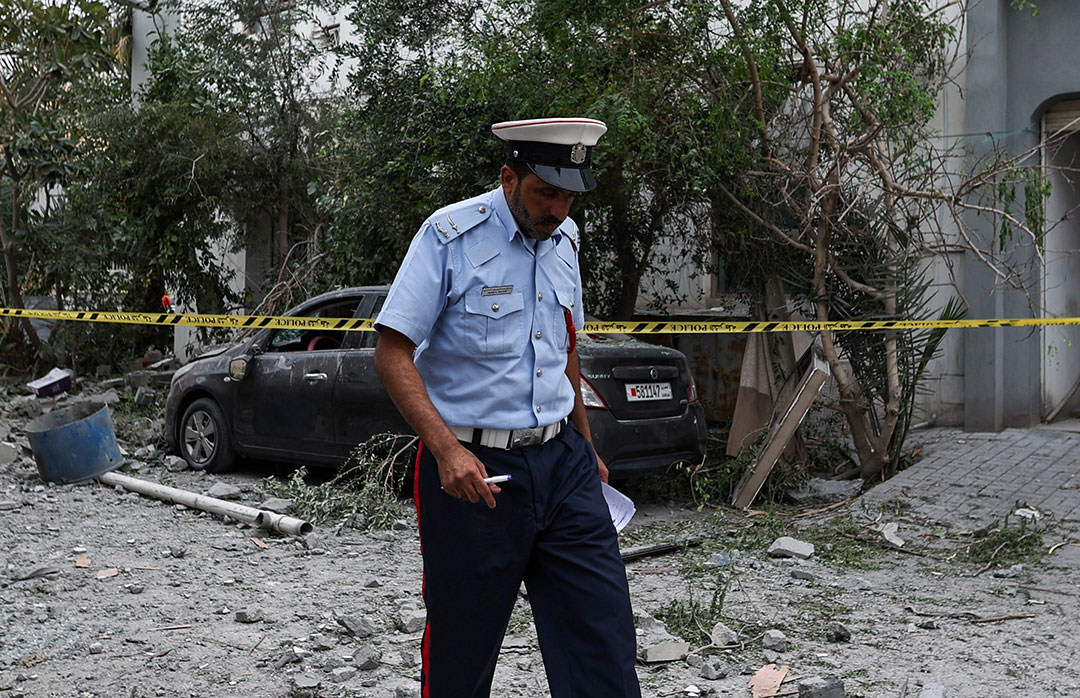

In the age of hybrid warfare, proxy militias, cyber penetration, digital espionage and psychological operations, the battlefield is no longer defined only by geography. It also is defined by perception, timing, intelligence, morale and the ability to strike before an enemy’s designs become visible.
In this environment, the Kingdom of Bahrain has done something remarkable. It has not merely defended itself against Iran’s revolutionary apparatus; it also has revived an ancient strategic instinct rooted deep in Islamic military history and adapted it to the tools of the 21st century.
Bahrain’s security model carries the spirit of two great strategic archetypes: Al-Faruq Umar ibn al-Khattab, the statesman of vigilance, patience and decisive timing, and Khalid ibn al-Walid, the commander of speed, precision, psychological shock and finality.
Their spirit is not musty historical memory. In Bahrain, it is living doctrine.
Where others see Bahrain as a small island state, Iran sees something far more challenging: a compact intelligence fortress, a society that understands subversion, and a state that has mastered the art of watching quietly, waiting wisely and striking precisely.
The wisdom of Al-Faruq
In the strategic mind of Al-Faruq, intelligence was never passive observation. It was preemption. To watch meant not merely to observe the enemy’s movements; it also meant to understand the enemy’s intention before the enemy could fully reveal it.
Al-Faruq understood that the strongest leader is not the one who reacts fastest, but the one who peers most deeply into the enemy’s politics, economy, loyalties, divisions, supply lines, morale and hidden networks. He understood that war begins long before the first sword is drawn.
This is precisely the logic Bahrain has applied against Iran’s hybrid warfare.
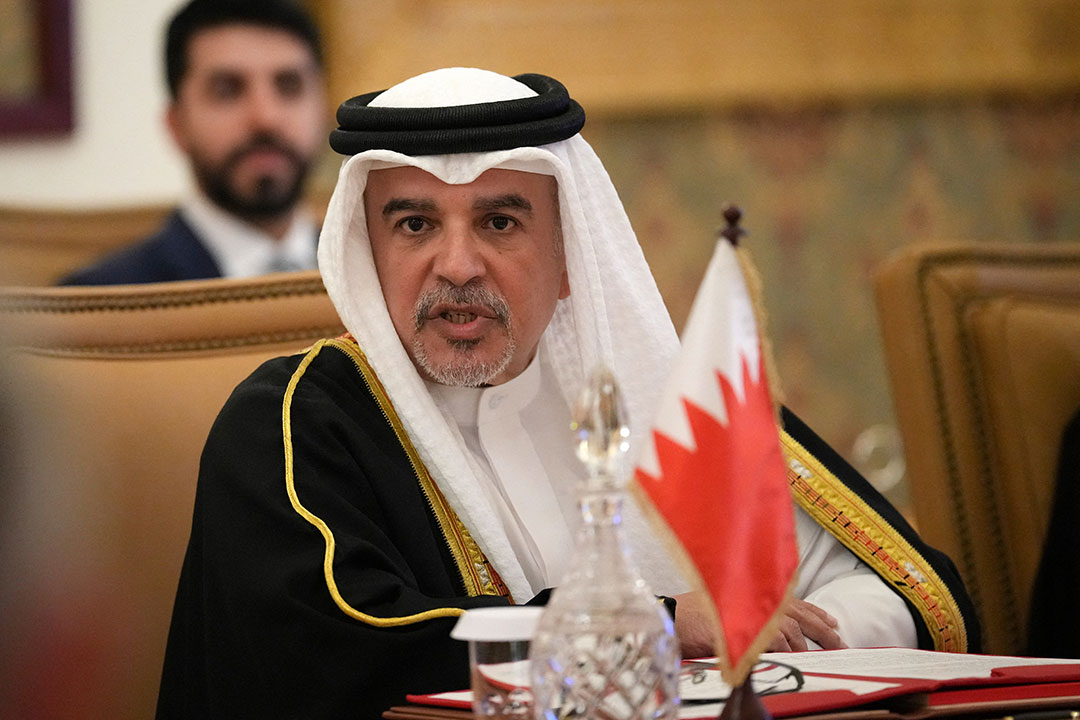
Iran’s model has never depended only on missiles or direct confrontation. Its real weapon has been infiltration: proxy networks, sectarian manipulation, espionage cells, ideological recruitment, smuggling routes, propaganda channels and attempts to fracture national unity from within.
Bahrain understood this early. It recognized that Iran’s most dangerous battlefield was not only the sky, the sea, or the border; it also was the mind, the street, the family, the mosque, the media space and the emotional memory of communities.
For this reason, Bahrain’s security approach is built on anticipation rather than reaction. It does not wait for plots to mature. It identifies the seed before it becomes a tree. It tracks the whisper before it becomes a mobilizing slogan. It sees the hand behind the proxy before the proxy raises its head.
That is the essence of Al-Faruq’s doctrine: observe until the enemy’s design becomes clear, wait until the moment favors you, then act with precision.
Strategic patience is not weakness
One of the greatest misunderstandings in modern security culture is the belief that patience equals hesitation. In the doctrine of Al-Faruq, patience is not delay. It is disciplined force-building.
To wait is to gather evidence. To wait is to map networks. To wait is to expose the sponsor behind the actor. To wait is to choose the battlefield instead of being dragged onto the enemy’s battlefield.
This is where Bahrain’s approach becomes especially important. Iran often seeks to provoke. It wants emotional reactions, street unrest, rushed escalation and internal confusion. Tehran’s goal is not always to win militarily; often, it seeks to make the target state lose control psychologically.
Bahrain denied Iran that victory. By maintaining internal stability, preserving social cohesion and refusing to be pushed into the timing chosen by the adversary, Bahrain transformed patience into deterrence. It allowed hostile networks to reveal themselves. It allowed propaganda to expose its own fingerprints. It allowed Iran’s tools to become evidence against Iran itself.
This is the quiet strength of the Bahraini model: the enemy moves, but Bahrain is already watching; the enemy plans, but Bahrain is already mapping; the enemy waits for chaos, but Bahrain turns restraint into power.
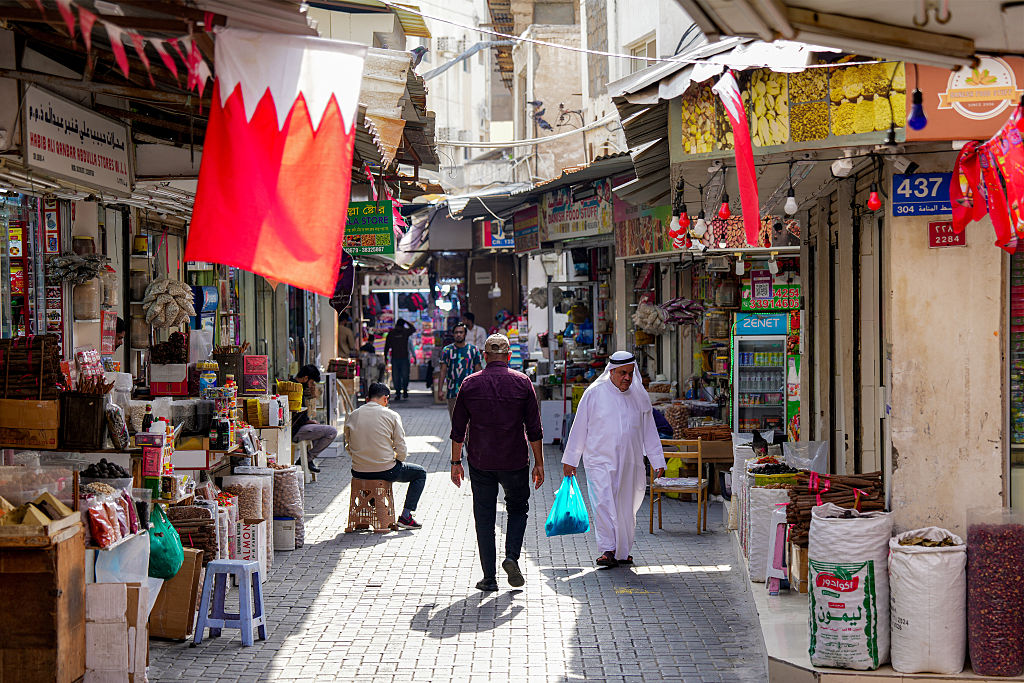
Bahrain as intelligence enigma
Iran once viewed Bahrain as vulnerable because of its size, geography and social complexity. That assumption became one of Tehran’s greatest strategic mistakes. Bahrain’s small geographic space did not become a weakness. It became an intelligence advantage.
In a compact state, every movement matters. Every network leaves a trace. Every suspicious pattern becomes visible faster. Every hostile cell operates under the pressure of proximity, exposure and rapid detection.
This is why Bahrain has become an intelligence enigma for Iran. The closer hostile actors move toward Bahrain’s internal space, the more exposed they become. Espionage cells, proxy links, and destabilization attempts do not disappear into vast terrain; they enter an environment where the state knows the lay of the land intimately.
The more Iran tries to penetrate, the more it risks losing its agents, its methods, its deniability and its narrative.
The Khalidi spirit: precision, shock and psychological dominance
Yet vigilance alone is not enough. A watchful mind also requires a decisive sword. This is where the doctrine of Khalid ibn al-Walid frames the Bahraini model.
Khalid was not merely a battlefield commander. He also was a master of psychological warfare. He understood that armies collapse psychologically before they collapse on the field. He struck where the enemy felt safe. He moved faster than expected. He targeted command, cohesion, and morale. He made the enemy fear the battle before the battle began.
The genius of Khalid encompassed not violence for its own sake, but precision. He did not waste force. He directed it toward the point that would break the enemy’s will.
Bahrain has applied this spirit in modern form through three simultaneous tracks:
- The covert intelligence strike: By exposing espionage cells, dismantling hostile networks, and publicly revealing Iranian-linked activity at carefully chosen moments, Bahrain turns the enemy’s hidden tools into political and legal evidence. The cell that was meant to destabilize becomes proof of Iran’s interference.
- The overt diplomatic strike: Bahrain does not confine its response to the security domain. It elevates the case to the international arena, using law, alliances and diplomatic legitimacy to isolate Iran’s behavior. This is the modern equivalent of choosing the battlefield wisely.
- The deterrent shield: Through military readiness, regional cooperation, missile defense, intelligence integration and allied support, Bahrain contributes to a defensive posture that denies Iran the psychological effect it seeks. A missile that fails to intimidate becomes more than a failed weapon; it becomes a failed message.
These are Khalidi principles in modern terms: Do not just block the enemy’s strike but also shatter the confidence of its planners.
Fusion of mind and sword
No successful doctrine can be built on intelligence without action or action without intelligence. A mind without a sword becomes analysis without consequence, and a sword without a mind becomes force without strategy. Bahrain’s model fuses Al-Faruq’s cold strategic mind with Khalid’s military decisiveness.
This is why Iran’s hybrid warfare has struggled in Bahrain. Tehran seeks confusion, but Bahrain offers clarity. Tehran seeks division, but Bahrain reinforces cohesion. Tehran seeks deniability, but Bahrain exposes fingerprints. Tehran seeks fear, but Bahrain answers with preparedness.
Lessons for the world
Small states facing larger adversaries can draw several lessons from the Bahraini model.
- Intelligence is not observation; it is preemption. The purpose of intelligence is not only to document the attack after it happens. Its highest value is to dismantle the attack before it begins.
- Patience is not weakness; it is controlled strength. A rushed response may satisfy emotion, but a timed response can change the balance of power. Bahrain shows that waiting can be lethal when it is guided by intelligence and discipline.
- Deterrence must be multidimensional. Iran’s hybrid warfare cannot be defeated by one tool alone. It requires intelligence, law enforcement, diplomacy, cyber defense, military readiness, social cohesion and narrative resilience working together.
- Small geography can become strategic depth. A small state that understands its terrain, society and networks can turn compactness into control. Size is not destiny. Awareness is power.
- Narrative is part of national defense. Iran does not attack with weapons alone. It attacks with stories, symbols, rumors, sectarian grievance and psychological pressure. Bahrain’s resilience depends not only on intercepting threats, but on denying Iran the ability to define reality.
Watch, wait and act
The Kingdom of Bahrain did not confront Iran with a single weapon, a single method or a single leader. It confronted Iran with a doctrine.
It watched with the vigilance of Al-Faruq. It waited with the patience of a state that understands timing. It struck with the precision of Khalid. It defended itself with the cohesion of a society that refused to be broken.
Bahrain’s doctrine can be summarized in one powerful maxim: Watch until you understand everything. Wait until the moment belongs to you. Then act with the resolve of one who does not intend to strike twice.
Bahrain proves that a small state can defeat a larger adversary’s hybrid warfare when it masters intelligence, timing, unity and psychological resilience. In the contest between chaos and discipline, Bahrain chose discipline. In the contest between provocation and patience, Bahrain chose patience. And in the contest between fear and sovereignty, Bahrain chose sovereignty.