

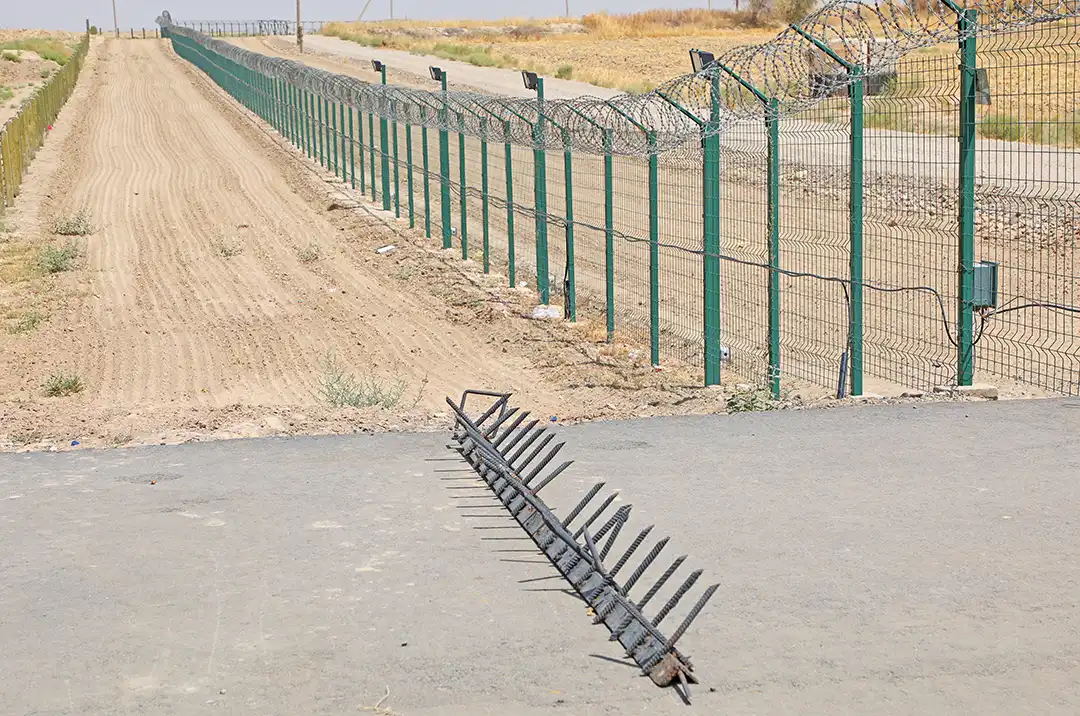
Automatic weapons fire echoed through the Panj River valley along the border between Afghanistan and Tajikistan. The August 2025 skirmish between Tajik and Afghan Taliban border forces erupted from a dispute over mining and dams on the river.
Afghanistan remains unstable under Taliban rule and its northern neighbors in Central Asia are grappling with how to keep extremism, narcotics, weapons and disorder from crossing porous frontiers. The five Central Asian republics — Kazakhstan, the Kyrgyz Republic, Tajikistan, Turkmenistan and Uzbekistan — share a deepening sense of urgency that has led to increased regional cooperation.
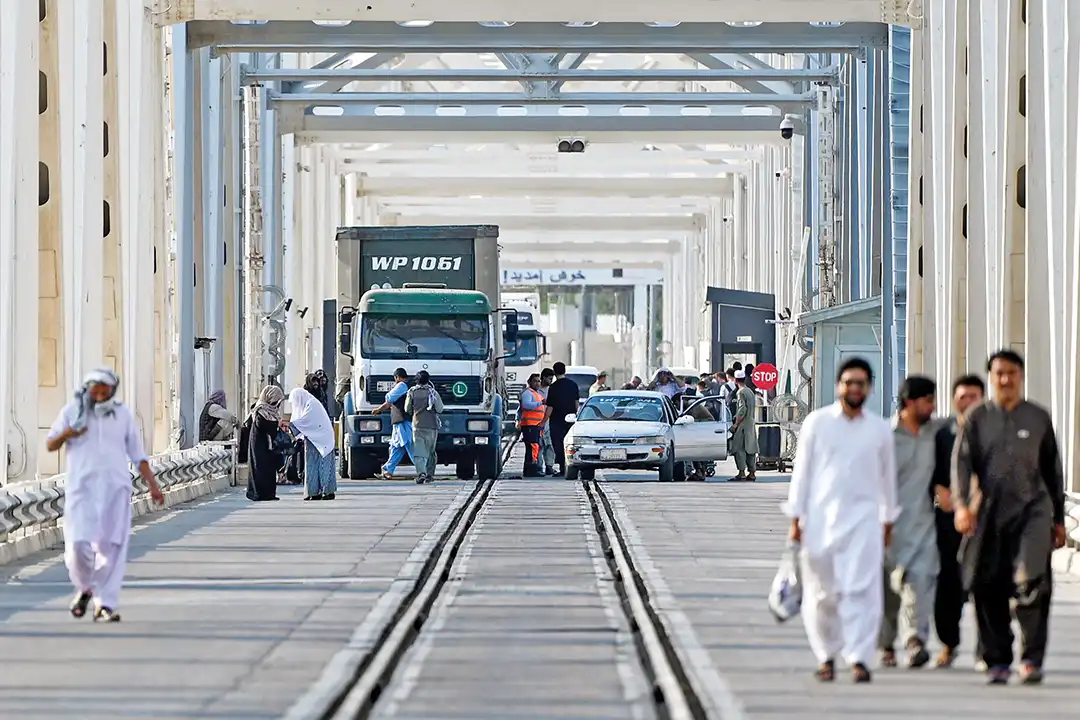
Fragile frontier
Afghanistan’s northern border has been unstable since the Taliban’s return to power in 2021. The presence of regional militant and terrorist groups such as the Islamic State-Khorasan Province (ISKP), al-Qaida and the Tehrik-i-Taliban Pakistan, the flourishing of narcotics and arms smuggling, and the Taliban leadership’s uneven control — and maybe facilitation of organized crime — all raise concerns in Central Asian capitals.
Tajikistan
Tajikistan and Afghanistan share the longest border, stretching more than 1,300 kilometers. Several incidents since the summer of 2025 underscore how volatile the frontier remains. In addition to the August 2025 skirmish across the Panj River, two attacks from Afghanistan into Tajikistan in November 2025 killed Chinese miners and road construction workers. A month later, an incursion by extremists, thought to be members of ISKP, killed two Tajik border troops and three civilians.
These recurring incidents are a security threat and an economic burden. With a still-developing economy and a large migrant labor force dependent on remittances, Tajikistan sees border insecurity as a potential fuse for wider unrest.
Tajikistan’s government seeks to make the country a bulwark against terrorist infiltration and drug trafficking. The Organization for Security and Co-operation in Europe (OSCE) and U.S. Army Central Command, in coordination with the U.S. Military Group-Tajikistan, provide regional training and equip Tajik forces to remove explosive mines that threaten civilians and render land unusable for farming.
OSCE also coordinates with the U.S. Military Group-Tajikistan to secure the border. They provide equipment like surveillance cameras and vehicles to suppress drug trafficking and terrorism.
Uzbekistan
Tashkent has sought cautious engagement with Afghanistan’s government, balancing kinetic security measures with pragmatic diplomacy in its stabilization efforts. As the International Institute for Strategic Studies noted in December 2024, Uzbekistan has spearheaded calls to reintegrate Afghanistan into international frameworks, arguing that isolation only strengthens extremist networks.
Uzbekistan has upgraded border checkpoints, fortified customs facilities and improved surveillance technology. It also leads regional discussions on trade corridor security — an issue closely tied to the planned Trans-Afghan Railway that would link Central Asian markets to the port of Karachi, Pakistan. But security concerns underlie the discussions: building and operating railways is hindered by lawlessness.
Kyrgyz Republic
In Bishkek, concerns over spillover instability and combating extremism have led to a restructuring of the country’s law enforcement and intelligence apparatus, with the State Border Service and the State Guard Department being detached from the rest of the security apparatus.
Kyrgyz officials insist that border vigilance is paramount, and recent border demarcation agreements with Tajikistan and Uzbekistan have lowered regional tensions and improved security cooperation.
The country maintains joint patrols and intelligence exchanges with Uzbekistan and Kazakhstan, and it participates actively in regional counterterrorism training programs led by the U.N. Office of Counter-Terrorism.
Kazakhstan
Though it does not border Afghanistan, Kazakhstan still views the insecurity emanating from that country as a threat and protects its own borders as a strategic priority. Terrorist infiltration is a lesser concern, but narcotics trafficking, extremist ideology and refugee flows greatly concern Astana.
As the region’s largest and wealthiest state, Kazakhstan also plays a key regional role, promoting coordination and hosting dialogues on counterterrorism and information sharing.
Turkmenistan
Turkmenistan exercises strict control over its border with Afghanistan and monitors movement in adjacent areas. In line with its officially recognized policy of neutrality, Turkmenistan cooperates with regional partners on border management and related security issues, with the aim of maintaining domestic stability and preventing cross-border crime.
Regional cooperation
If Afghanistan’s instability has brought one benefit, it is that it has drawn the Central Asian states closer together. The countries are cautiously aligning their priorities on border management and law enforcement cooperation.
Through multilateral formats such as the U.N.’s regional counterterrorism training initiatives, Central Asian customs and border control officers have shared best practices and conducted joint simulations. Regular consultations under other multinational frameworks have likewise fostered communication channels previously hampered by political disagreement.
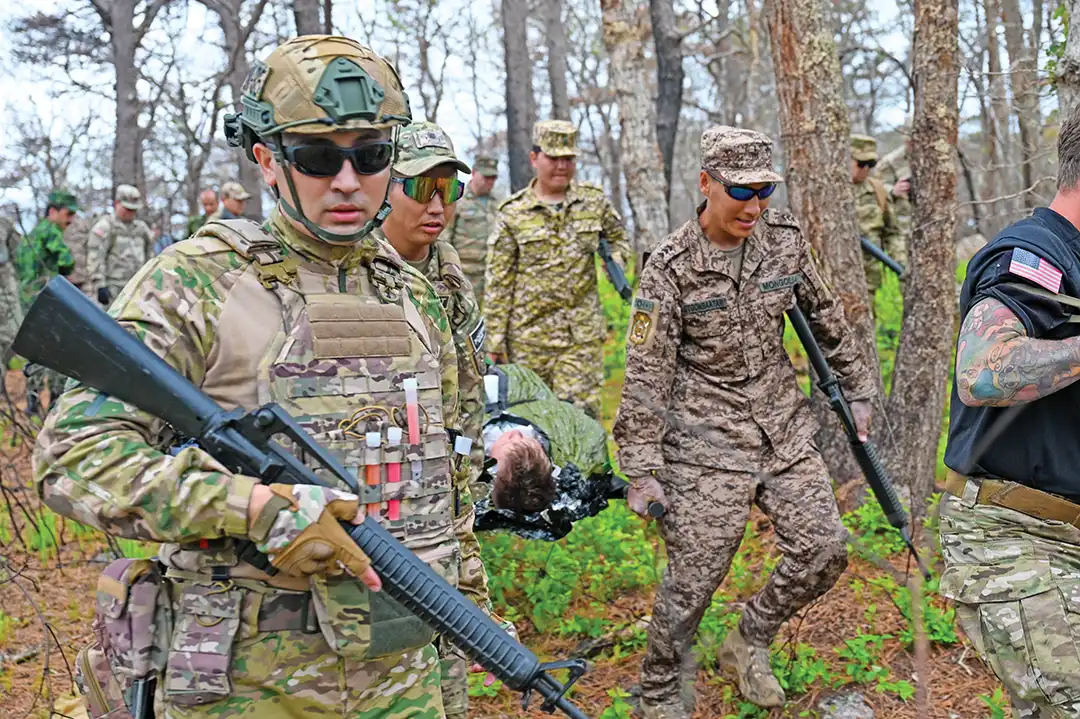
Kazakhstan, the Kyrgyz Republic, Tajikistan and Uzbekistan have also participated in the annual Regional Cooperation joint military exercises sponsored by U.S. Central Command (Turkmenistan has been an observer) and conduct regular exchanges and joint training with U.S. National Guard partners as part of the State Partnership Program.
STAFF SGT. COLTEN TESSNESS/U.S. AIR FORCE
Old problems, new solutions
Post-2021 security realities have forced Central Asia to rethink old assumptions. Economic cooperation is explicitly tied to stability, with regional investment in transport and energy corridors contingent upon secure borders. This linkage is especially evident in the growing dialogue between Kazakhstan, the Kyrgyz Republic and Uzbekistan on integrating border management systems — an important step toward minimizing smuggling and human trafficking.
Regional solidarity remains fragile, national interests often diverge, information flows between states remain patchy and resource disparities create uneven capacities to implement reforms — all crucial elements for effective security collaboration. However, in the past year, these countries have enjoyed unprecedented progress in cooperation and coordination.
Afghanistan’s shadow
Despite intermittent outreach, Afghanistan remains an unpredictable neighbor. The Taliban’s ambivalence toward international engagement, the persistence of ISKP attacks near the northern provinces, and the illicit economy’s entrenchment all suggest that border pressure will not abate.
For Central Asia, the challenge is two-sided: hardening borders while avoiding isolation that can breed extremism within their own populations. As a security strategy, containment has its limits. Economic integration and trade could reduce dependency on illicit networks — provided security is maintained.
The region’s security trajectory will depend on its ability to institutionalize cooperation, including intelligence-sharing mechanisms, professionalizing border agencies and investing in technology — from drones to biometric systems — to monitor vast, rugged terrain.
External partners, both regional and international, remain critical. The U.S., U.N., OSCE and the European Union have expanded training and funding for border programs. However, the ultimate test lies in regional ownership and cooperation. Central Asian states hold the keys to their own security.