

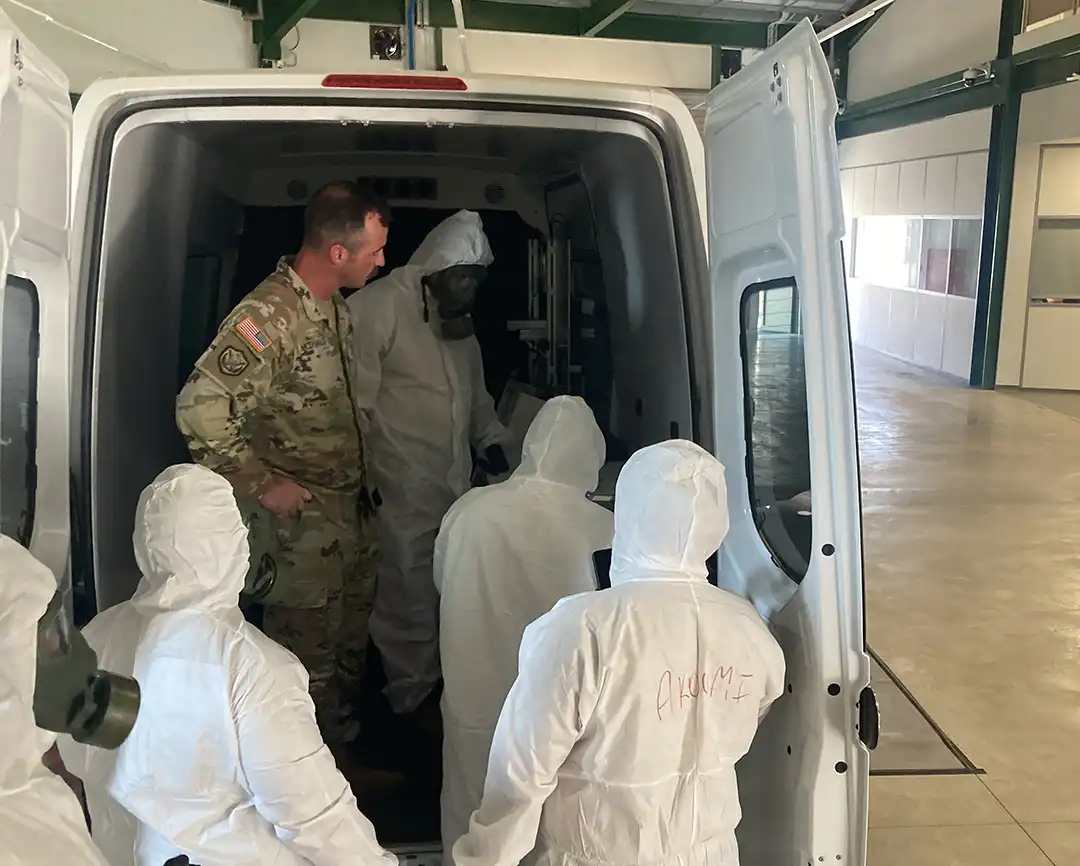
A Lebanese military reconnaissance team swaddled in protective white suits inches closer to an abandoned van. The digital readout on their handheld detector ticks higher as they near the suspicious vehicle: The van was emitting radioactivity.
The team leader radios a message to his commander: They would need a sampling team to retrieve a possible source of nuclear contamination that could endanger the public.
These first responders were members of a Lebanese Armed Forces (LAF) company trained to respond to chemical, biological, radiological and nuclear (CBRN) threats. And they were engaged in a fictional scenario with partners from the United States.
As the Lebanese troops decontaminated the site, their counterparts from the Mississippi National Guard Civil Support Team (CST) mentored the Lebanese on emergency procedures with their own tactics, techniques, and procedures (TTP).
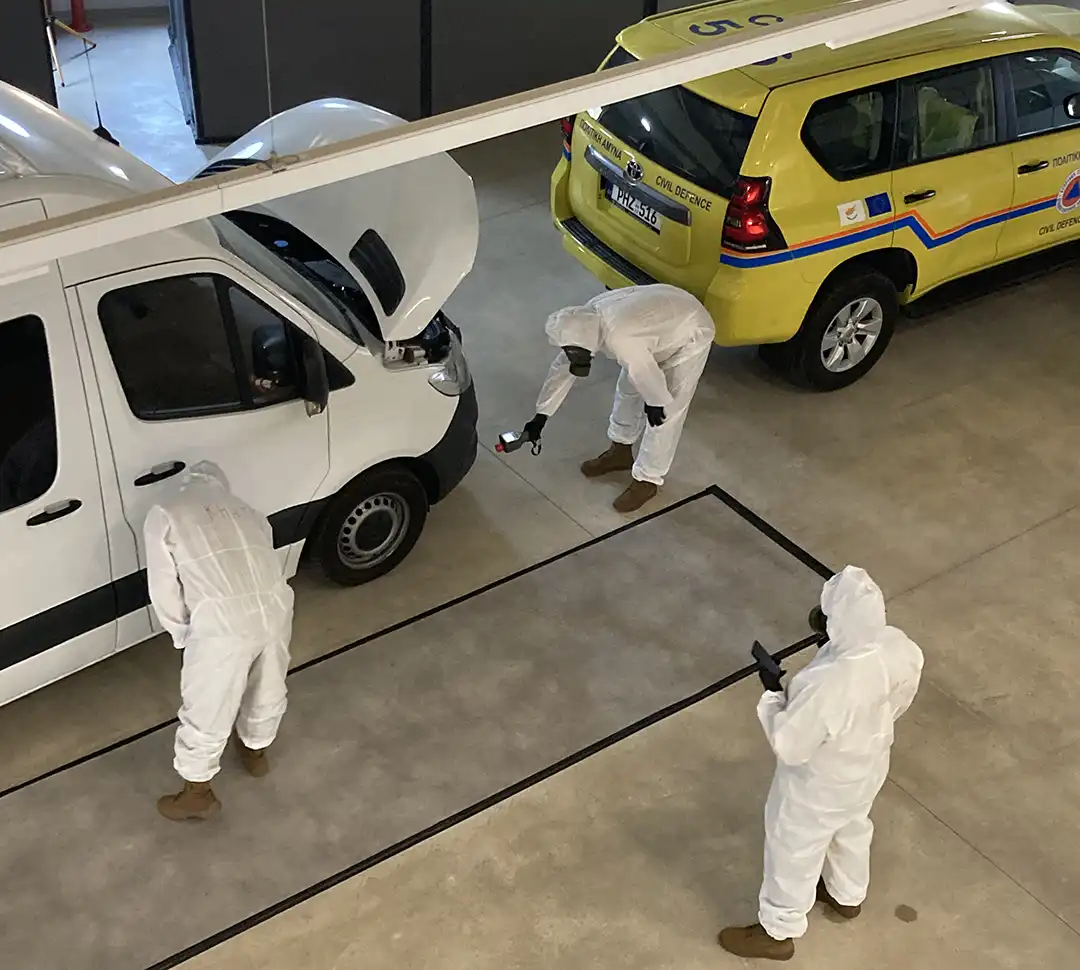
The U.S. team praised the skill and professionalism of the LAF CBRN team on how they responded:
- The Lebanese team gathered two samples from the contamination site instead of one, in case one sample got lost in the system.
- The Lebanese advanced closer to the source of contamination than permitted by U.S. regulations despite higher radioactivity readings on their handheld gauges.
- In treating victims of toxic exposure, Lebanese forces create separate contamination stations for men and women, owing to cultural differences. U.S. military forces typically use a single station for men and women if resources are restricted.
- Lebanese CBRN teams conducted reconnaissance and response safely and quickly during a contamination event. The U.S. team rated them highly for sustained proficiency and expressed confidence that in a CBRN catastrophe Lebanon and the U.S. could share the burden of response.
“We’re here to learn from each other and sustain a partnership that fosters burden sharing in the region,” said Derrek Brooks, a former U.S. Marine Corps CBRN officer who led the U.S.-Lebanese engagement for U.S. Central Command at a training center in Cyprus.
U.S. CENTCOM’s Strategy, Plans and Policy Directorate operates a Countering Weapons of Mass Destruction Division that conducts capacity building engagements with partner nations CBRN units.
The weeklong Cyprus exchange between Lebanese and U.S. troops was designed to share best practices in a field that’s become increasingly relevant. Terrorists and malign state actors have been known to create and employ biological, chemical or radiological agents that could lead to mass casualty events.
Lebanon’s 40-person CBRN company, part of the LAF’s engineering regiment, was created in 2009 with expertise and financial support from U.S. and European partners. Facing regional conflicts and a recurring economic crisis, Lebanese leaders were initially wary of adding to the country’s financial burden by standing up such a unit, but decided it was a good investment.
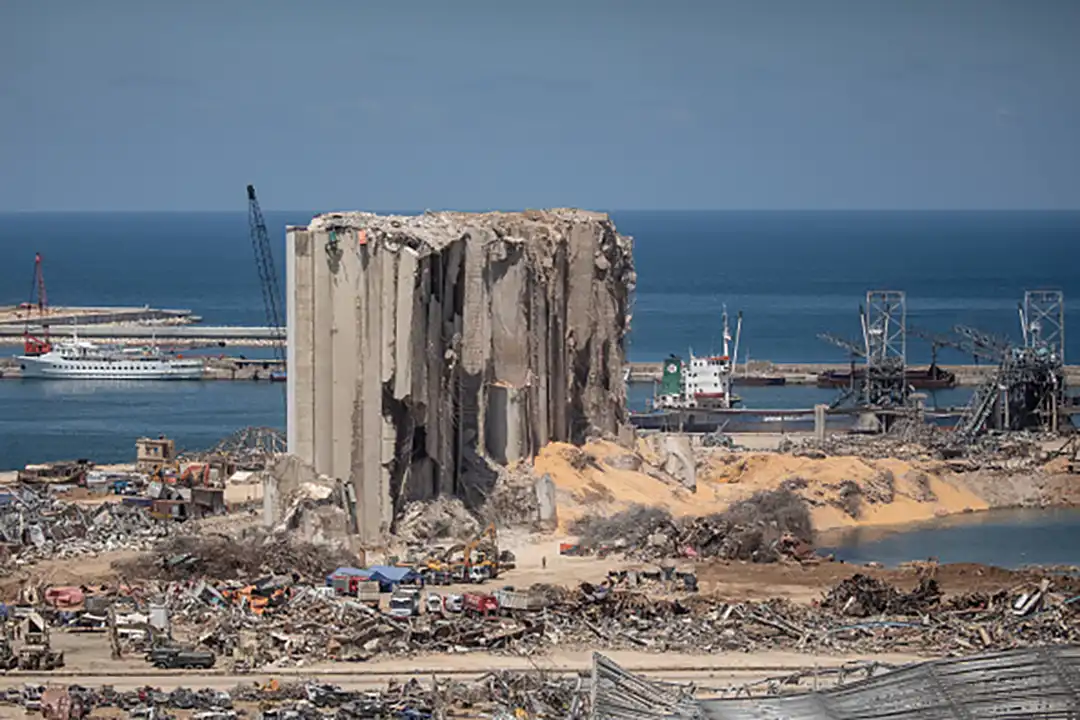
That foresight paid off in August 2020, when the Beirut port explosion, one of the largest non-nuclear explosions in history, released toxic chemicals near population centers of the Lebanese capital. The LAF CBRN company occupied the frontlines during the disaster.
“A CBRN company is like having car insurance. You don’t need it until you need it,” said LAF CBRN Company Commander Maj. Ziad Abou Malhab. “CBRN is a low probability but high impact event.”
The Cyprus engagement between Lebanon and the U.S. focused on radiological and chemical threats. Held at the Cyprus Centre for Land, Open Seas and Port Security (CYCLOPS), a subject matter expert exchange (SMEE) led by CBRN troops with U.S. Army National Guard from Mississippi outlined advancements in surveillance, reconnaissance, response, decontamination and medical care.
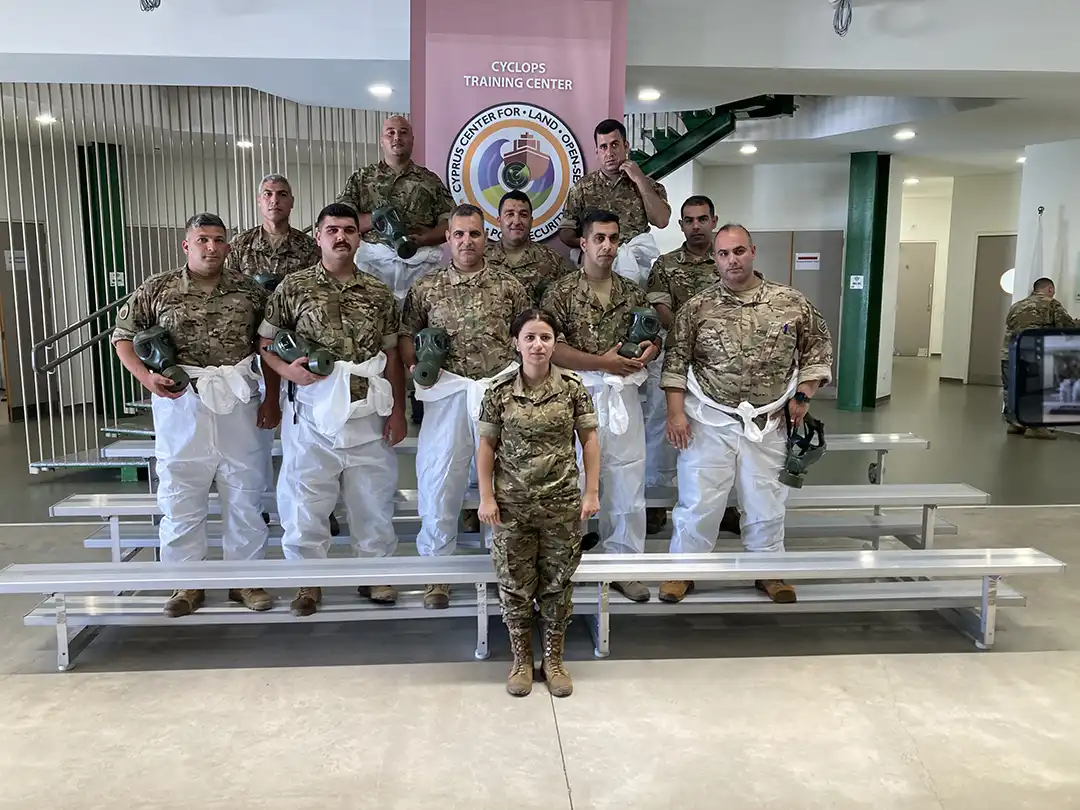
Lectures alternated with radiological and chemical drills in which 12 LAF troops suited up and responded to fictional emergencies. Also participating was a skilled Cypriot CBRN team consisting of five men and one woman.
Sample radiological sources, serving as contaminants, were used for realistic detection and identification of radiological hazards. For chemical weapons they used cold medicine, cologne, mothballs and skin balm, which gave off enough vapor to activate modern detection equipment and provide a false positive reading.
“We used a real source of radiation but it’s a tiny, harmless amount. These detectors are very sensitive,” said Chief Warrant Officer 3 Tony Ryals, a senior member of the U.S. CBRN team.
Some samples were hidden in shipping containers on the grounds of the Cyprus training center. The shipping containers represented containers on a ship and provided a realistic unknown environment for participants to explore. Other contaminants were stashed in a parked van meant to represent a vehicle left behind by terrorists or criminals.
This engagement provided the Lebanese team an opportunity to introduce new recruits to engage with the U.S. team. To direct the operations, Lt. Rabia Ashkuti of the LAF established a command and control center with Ryals from the U.S. to gather intelligence, provide guidance, maintain communications and monitor team progress.
After searching the van, the Lebanese team pinpointed the objects emitting radioactivity. Discussions between the Lebanese and U.S. team highlighted that best practices require troops work in pairs in the event a team member is affected by a contaminant or overheats and needs help from his partner.
Maj. Malhab has grown accustomed to working under economic shortfalls as all CBRN professionals do, but is grateful for knowledge sharing from experts in the field. With many critical missions under its belt, the LAF CBRN company welcomes any opportunity to increase its CBRN capacity.
“The port explosion was a big turning point,” Maj. Malhab said. “Before that, CBRN wasn’t a priority.”
Lebanon’s CBRN Company: Nullifying Noxious Threats
Despite the country’s small size, Lebanon frequently calls on the skills of its specialized military unit to counter chemical, biological, radiological and nuclear agents
The Lebanese Armed Forces CBRN company responds to civilian as well as military emergencies based on the LAF’s doctrine of civilian-military cooperation. It’s part
of a larger engineering regiment that specializes in
demining and bomb disposal.
When created in 2009, the company recruited elite noncommissioned officers from different specialties and maintains a contingent of 40 enlisted troops and officers. It was initially equipped by the European Union, which supplied 40 protective hazardous materials suits, plus chemical and radiological detectors.
Company Commander Maj. Ziad Abou Malhab holds an advanced degree in chemistry and other members of the unit have degrees in biology.
Here are some of the emergencies in Lebanon that have required the skills of the LAF CBRN unit:
- The Beirut port explosion: On August 4, 2020, a giant mushroom cloud erupted over the Port of Beirut, caused by an explosion of 2,750 tons of ammonium nitrate stored in port warehouses. The disaster killed hundreds and ruined more than 40,000 homes, apartments, shops and offices. It was a supreme test of the skills of the LAF CBRN company, which focused on containing contaminants released by the explosion. They mapped, catalogued and contained hazardous materials on site such as fireworks, toxic gases, flammable liquids and pesticides.
- Grain silo contamination: The port explosion was so dire that even years later, cereal grains stored in damaged silos at the port were exposed to rain and fermented into flammable methyl alcohol. As the silos collapsed and emitted toxic spores, the CBRN company was summoned to help contain the contamination.
- Radioactive underwear: In a case of contamination by nuclear agents, United Nations peacekeeping troops from Italy discovered smuggled boxes of Chinese-made men’s underwear with radioactive thorium pellets sewn into their seams. The underwear was falsely marketed as a means to block cell phone radiation from suppressing male fertility. The CBRN unit sealed the contraband in lead containers.
- Illegal perfume: Hazmat teams were called to investigate illegally produced perfume containing chemicals that, if used malevolently, could serve as precursors for explosives. Lebanon tries to regulate the importation of dual-use chemicals such as those used in the perfume and cosmetics industries.
- Artillery shell disposal: Members of the CBRN company assisted a military bomb disposal team disarm munitions discovered hidden in South Lebanon. An artillery shell that appeared dormant exploded unexpectedly, killing five Soldiers and severely wounding a CBRN company member, who lost an eye and broke his leg.
- Radioactive petroleum industry equipment: A box with radioactive markings containing an unknown object washed up on a Lebanese beach. The CBRN company was dispatched to investigate. They discovered the gear, with its serial number scratched off, had been used by oil and gas companies operating in the Mediterranean Sea. Testing revealed the radiation levels emitted by the equipment was little threat to civilians.
- Fungus farmer: A Lebanese man with petri dishes in his home raised fears he was cultivating toxic biological agents. An investigation by the CBRN team revealed he was growing mushrooms, possibly for sale as a mind-altering drug.