
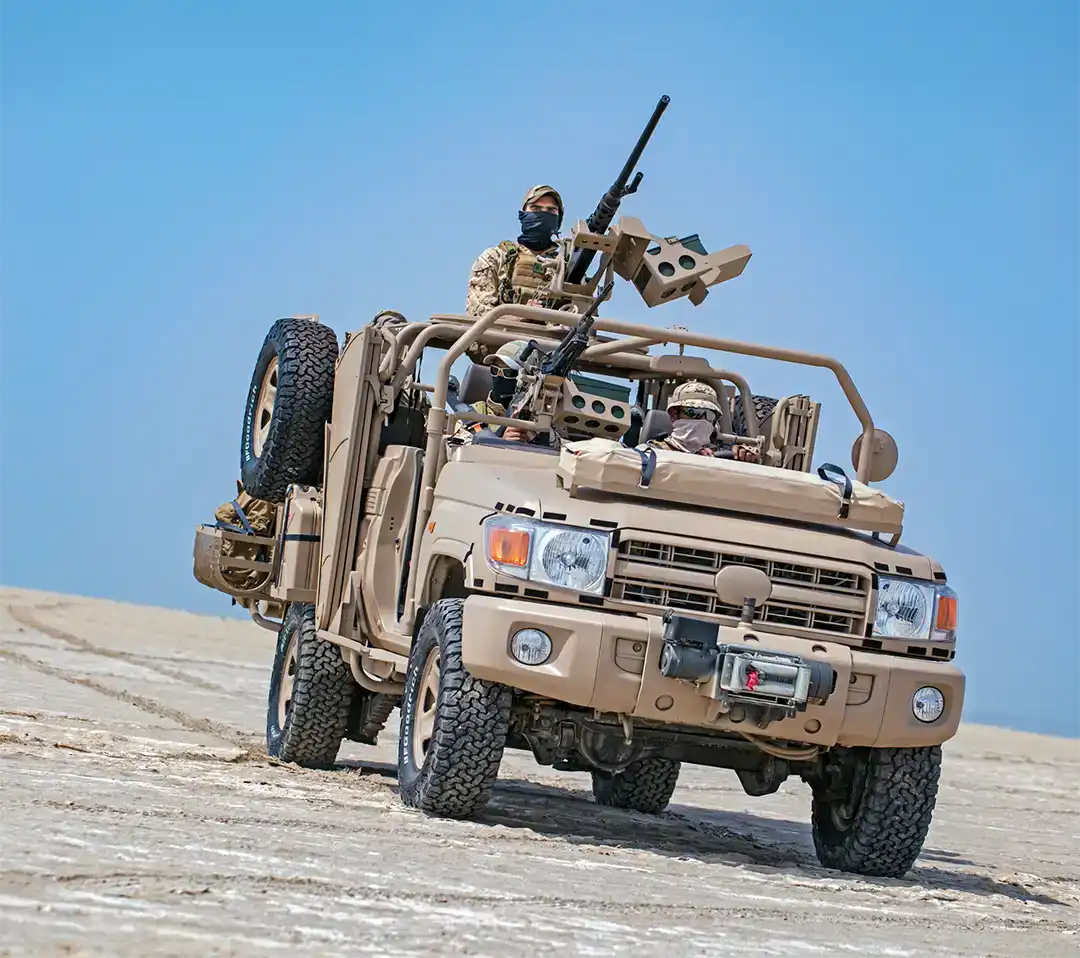
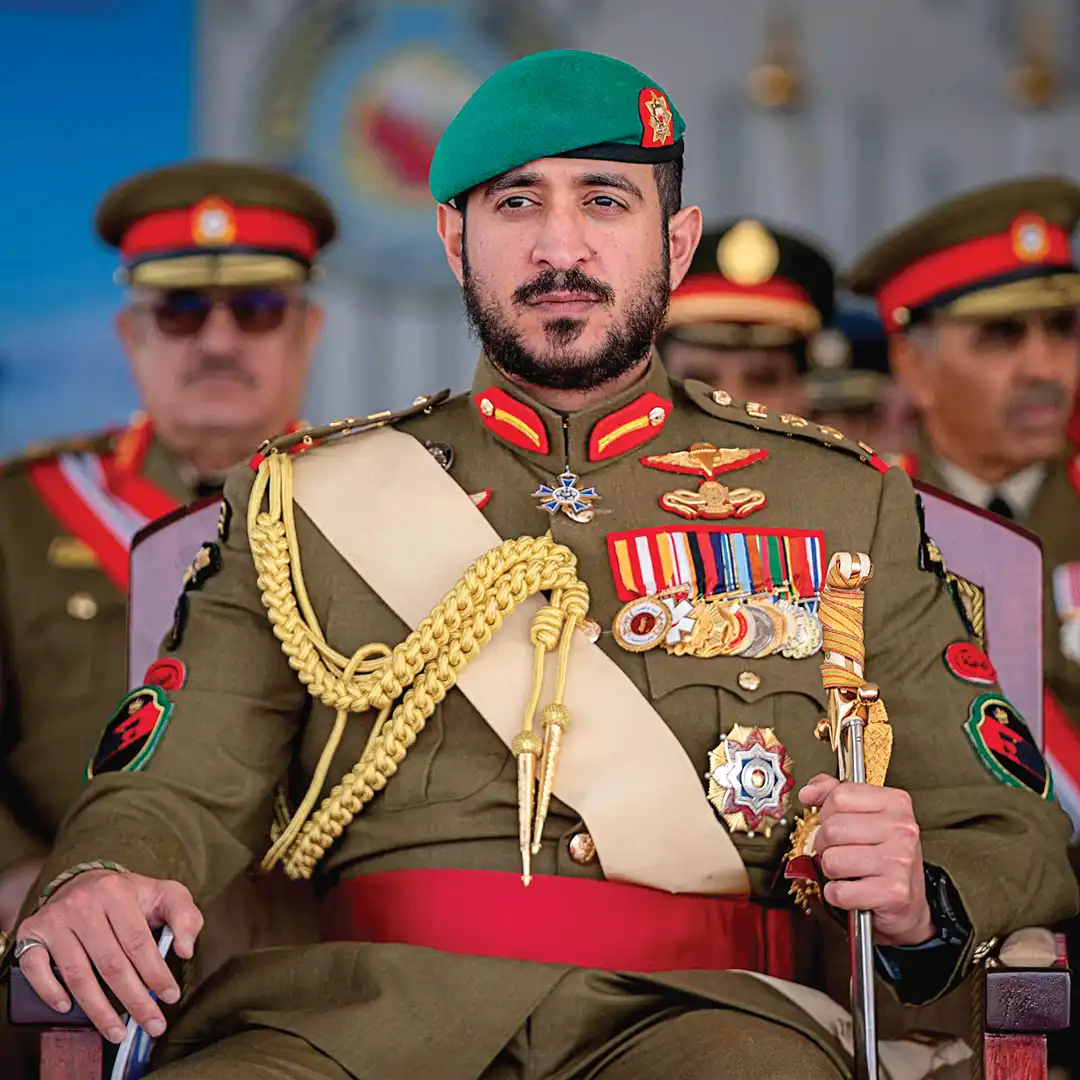
 Unipath interviewed His Highness Bahraini Brig. Gen. Khalid bin Hamad Al Khalifa, who commands one of the most prestigious units of the Bahrain Defence Force, the Royal Guard Special Forces.
Unipath: How do you partner with the United States to develop equipment and training for the Bahraini special forces?
Brig. Gen. Khalid bin Hamad: We have a deep partnership with the U.S. that has been ongoing for a long time and continues to this day, not only on the military side but also on the strategic, political and economic sides. This reflects our common interests. The U.S. has a great deal of experience in special operations. Our partnership involves the transfer of knowledge, exchange of expertise and access to the latest operational concepts that enhance the efficiency and readiness of special operations, especially in the areas of operational planning, crisis management and joint operations.
In addition, joint training programs improve combat professionalism and develop troops’ skills in dealing with various challenges and diverse operational environments, including naval, air and land operations. These partnerships also provide an opportunity to learn about the latest technologies and modern systems that improve accuracy and improve response times in the fields of communications, reconnaissance and logistical support. This relationship also enhances our ability to work within coalition forces and multinational operations, where concepts and tactical procedures are unified. This strengthens operational integration and coordination among friendly forces. This partnership also contributes to supporting continuous development programs and honing leadership skills, making sure to keep pace with the rapid developments of threats and how to confront them.
Unipath: What challenges confront the Royal Guard’s special operations force?
Brig. Gen. Khalid bin Hamad: The most notable challenge is keeping pace with rapid technological development, which requires continuous training and the acquisition of advanced skills. Careful selection of troops also represents a prominent challenge, as the requirements and specifications of special operations Soldiers differ from those of the regular military units. Also, special operations may face difficulty in obtaining intelligence sufficient to act quickly under time pressure in complex and changing environments.
Unipath: What technologies would you like to acquire in the near future?
Brig. Gen. Khalid bin Hamad: We aim to acquire modern capabilities in line with global defense shifts, focusing on enhancing situational awareness, maximizing troop safety through automated systems and securing our strategic communication networks using advanced technologies.
Unipath: How do real-world security threats shape your training?
Brig. Gen. Khalid bin Hamad: In general, the training we conduct aims at raising efficiency and readiness to deter attempts to harm the security of the kingdom and its leadership. This is achieved by conducting a variety of exercises, such as Jalmud, Rabdan and Kingdom Guard. These exercises feature different scenarios that include combating sleeper cells, combating terrorism and protecting embassies. These exercises are excellent for refining the skills of our forces. The most prominent security challenges are the rapid developments in the nature of unconventional threats, which include terrorism, organized crime and cyber threats, in addition to the instability witnessed in some parts of the region and the security repercussions that may result from it. The spread of modern technologies and the ease of access to means of communication and operational planning present an additional challenge that requires keeping up with and constantly developing security capabilities. The relevant authorities are working to counter these threats by developing operational capabilities and strengthening regional and international cooperation, in addition to investing in training and qualification and using modern technologies in the fields of monitoring, reconnaissance and information analysis.
Unipath: The Bahrain Defence Force follows the British military doctrine. How difficult was it for special operations forces to adjust to U.S. military doctrine?
Brig. Gen. Khalid bin Hamad: The special operations forces are keen to benefit from different international military schools and doctrines without adhering to a single doctrine. The philosophy is based on selecting from operational practices proven successful in the field. Although British military doctrine was the historical basis for building the military system, it was not difficult to work with the U.S. side to expand our operational horizons. The U.S. school is considered one of the best for developing special operations tactics and techniques, especially in the areas of joint missions, use of modern technology and management of complex operations. In contrast, the British school is characterized by its focus on operational discipline, deep field experience and working in diverse environments. Through the selective adaptation of these schools, the Bahraini special operations forces have developed a distinct national system completely tailored to our own sovereign defense requirements, combining combat professionalism with tactical flexibility.
Unipath: Do your special operations forces undergo specific training in the maritime environment of Bahrain or do you train in all terrains, such as mountains and forests?
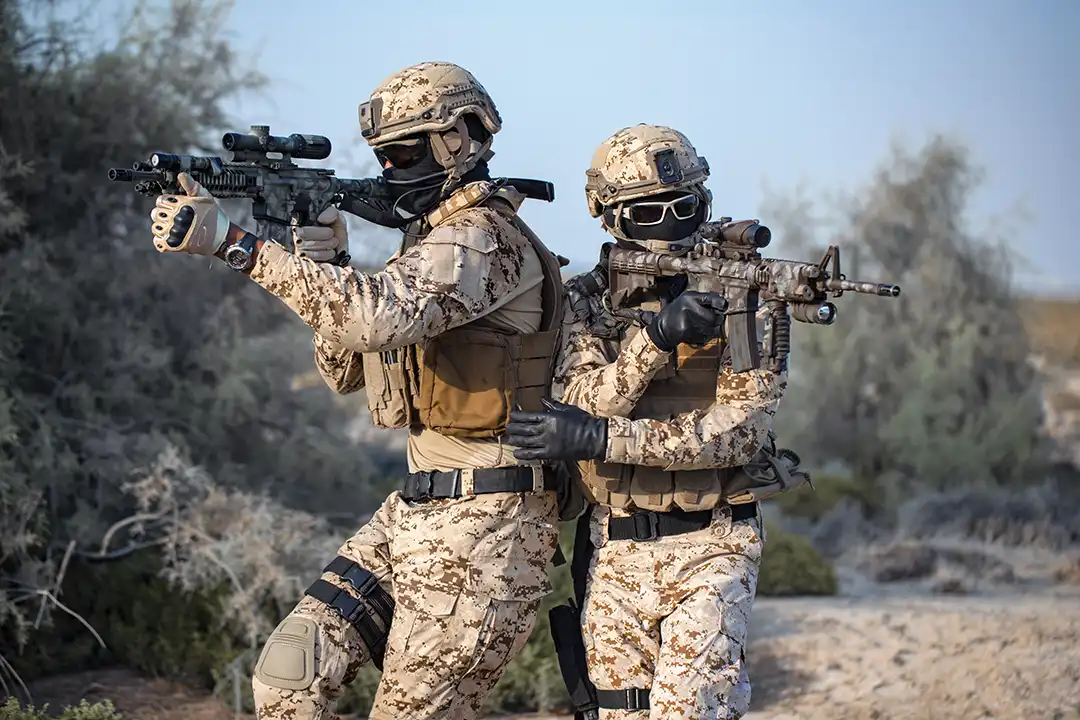
Brig. Gen. Khalid bin Hamad: We rely on comprehensive and diverse training programs that take into account the geographical environment of Bahrain, where the focus is on training in coastal, maritime, urban and desert areas. At the same time, leadership is keen to expand the scope of training abroad to include various environments and terrains outside Bahrain, such as mountains, forests and environments with harsh climatic conditions. This diversity in training aims to raise the readiness of troops and develop skills for rapid adaptation to changing operational theaters.
Unipath: What special operations-oriented exercises does Bahrain host?
Brig. Gen. Khalid bin Hamad: We focus particularly on counterterrorism and organized-crime exercises. One of the most important of these held in the Kingdom of Bahrain is the joint Hamad Falcons exercise, which brings together state institutions and security agencies in addition to friendly countries such as the U.S., the United Kingdom, Malaysia, Brunei and the Philippines.
Unipath: Do the Soldiers under your command train with other security forces in the kingdom?
Brig. Gen. Khalid bin Hamad: Joint security exercises are carried out periodically, bringing together various security and military agencies and institutions in Bahrain. The goal is enhancing integration and coordination between the competent authorities in dealing with different security challenges. Exercise participants include the Ministry of Interior, the National Guard, the National Intelligence Service and other relevant agencies. These exercises aim to unify operational concepts and procedures, and to raise the level of readiness and rapid response to incidents and emergencies, as well as coordination mechanisms between participating entities. These exercises promote information sharing and teamwork, ensuring the highest levels of efficiency in maintaining security and stability within the kingdom.
Unipath: How important is holding exercises with counterparts in the United Arab Emirates?
Brig. Gen. Khalid bin Hamad: The security threats facing countries in the region from terrorist groups require we keep pace with rapid changes and develop advanced tactics to maintain tactical and technical superiority. Working with the UAE special operations forces comes within the framework of joint military action falling under the umbrella of the Gulf Cooperation Council. The importance lies in exchanging experiences and learning about the most prominent tactics and equipment used in the field of special operations. Among the most important joint exercises with UAE special operations forces are Jalmud, Rabdan and Hamaat Al Dar. These exercises are designed to confront challenges that exist in the region. We also conduct joint exercises with the Kingdom of Saudi Arabia, Jordan, the United Kingdom, the U.S., Malaysia, Brunei and others among our friendly partner nations.
Unipath: How valuable is attending the annual Special Operations Week overseen by the U.S. Special Operations Command in Florida?
Brig. Gen. Khalid bin Hamad: Participation in the annual Special Operations Week in Tampa, Florida, is of utmost importance, as it is where the challenges facing the special forces of the countries participating in the conference are discussed, and appropriate solutions proposed based on the experiences of the participants and under the supervision of the Special Operations Command Central. It also includes bilateral meetings with members of allied special forces, the exchange of expertise, and an introduction to the latest technologies and equipment on display. This is all aimed at achieving the necessary development to keep pace with global advances in special operations.