
Iraq experienced a bloody spiral of violence after 2003 for several reasons, the most conspicuous of which was the hasty formation of security agencies as Iraq was facing brutal terrorist attacks and sectarian violence. The streets of the capital were littered with unidentified bodies, and a malicious media war sowed doubt among citizens and security forces. Therefore, it was necessary to ensure that security agencies were protected from infiltration and to verify the loyalty of their personnel. The Ministry of Interior successfully navigated this critical phase and became a model for other countries in the region.
The Internal Security Forces Inspection Commission is a key agency within the Ministry of Interior because of the active role it plays in oversight, evaluation and continuous development. Through its fieldwork, inspections and ongoing efforts, the commission has proven its ability to drive institutional reform and enhance security and service readiness, combat corruption, and improve the quality of services provided to citizens.
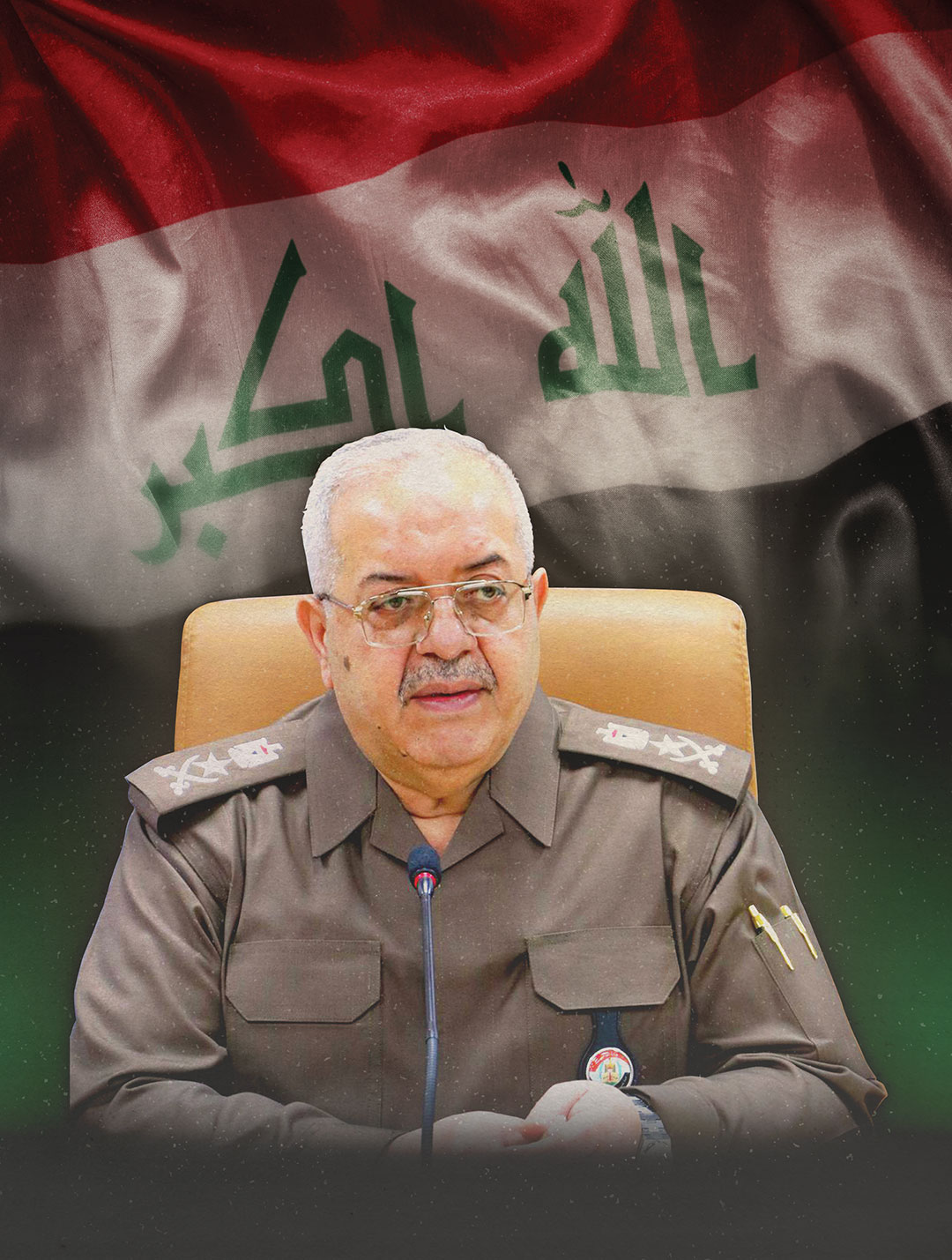
Unipath met with Lt. Gen. Atef Al-Sudani, head of the authority, who spoke about his department’s achievements, the challenges it faces, and his plans to improve performance of ministry personnel.
Unipath: Over the past two decades, cases of corruption and bribery emerged in several departments within the ministry. How did you manage these?
Lt. Gen. Atef: We must remember that the rapid and confusing restructuring of all the ministry’s departments, without following basic procedures, in addition to the interference of influential parties in the appointment process, resulted in the recruitment of incompetent individuals and others with conflicting loyalties. This made the period between 2004 and 2007 one of the most difficult the ministry has ever experienced. However, with professionalism and self-confidence, we were able to correct course and purge security agencies connected to the Ministry of Interior from affiliations and allegiances that conflict with the state. The ministry faces a major challenge in the form of administrative corruption, which is, of course, a challenge faced by all countries. Cases of corruption have been reduced by strengthening oversight committees and carrying out more surprise inspections of service and security departments that are in direct contact with citizens to evaluate the true situation in these departments. We also taught our personnel to fight corruption and introduced strict laws to penalize those who engage in it.
Unipath: What is your role in evaluating the performance of investigating officers and holding accountable those who fail to perform their duties?
Lt. Gen. Atef: In the Inspection Commission, we are tasked with evaluating the performance of investigating officers through specialized field inspection committees that review detected, referred and closed cases of corruption, as well as ensuring compliance with legal procedures, instructions and controls, and how quickly investigations are conducted. In the event of a failure to comply, detailed reports are prepared and referred to the relevant authorities for legal action, leading to administrative accountability or referral to investigative committees, ensuring professional discipline and raising performance levels. We verify the qualifications of officers nominated for investigation departments or eligible for promotion. We also conduct a comprehensive annual assessment of ministry personnel to ensure that there are no irregularities, complaints or penalties against them that could affect job performance. All officers and employees are assessed by inspection committees (inspection reports) according to professional standards (assessment surveys). This assessment constitutes the basis for appointing and promoting staff.
Unipath: What is the role of the inspector general in monitoring the performance of police departments in different provinces?
Lt. Gen. Atef: The inspector monitors police departments in the provinces through field inspections carried out by specialized committees. These committees evaluate administrative, field and disciplinary issues, as well as monitor obstacles and assess the needs of each department in terms of personnel, equipment or infrastructure. Our recommendations are then submitted to higher authorities to secure the support required for carrying out security tasks effectively. We also conduct inspections and investigations into complaints submitted by citizens or relevant authorities. I’d like to express gratitude and appreciation to citizens who fulfill their national duty by reporting negligence or corruption in the Ministry of Interior. We take complaints seriously, and the office of the Minister of the Interior personally follows up on this issue.
Unipath: Describe the steps in the investigation process from start to finish.
Lt. Gen. Atef: Once we receive a complaint, we review it and refer it to a specialized investigative committee. Statements are taken from all parties, and administrative evidence is gathered. After the investigation is completed, recommendations are submitted to the competent commission for approval and appropriate action. Depending on the evidence, this can either be to pursue accountability or to close the case. We then follow up implementation of the decision to ensure transparency and administrative justice.
Unipath: Some Iraqis complain of mistreatment by police. What procedures ensure officers do not use excessive force or mistreat suspects?
Lt. Gen. Atef: This phenomenon is not limited to a specific country; rather, the problem of abuse of power is one that afflicts the entire international community. Numerous studies and cases show that the main cause is corruption or religious or ethnic intolerance. In Iraq, we managed to overcome the dark era of sectarian violence and have not recorded any violations in this regard. However, there may be individual cases where members of the security forces mistreat citizens or even resort to unjustified physical violence. Of course, the ministry has a zero tolerance policy toward any such violations. The ministry has a department dedicated to human rights that is responsible for monitoring this issue. Our role at the Inspection Commission is to monitor and evaluate the performance of this department and ensure its effectiveness. We also receive complaints from citizens and investigate them through inspection committees to ensure violators are held accountable and to promote among security agencies a culture of respect for citizens and human rights.
Unipath: What is your strategy for making the Ministry of Interior a model for other state institutions?
Lt. Gen. Atef: We have come a long way and have a track record of achievements and successes. Careful planning and wise leadership have been key to our success over the past 10 years. We are now working to raise individual and institutional levels of performance and preparedness (security, combat and services) in all departments of the ministry. Federal police units have gained considerable experience in urban warfare, and the ministry’s strategy has been to build combat capabilities and focus on field training. Our strategy also includes serious follow-up on the implementation of previous recommendations to address issues (downsides, obstacles, dilemmas and evaluations) identified by inspection committees according to operational specializations. We are also in the process of evaluating and training units that have not yet been evaluated and continuing to update inspection criteria as different departments are created, merged or closed down.
Unipath: How much do you cooperate with counterparts in other countries to exchange expertise and improve performance?
Lt. Gen. Atef: We have limited cooperation with coalition countries, but we hope to increase cooperation to cover more areas. Since 2003, we have had advisors from friendly partners, and the coalition has supervised the training and equipping of the ministry’s units. We now have more intelligence cooperation in the fight against Daesh gangs. The ministry sent counter explosive specialists to advanced courses in the United States, and we also cooperate in the field of media through the joint forces command. Our visit to Washington as part of a high-level government delegation to attend the strategic planning session at the Near East South Asia Center for Strategic Studies is proof of our commitment to international partners. The Border Forces Directorate and the Ports Commission also work closely with neighboring countries. We also hope to work directly with our counterparts in other countries around the world, given the importance of such cooperation in exchanging experiences, learning about best regulatory practices, and developing inspection mechanisms that meet international standards. This will improve performance of security agencies and increase the efficiency of inspectors.
Unipath: How are needs of different departments identified and their budgets allocated?
Lt. Gen. Atef: Field inspections carried out by specialized committees evaluate human and material resources in real time and compare them with the tasks and duties assigned to each department. Based on this data, detailed recommendations are submitted to the competent authorities to allocate money to meet real-time priorities and operational needs while ensuring fair distribution and effective spending. We also receive requests from unit commanders and department heads and send inspectors to make evaluations.
Unipath: How is the ministry’s procurement of equipment and supplies audited?
Lt. Gen. Atef: Equipment and supplies procurement procedures are checked by specialized inspection committees that review the entire process, from announcing the requests for proposals through signing contracts to delivery and technical inspection. We check that contracts meet legal standards and that materials supplied comply with technical specifications, as well as verifying the integrity of disbursements and accounting procedures to ensure transparency and prevent waste and corruption. Expenditures are audited by specialized financial inspection committees. They verify that actual expenditures match the financial plan submitted to and approved by the ministry. Expenditures are verified to ensure compliance with allocations and budgeting. In the event of violations, detailed reports are prepared and submitted to higher authorities to take the legal and administrative measures.
Unipath: How are the commission’s employees selected, trained and evaluated?
Lt. Gen. Atef: Members of the Inspection Commission are selected based on professional criteria that include integrity, competence and experience. Candidates undergo internal and external development courses, and their performance is periodically evaluated based on their fieldwork, ability to follow instructions and professionalism in dealing with others.
Unipath: Iraq recently witnessed drone attacks on military and economic infrastructure. How can the commission enhance the capabilities of the federal police to counter these weapons?
Lt. Gen. Atef: This issue poses a major challenge for all countries around the world, a challenge that requires concerted efforts of all state institutions and security agencies. Border crossings must be monitored to detect equipment used in the manufacture of drones. Our role at the Ministry of Interior is to assess the security readiness of federal police units through field reports and to identify gaps in equipment and training. We make recommendations to secure early warning and jamming technologies to bring down drones. We also support training plans for dealing with drones in coordination with the relevant authorities in the ministry.
Unipath: What is your role in coordinating between border guards and other security agencies to stop the smuggling of illegal drugs into Iraq?
Lt. Gen. Atef: We conduct inspection visits to the Border Forces Command and the Anti-Narcotics Directorate, and we monitor weaknesses in field coordination. We recommend consolidating intelligence efforts, updating border control mechanisms, and regulating authorities in a way that integrates agencies and contributes to reducing smuggling.
Unipath: Do you focus on combating cybercrime and money laundering?
Lt. Gen. Atef: We have technical inspection committees that have prepared assessments of cybercrime and money laundering, in cooperation with the relevant authorities. We have submitted recommendations to strengthen the capabilities of the relevant units, update legislation, and expand the powers of investigation into digital crimes within the legal framework. The security services have succeeded in arresting individuals and gangs involved in cybercrime, and we maintain specialized teams for this purpose.
Unipath: How do you rate the performance of Iraqi police?
Lt. Gen. Atef: Iraqi police have made remarkable progress in recent years, both in terms of field performance and maintaining security and professional standards. This progress is the result of several factors, most notably the role of the Inspection Commission in evaluating performance, monitoring shortcomings, and making recommendations for improvement, in addition to continuously monitoring the level of readiness and submitting the necessary proposals to enhance discipline and efficiency in various aspects of police work.
Unipath: How can you prevent infiltration of security forces by drug traffickers and other criminals?
Lt. Gen. Atef: We have a Personnel Security Department in the ministry responsible for vetting the backgrounds of employees and candidates to establish their integrity and the absence of suspicious connections. As for our role in the Inspection Commission, this is to monitor the performance of the Personnel Security Department, evaluate the effectiveness of its procedures, and ensure that it applies security and professional verification standards, thereby protecting the security system from any infiltration or unlawful influence.