

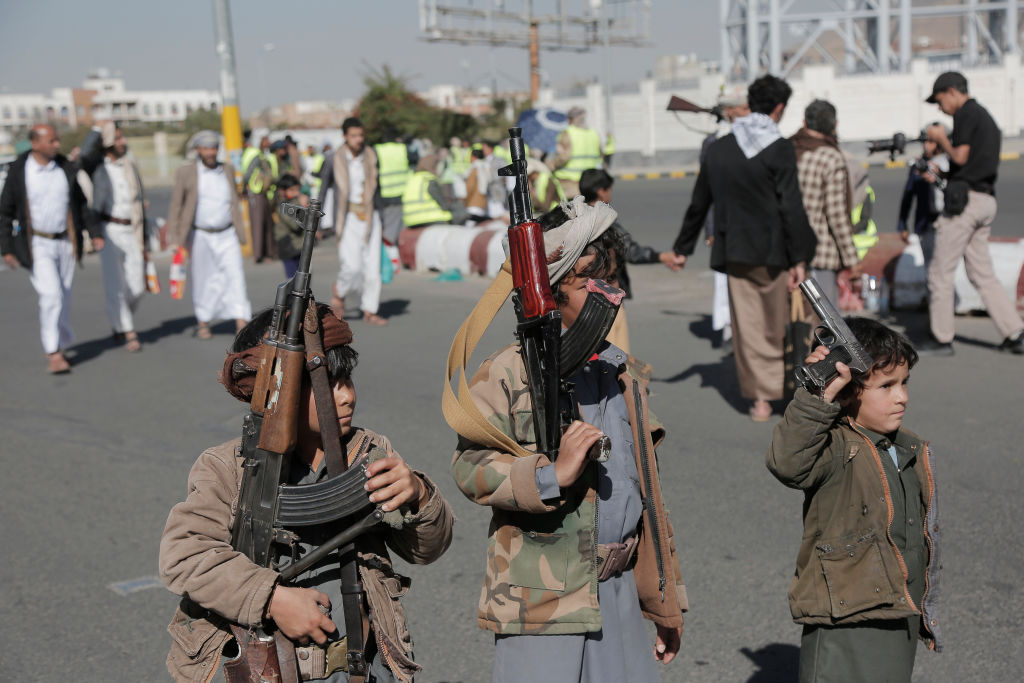
The recent military confrontation with Iran compels a fundamental reassessment of what has traditionally been described as the “Axis of Resistance.” The evidence no longer supports viewing this axis as a loose political alignment or a coalition between Iran and affiliated armed groups. Rather, it reveals a transnational military system deliberately constructed over decades to function as an extension of Iran’s war doctrine beyond its borders.
This is not merely a network of alliances. It is an integrated operational architecture, functioning through centralized command and control and operating as a cohesive entity within a unified strategic framework.
First: Centralized decision-making and unified operational tempo
Recent events demonstrate that the actions of Iran-aligned proxies are neither spontaneous nor locally driven. Instead, they are synchronized across multiple theaters, reflecting a coordinated operational design.
This level of alignment strongly indicates the presence of a centralized command structure, likely directed by the Islamic Revolutionary Guard Corps (IRGC). The IRGC is responsible for:
- Allocating roles across proxy forces
- Controlling escalation and de-escalation cycles
- Calibrating engagement levels to maximize strategic impact while minimizing direct costs to Iran
This coordination reflects a transformation from decentralized proxy activity into a functional equivalent of a regional theater command.
Second: Functional specialization across theaters of engagement
A defining feature of this system is the deliberate division of operational roles across geographic theaters:
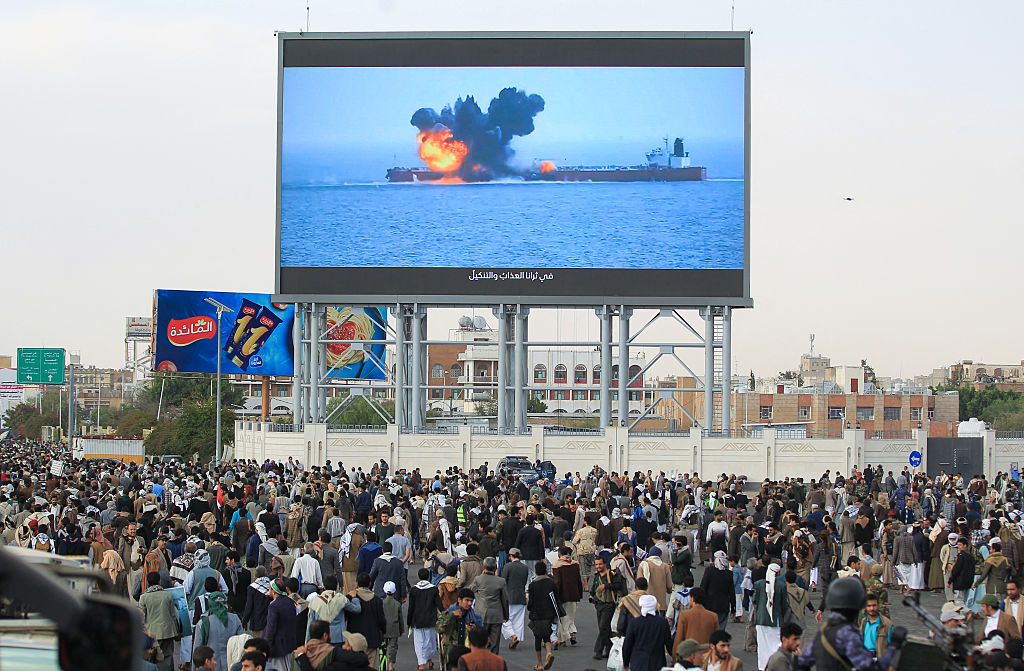
- Red Sea/Gulf of Aden: The Houthis have opened a maritime pressure front targeting commercial shipping and energy flows to impose global economic costs.
- Lebanon: Hezbollah operates within a calibrated escalation model — what can be described as a war of attrition and diversion — degrading adversaries without triggering fullscale conflict.
- Iraq: Iran-aligned militias execute distributed attacks on regional and international interests, acting as flexible instruments of multi-directional pressure.
This distribution is not incidental; it reflects a strategic design aimed at expanding the battlespace, dispersing adversary focus and reducing the feasibility of decisive retaliation.
Third: Long-term investment in asymmetric warfare capabilities
The effectiveness of this system is the result of sustained, long-term investment, not reactive mobilization. Iran has systematically developed proxy capabilities through:
- Transfer of advanced missiles and unmanned aerial vehicle technology
- Training in asymmetric and irregular warfare
- Expansion of long-range strike capabilities
- Establishment of integrated logistical and intelligence networks
These efforts have transformed proxy groups from localized militias into semiregular forces embedded within a regional combat system.
Fourth: Collapse of the “local actor” narrative
The confrontation has effectively dismantled the narrative that these groups operate as independent national movements. Instead, they exhibit clear characteristics of belonging to a transnational command structure:
- Ideological alignment with Velayat-e Faqih (Insistence that a senior Shia jurist oversee a state)
- Integration within a centralized chain of command
- Functioning as a forward defense layer for Iranian strategic interests
- Serving as instruments for externalizing conflict away from Iranian territory
This reflects a mature model of centrally managed proxy warfare, not decentralized partnership.
Fifth: Strategic implications for regional and global security
This war architecture presents a new category of strategic challenges:
- Threats to global commerce: Disruption of key maritime chokepoints (Red Sea, Bab el-Mandeb, Strait of Hormuz)
- Erosion of deterrence models: Attribution ambiguity complicates state-to-state response
- Persistent multifront pressure: Simultaneous escalation across theaters
- Sovereignty degradation: Armed actors operate beyond control of the state in which they reside
This is no longer a bilateral conflict. It represents a systemic shift in the nature of warfare.
Conclusion
The central lesson is clear: Targeting Iran alone is insufficient. The true center of gravity lies in its distributed regional network, which enables resilience, deniability and regeneration of conflict.
An effective strategy must therefore focus on:
- Disrupting the operational cohesion of the network
- Degrading its logistical and technological backbone
- Reinforcing state sovereignty where proxy forces operate
- Establishing a coordinated international framework to address this model as a transnational threat
Failure to address this architecture will allow the system to persist, adapt and regenerate, even if Iran itself is under sustained pressure.