

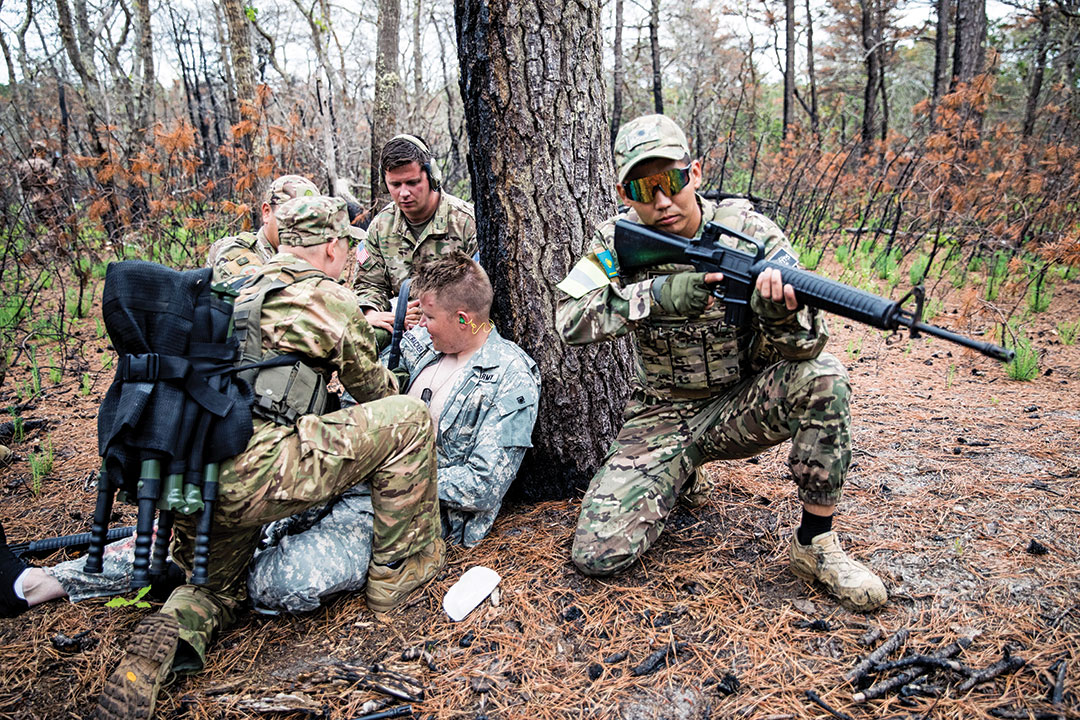
 In the context of growing geopolitical turbulence, changing strategic interests and challenges to international security, it is important to remember the history of cooperation between the United States and the countries of Central Asia, in particular with the Republic of Kazakhstan.
It was one of the first countries in the post-Soviet space to begin institutional military cooperation with the U.S. The reason for this was the accession of Kazakhstan to the State Partnership Program in 1993, among the 13 partnerships created in the first year of the program’s existence.
This pairing, with the National Guard from the U.S. state of Arizona, has annually expanded and become the basis for joint initiatives in military security focused on peacekeeping operations. The inclusion of Kazakhstan in the program was an important step toward forming an even deeper long-term partnership.
Kazakhstan not only joined the program early but also became a model for the development of similar partnerships in other Central Asian countries.
In the late 1990s, with the support of the U.S. and NATO, the first joint peacekeeping training events were held for servicemen from post-Soviet countries. Among them was the exercise Centrazbat-97, which involved 1,400 military personnel of the U.S., Kazakhstan, Uzbekistan, the Kyrgyz Republic, Türkiye, Russia, Georgia and Latvia.
Centrazbat-97 made history for U.S. and Central Asia forces. On September 15, 1997, about 500 paratroopers of the U.S. Army’s 82nd Airborne Division and 40 Soldiers of the Central Asian battalion of the United Nations auxiliary forces (including Kazakh, Uzbek and Kyrgyz servicemen) flew 12,000 kilometers from Fort Bragg, North Carolina, to Shymkent, Kazakhstan.
The mission involved eight C-17 transport aircraft that were refueled in the air three times during the journey.
U.S. Marine Corps Gen. Jack Sheehan, then commander of U.S. Atlantic Command, was the first paratrooper to make the jump. Just three days from retirement, the general emphasized the importance of demonstrating the reach of the U.S. military in the event of a crisis demanding its services.
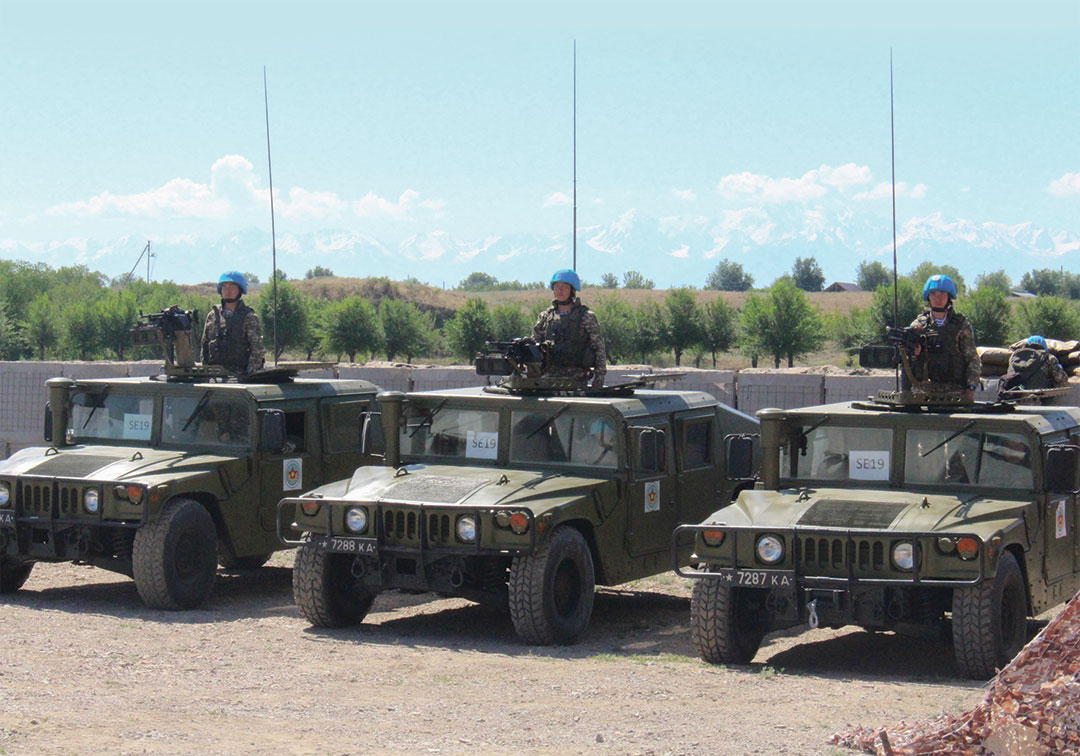
Such military cooperation laid the foundation for the creation of the Kazakhstan peacekeeping battalion Kazbat, which later participated in real-world operations as part of international coalition forces.
The logical continuation of Centrazbat was the organization of the Steppe Eagle peacekeeping military exercise initiated by the U.S., Kazakhstan and the United Kingdom. It has been held annually since 2003, mainly in Kazakhstan.
Steppe Eagle became the main platform for training Kazakh units for international peacekeeping missions and let them coordinate more smoothly with the Armed Forces of other participating countries.
The events of September 11, 2001, fundamentally changed the architecture of global security. At this critical moment, Kazakhstan confirmed its status as a responsible international partner, becoming the only Central Asian state to send troops to Iraq to support the international coalition.
The mission lasted about five years, including 10 rotations with the participation of hundreds of Kazakh servicemen who received practical experience in combat zones.
Kazakh personnel focused on critical tasks such as engineering reconnaissance, demining, medical support, humanitarian relief and rebuilding civilian infrastructure.
The work of the engineering unit was an indicator of the exceptional effectiveness of the mission. During the deployment, Kazakh specialists discovered and destroyed more than 4.5 million explosive objects, ensuring the safety of both allied troops and Iraqi civilians.
The fulfillment of tasks in the conflict zone required not only professionalism but also self-sacrifice. Capt. Kairat Kudabayev — one of the first officers commissioned in the newly independent Kazakhstan — gave his life while performing his duty as part of the international coalition.
The Kazakh Soldiers’ success in Iraq served as a powerful impetus for the development of Kazakhstan’s system of training military personnel. The practical skills acquired in real operations formed the basis for the establishment in 2008 of the Peacekeeping Training Centre (KAZCENT), since renamed the Peacekeeping Operations Centre. The center was created with the support of the U.S.
The center has become a leader in the region and is officially certified to prepare U.N. peacekeeping troops. This allows Kazakhstan not just to send contingents to U.N. missions, but also to provide high-level training to other countries’ peacekeeping troops.
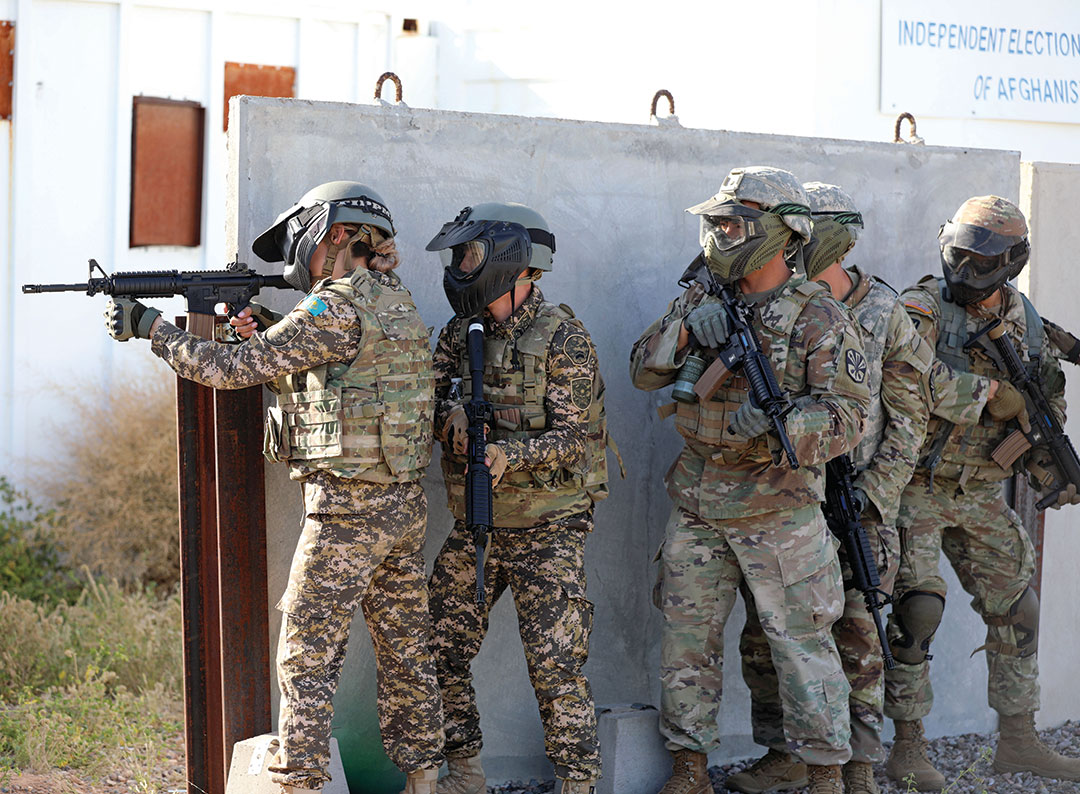
Thanks to this experience and preparation, Kazakhstan has expanded participation in international peacekeeping efforts by sending contingents and staff officers to U.N. peacekeeping missions in the Middle East and Africa, contributing to global peace.
During the withdrawal of coalition troops from Afghanistan in 2021, Kazakhstan became the only Central Asian country to send a military aircraft to Kabul airport. Working closely with coalition forces, Kazakh pilots evacuated citizens of Kazakhstan, the Kyrgyz Republic, Russia and Latvia. The operation confirmed high interoperability with international forces and Astana’s determination in a crisis.
In addition, Kazakhstan is recognized as a world leader in the return of citizens from combat zones. During the five stages of the humanitarian operation Jusan, conducted from 2019 to 2021 with key logistical support from the U.S., Kazakhstan repatriated and reintegrated more than 750 of its citizens from Iraq and Syria, the vast majority children.
Kazakhstan’s contribution was honored by the U.S. State Department, which called the operation a global benchmark and recommended other countries duplicate its success.
The history of cooperation between the U.S. and Kazakhstan isn’t confined to the pages of official agreements but is embodied by real experience gained during joint missions to combat global threats.
These achievements serve as an important reminder that partnerships and trust built in the past remain a critical foundation to confront new challenges to global security.