
After Iran attacked commercial vessels in the Strait of Hormuz in August 2026, killing innocent crewmembers, it alleged that the United States had attacked Iranian civilians in breach of international law. Tehran’s accusations were baseless, hypocritical and an attempt to deflect from the fact that Arabian Gulf nations have consistently denounced Iran’s violations of international law.
Aggression in the Strait of Hormuz
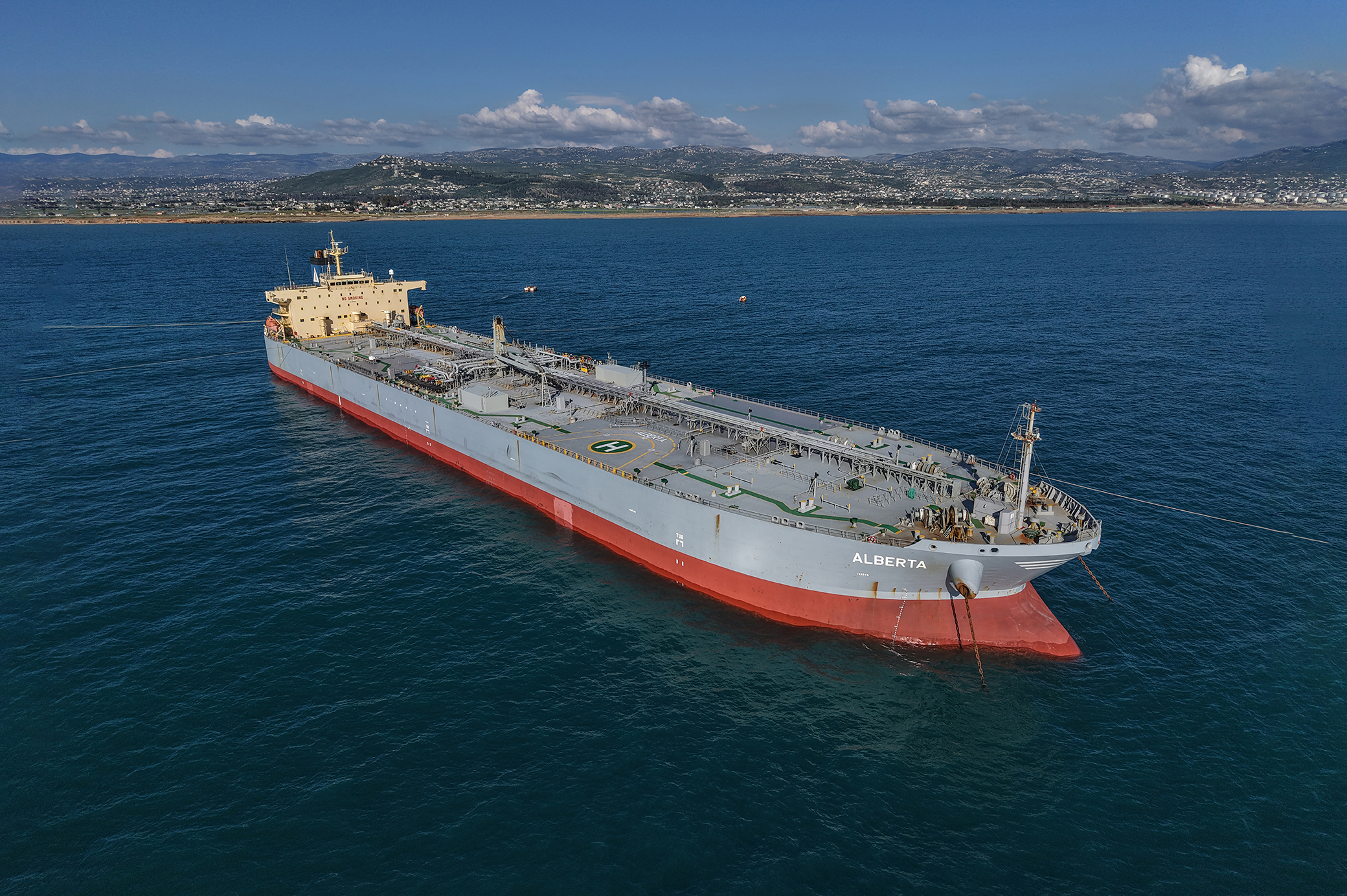
On August 31, 2026, Iranian forces fired at commercial tankers transiting the Strait of Hormuz — one Saudi Arabian-flagged and one Liberian-flagged — striking them minutes apart and killing two Philippine crew members. Saudi Arabia condemned the attack and underscored the importance of safeguarding international maritime safety and the Philippines offered condolences to the families of the seafarers.
Qatar likewise denounced the strikes as a blatant violation of international law, freedom of navigation and U.N. Security Council Resolution 2817. Iran’s Islamic Revolutionary Guard Corps (IRGC) later claimed the vessels had struck naval mines, contrary to all available evidence.
Nuclear Non-Proliferation Treaty violations
Iran’s attacks on foreign vessels are part of a pattern of disregard for international legal obligations. Since 2019, Iran has regularly obstructed International Atomic Energy Agency (IAEA) inspectors and failed to provide information about its nuclear activities, contrary to its commitments under Article III of the Nuclear Non-Proliferation Treaty. Saudi Arabia and the United Arab Emirates regularly denounced Iran’s persistent noncompliance, and the IAEA referred the matter to the U.N. Security Council — an escalation highlighting the seriousness of Iran’s violations.
Systemic human rights abuses and information suppression
The Iranian regime’s disregard for its international commitments extends beyond the nuclear domain, manifesting in severe human-rights abuses at home. During the Iranian Regime’s crackdown on nationwide protests earlier in 2026, its security forces killed thousands of its own citizens in violation of international law. The Iranian president acknowledged 3,117 deaths, but independent reports estimate the toll exceeds 30,000. These widespread, systemic killings violate multiple provisions of the International Covenant on Civil and Political Rights (ICCPR) — a U.N. treaty Iran ratified, including Article 6 (right to life), Article 14 (due process and fair trial) and Article 21 (peaceful assembly).
The U.N. Human Rights Council, which includes several Gulf Cooperation Council countries, condemned the killings, and Amnesty International has argued the violence was large and systematic enough to meet the Rome Statute’s criteria for crimes against humanity.
Following the nationwide domestic protests, the Iranian regime shut down internet access for 88 days, a measure that severely restricted Iranians’ ability to communicate. Such broad censorship violates Article 19 of the ICCPR, which protects the freedom to seek, receive and impart information.
Interfering abroad and sponsoring terrorism
Iran also has violated international law repeatedly by interfering in the internal affairs of its neighbors across the Middle East. During much of 2026, Iran has also directly attacked its neighbors, alleging the attacks are in response to U.S. actions. These attacks targeted oil installations, airports, desalination plants, embassies and other civilian infrastructure.
A broad Arab-Islamic coalition — including Azerbaijan, Bahrain, Egypt, Jordan, Kuwait, Lebanon, Pakistan, Qatar, Saudi Arabia, Syria, Türkiye and the UAE — issued a joint condemnation in March 2026 of Iran’s blatant attacks, which Oman separately condemned.
In August 2026, Saudi Arabia, Türkiye and Pakistan announced the Mecca Joint Defence Agreement. The U.N. Security Council adopted Resolution 2817, condemning the egregious attacks and demanding respect of international law.
Iran also has persistently interfered in the internal affairs of other states by sponsoring terrorist groups. A sovereign state has the right to determine its political, economic and social systems and pursue its foreign affairs without external coercion. Under Article 2 of the U.N. charter, members must respect the sovereignty of other nations and refrain from interfering in their internal affairs.
Iran’s sponsorship of terrorism, including providing training, weapons and money to Hezbollah in Lebanon, Hamas in Gaza and the Houthis in Yemen, contravenes these core principles.
Despite its own systematic violations of international law, Tehran hypocritically levies accusations against other states. Only two days after its attacks on Saudi and Liberian civilian vessels, Iran submitted two letters to the U.N. alleging that U.S. strikes and economic sanctions affecting civilians since February 2026 have breached international law. Washington reaffirmed that it never targets civilians. Although collateral damage and economic effects on civilians from legitimate military objectives are unfortunate byproducts, this is distinct from Iran deliberately targeting civilians hundreds of times in violation of international law.
Tehran also recently accused Ukraine of violating international law. In late July 2026, Ukraine used long-range drones against several military-linked targets in the Caspian Sea to disrupt supply routes supporting Russia’s ongoing invasion. The strikes damaged a Russian missile warship, a Russian oil platform, multiple sanctioned cargo vessels and an Iranian-flagged vessel involved in shipments to Russia.
Tehran labeled the strikes illegal and unjustified and filed a protest with the U.N. alleging that Ukraine violated Article 2(4) of the U.N. charter. Tehran said the Iranian commercial vessel was carrying no military cargo but instead was transporting rolled sheet iron. Ukraine maintains that the Iranian ship was carrying components for drones and missiles to Russia.
Andrii Sybiha, Ukraine’s foreign minister, emphasized that the “Tehran regime is a direct accomplice to Russian aggression against Ukraine, fueling Moscow’s criminal war with weapons that have killed Ukrainians since 2022.”
Since 2022, Iran has steadily supplied Moscow with kamikaze-style Shahed drone in various stages of assembly. Depending on the model, these drones have a range of roughly 1,500 miles and deliver a 110-pound explosive guided by satellite navigation. At about $20,000 per unit, Russia launches an estimated 6,500 to 8,100 drones a month, contributing substantially to civilian casualties and widespread destruction across Ukraine.
Iran’s allegation that Ukraine violated international law does not withstand legal scrutiny. Ukraine’s actions in the Caspian Sea fall squarely within its inherent right of self-defense under Article 51, which preserves a state’s right to self-defense. Russia has subjected Ukraine to continuous armed attacks for years, relying heavily on Shahed drones. In this context, Ukraine reasonably assumed that interdicting Russian-Iranian supply routes would reduce further attacks.
Iran’s hypocrisy
Tehran’s allegations of illegality ring hollow in light of its pattern of conduct in the Strait of Hormuz. Iran has repeatedly struck commercial vessels from numerous nations performing transit passage under the U.N. Convention on the Law of the Sea Articles 34-45, offering vague references to security or retaliation.
On August 8, 2026, for example, Iran struck an unarmed commercial vessel from the UAE with a missile as it crossed Hormuz. The UAE condemned the attack as an act of piracy, while Iran tried to portray the attack as a navigation safety measure to try to mask coercion as legitimate regulation. Iran also has attacked commercial vessels from Gibraltar, Japan, Malta, the Marshall Islands, Panama and Thailand, reflecting Iran’s broader attempt to assert unlawful control over the strait.
Iran does not have absolute sovereignty over the Strait of Hormuz. It is an international waterway and foreign vessels enjoy protected right-of-transit passage. Under Article 44 of UNCLOS, coastal states may adopt navigation safety regulations and pollution prevention measures but may not impede transit passage. Iran’s repeated attacks on unarmed commercial vessels exceed these limitations, draw widespread condemnation and highlight Iran’s willingness to use force against civilian shipping.
Upholding international law
When nations adhere to international law, the world benefits from the increased sense of security, order and predictability. The value of that system lies in the shared expectation that states will not deliberately target civilians or interfere unlawfully in others’ affairs.
Iran’s serial violations of international law, coupled with its baseless accusations against others, have eroded its standing with its neighbors. Despite the Iranian regime’s claims of innocence, Arabian Gulf countries have consistently condemned Iran’s actions, reinforcing their collective commitment to the rule of international law. Unity among Gulf nations in defense of international law remains essential to preserve stability, security and prosperity across the Middle East and beyond.