

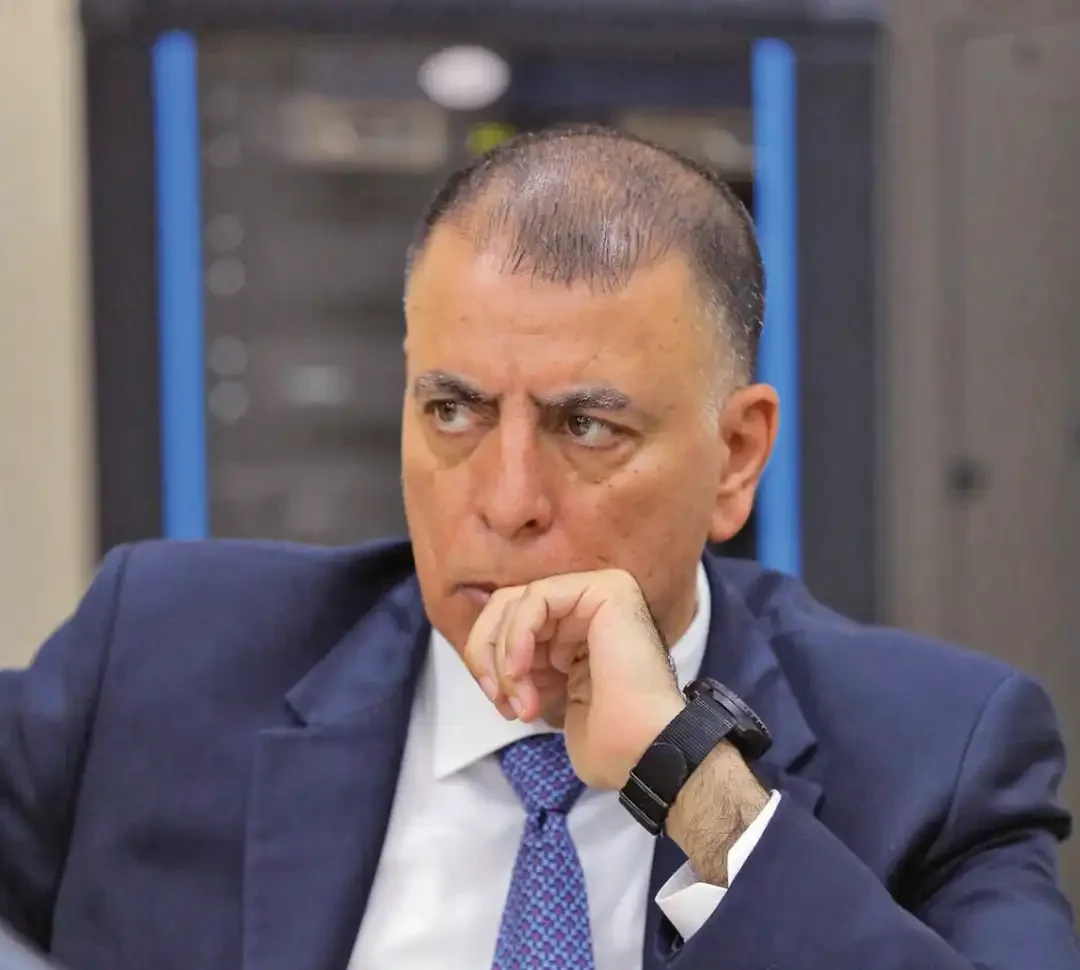
I would like to express my gratitude to our friends at United States Central Command for inviting us to contribute to this important issue of Unipath, which focuses on confronting complex threats that threaten national sovereignty. We in Jordan have gained a wealth of field experience because of our location in a region plagued by multiple conflicts that could have seeped across borders had it not been for the vigilance of our security forces.
We all remember how terrorists infiltrated Jordan from Iraq in 2006 and committed massacres by bombing hotels. Those attacks were planned by Al-Qaida in Iraq, which controlled areas north and west of Baghdad. Whenever a safe environment for terrorism exists, it becomes a launching pad for attacks on neighboring countries or across oceans.
With the outbreak of civil war in Syria and several cities falling outside government control, terrorist organizations found fertile ground for manufacturing bombs and recruiting and equipping suicide bombers. Countries with malicious agendas support some of these groups in an attempt to destabilize the region. Jordan witnessed widespread drug smuggling across the Syrian border. The majority of these drugs were controlled by the former regime and its supporting militias to finance their operations, acquire advanced weapons and destroy communities in the region. The situation escalated into major military confrontations between the Jordan Armed Forces and drug smugglers, and our men crushed the enemy.
With a new administration and government in Syria, I believe we are entering a different phase that shows positive signs. Large-scale smuggling has declined and been limited to a few traffickers. Nevertheless, complete control of the borders cannot be achieved overnight.
The so-called Muslim Brotherhood is no longer a framework for legitimate public action. Rather, it has become an outlaw entity acting in secret that directly threatens security and societal unity. The presence of weapons and explosives and their covert activities in residential neighborhoods are unacceptable. No self-respecting state would allow dual allegiances, nor entities operating outside its legitimate institutions.
In 2020, Saudi Arabian oil installations witnessed an attack by swarms of slow-speed, low-altitude drones that evaded radar and air defenses. These attacks disrupted the global economy and forced countries to change their air defense strategies. After the events of October 7, 2023, the fall of Syria’s Assad regime and the waning influence of Iranian-backed militias, the world has witnessed a new pattern of unconventional warfare that has changed standard fighting doctrines. We now find ourselves confronting new threats that are different from those we faced in the previous 20 years.
The world was surprised by the missile capabilities of the Houthi terrorist organization, which attacked commercial ships and paralyzed global shipping through the Bab el-Mandeb strait. Despite damaging airstrikes against the Houthis, they have not lost their ability to launch ballistic missiles and continue to threaten freedom of navigation. There is no doubt that the technologies available to the Houthis are not domestically produced but were provided by countries that possess these capabilities. We commend the role of our brothers and friends in exchanging intelligence and imposing financial sanctions on the networks that finance, support and act as fronts for this terrorist octopus.
These complex threats cannot be defeated by conventional warfare nor by a single country, regardless of its military capabilities. Rather, they require the combined security and intelligence efforts of friendly countries. Had it not been for international sanctions imposed on financing networks, we would not have been able to dry up the sources of terrorist financing. Had it not been for cooperation with friendly countries, we would not have been able to capture supporters who use aliases in countries in the region and have fronts that sponsor terrorism but appear to the public as ordinary businesses.
True citizenship is the cornerstone of building a strong Jordanian state that can face challenges and crises, whatever form they take. This is not limited to simply holding a national identity card, but rather is a practical commitment and national responsibility that is reflected in an individual’s daily behavior and loyalty to their country. Every Jordanian citizen enjoys equal rights and, in return, has duties related to protecting the security and stability of the homeland and preserving its unity.
Citizens must work to develop themselves and their abilities to be productive and active members of society. It is vital to emphasize the role of the family in raising a generation that embodies national values and believes in honest work and achievement. The value of a citizen is measured by positive work and civilized behavior, not by tribal or regional affiliation. We must work to fortify national unity and close ranks in the face of attempts to sow discord or hatred.
It is certain that, under the leadership of His Majesty King Abdullah II ibn Al-Hussein and with the diligence of the Jordanian people, Jordan will remain strong and united thanks to citizens who believe in their homeland.
Mazen Al-Faraya, Minister of the Interior Hashemite Kingdom of Jordan