

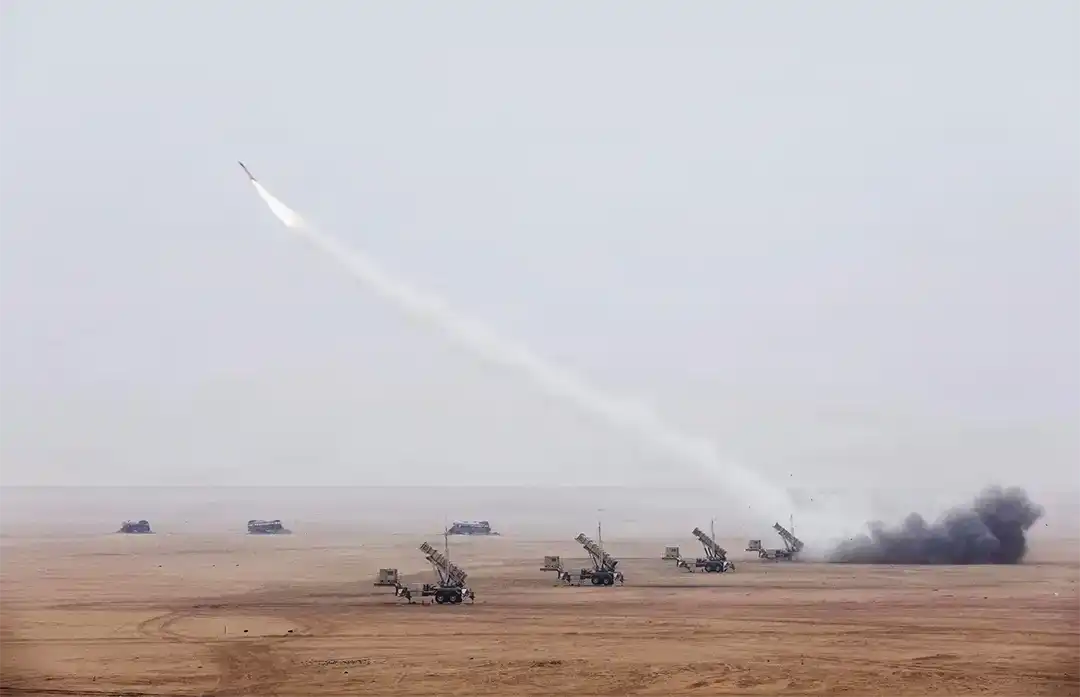
Kuwait plans to invest in upgrades for its U.S.-built Patriot missile systems to defend against aerial attacks.
Kuwait is a Major Non-NATO Ally of the United States, and the U.S. Department of State has approved $800 million worth of improvements to Kuwait’s Patriot batteries that include spare parts, maintenance, improved radar tracking and training for crews.
Patriot is a mobile surface-to-air interceptor, usually affixed to the back of a truck, designed to shoot down enemy aircraft and ballistic missiles. Kuwait activated some of its Patriot launchers to shoot down Iranian ballistic missiles targeting Ali Al Salem Air Base in March 2026.
Kuwait has maintained strategic relations with the U.S. since gaining independence from the United Kingdom in 1961. However, the partnership between the two countries deepened after the U.S. led an international coalition to liberate Kuwait in 1991.
Since then, Kuwait has served as a logistical hub for U.S. forces in the region, with U.S. troops stationed at camps Arifjan and Buehring, in addition to Ali Al Salem.
The Arabian Gulf state also hosts the forward headquarters of Combined Joint Task Force – Oper-ation Inherent Resolve. U.S. troops stationed in these locations constitute a forward operating base for U.S. Central Command to promote security and stability through counterterrorism efforts in Iraq, Syria and other areas of the Middle East.
Aimed at enhancing interoperability, maritime security and air defense capabilities, the two countries conduct joint exercises, including Eager Defender and Marauder Shield.
Sources: defensehere.com, U.S. Defense Security Cooperation Agency, U.S. State Department