

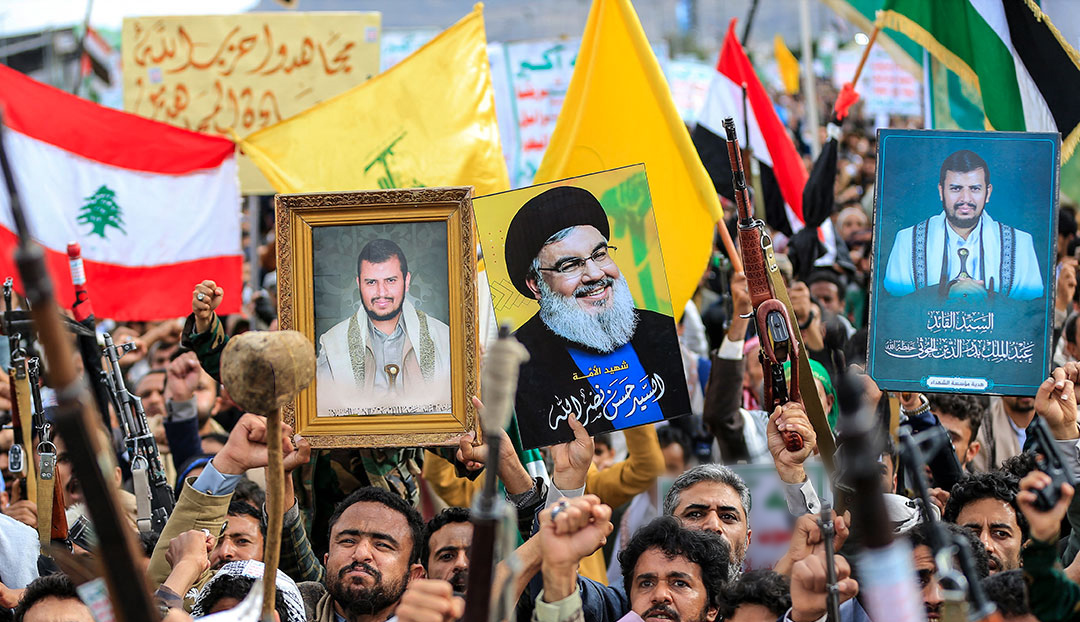
- The Houthis serve the agenda of Iran’s Islamic Revolutionary Guard Corps
- Iran uses indoctrination and coercion to destabilize the Middle East
- Iran’s proxies are not independent, but tools of Iranian expansion
What the Houthi movement promotes under the slogan “Unity of Fronts” is not a doctrine of solidarity, resistance or regional coordination. It instead is a dangerous model for the internationalization of instability designed to weaken sovereign states from within, fracture national cohesion and turn Arab countries into open arenas for external influence, militia expansion and proxy warfare.
This so-called unity is not organic. It is not rooted in the interests of the peoples of the region. It instead reflects a transnational network of influence led by Iran, built through militias, ideological indoctrination, political coercion and armed intimidation. Its objective is clear: impose political realities by force, undermine state institutions and replace national decision-making with allegiance to an external revolutionary project.
In Yemen, the Houthi militia has long abandoned any claim to being a purely local actor pursuing national objectives. Its conduct, messaging, narrative, alliances and military behavior demonstrate that it is a component within a broader regional system aligned with the strategic vision of the Islamic Revolutionary Guard Corps.
The Houthis do not serve Yemen. They serve as a tool within an Iranian-backed architecture that exploits Yemen’s suffering, geography and institutions to advance ambitions far beyond Yemen’s borders.

Their public rhetoric leaves little room for ambiguity. Their repeated declarations of loyalty to Tehran, their alignment with Iranian regional priorities and their willingness to escalate according to external calculations all reveal a dangerous reality: The center of decision-making has moved outside Yemen. National sovereignty has been subordinated to foreign agendas, and the interests of the Yemeni people sacrificed for the benefit of a wider destabilizing project.
The consequences of this transformation no longer are confined to Yemen. The Houthis’ conduct, particularly in the maritime domain, poses a direct threat to international shipping lanes, global energy security and freedom of navigation. By exploiting Yemen’s strategic location near vital waterways, the militia has turned the country into a pressure point in broader geopolitical confrontations that have nothing to do with the aspirations, security or welfare of the Yemeni people.
This pattern is not unique to Yemen. Across several Arab contexts, Iran-aligned networks have followed the same destructive path: weakening national institutions, prolonging armed conflicts, obstructing political settlements, spreading sectarian and ideological polarization, and transforming local crises into long-term regional and international security challenges. The result is not resistance. It is the systematic erosion of state sovereignty and the normalization of militia power over national authority.
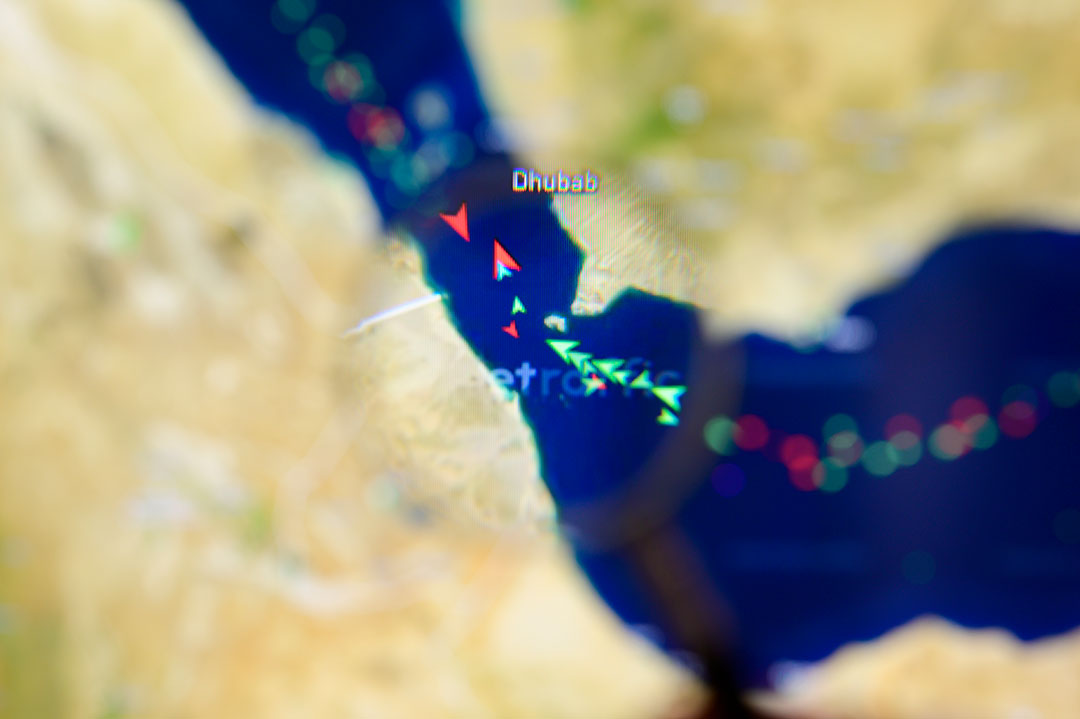
The international community can no longer afford to treat the Houthis as an isolated internal Yemeni issue. Such an approach misreads the nature of the threat and underestimates its reach. We must place the Houthis within the wider framework of Iran-aligned proxy networks operating across borders, coordinating narratives, sharing tactics and advancing a common agenda that threatens regional security and international stability.
Ignoring these links — or responding to them with hesitation — only encourages the expansion of this model. It leaves the region vulnerable to a network that recognizes neither state sovereignty nor peaceful coexistence, and that thrives on chaos, fragmentation and the weakening of legitimate national institutions.
Yemen is not merely a theater of conflict. Yemen is a sovereign Arab state. Its stability is inseparable from the security of the region, the safety of international waterways and the integrity of the global order. Protecting Yemen from this transnational network is not only a Yemeni national priority but also is a regional and international necessity.