

Close Menu
Unipath
    Facebook X (Twitter) Instagram
    Facebook X (Twitter) Instagram
    Unipath
    • English
      • Русский(Russian)
      • العربية(Arabic)
      • Kurdish
    Subscribe
    • Home
    • Features

      Steadfast on the Seas

      April 24, 2026

      Iraq’s Soft-power Approach to Countering Violent Extremism

      April 24, 2026

      Tightening Border Control

      April 23, 2026

      The Effectiveness of Military Confrontation in Defeating Terrorism

      April 23, 2026

      Overseeing the Police

      April 23, 2026
    • Departments
      1. Senior Leader Profile
      2. Around the Region
      3. Key Leader’s Message
      4. View All

      A Protector of Ports

      March 5, 2026

      Building a Professional Naval Force

      December 31, 2025

      Professionalism in the Service of Counter-Terrorism

      August 11, 2025

      A Special Soldier to Command Special Forces

      April 9, 2025

      Iraq Champions Diplomacy To Resolve Conflict

      April 23, 2026

      Kazakhstan, U.S. Reinforce Relationship

      April 23, 2026

      Egyptian Security Forces Raid Terrorist Hideout

      April 23, 2026

      Ak Shumkar Exercise Strengthens Kyrgyz-U.S. Partnership

      April 23, 2026

      Key Leader’s Message

      March 25, 2026

      Key Leader’s Message

      January 2, 2026

      Key Leader’s Message

      August 15, 2025

      Key Leader’s Message

      April 11, 2025

      Iraq Champions Diplomacy To Resolve Conflict

      April 23, 2026

      Kazakhstan, U.S. Reinforce Relationship

      April 23, 2026

      Egyptian Security Forces Raid Terrorist Hideout

      April 23, 2026

      Ak Shumkar Exercise Strengthens Kyrgyz-U.S. Partnership

      April 23, 2026
    • About Unipath
      • About Us
      • Subscribe
      • Contact
    • Contribute
    • Archive
    • English
      • Русский(Russian)
      • العربية(Arabic)
      • Kurdish
    Unipath
    Home » In Yemen’s Conflict, Children Pay the Price
    Around the Region

    In Yemen’s Conflict, Children Pay the Price

    UnipathBy UnipathJuly 21, 2022Updated:July 26, 202202 Mins Read
    Share
    Facebook Twitter Telegram WhatsApp Copy Link

    UNIPATH STAFF

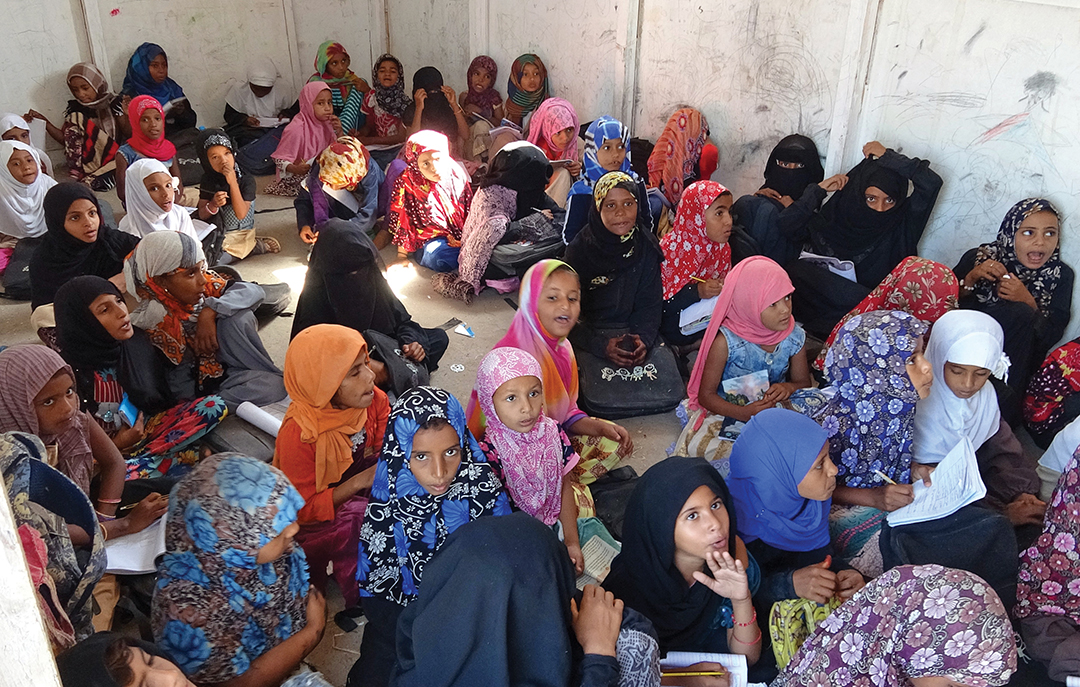
    Six years of ongoing conflict between the legitimate Yemeni government and the Houthi militia have, among other things, deprived more than 2 million children of education, according to a UNICEF report.

    In 2015, about 890,000 children were out of school, less than half the current amount. The significant increase reflects the accelerating deterioration of the situation in Yemen, pressing the international community to find a solution to end one of the world’s worst humanitarian crises.

    Many fear those children will never return to school, hampering Yemen’s development and prospects for recovery. Even those remaining in school did not always receive a quality education because of school and teacher shortages. Many school buildings have suffered from the civil war — being damaged, converted into shelters or occupied by the Houthi militia. 

    The world has watched in horror as the Houthis have taken advantage of uneducated children and pressed thousands into combat to alleviate troop shortages. Some of this recruitment is conducted under the guise of providing summer camps for idle children.

    Between March 2015 and February 2021, more than 3,600 Yemeni children were recruited by armed groups, and earlier it was reported that 17% of Yemen’s children between the ages of
    5 and 17 were exploited for their labor.

    The United Nations estimates that eight of 10 Yemeni children live with families whose incomes are insufficient to meet basic life needs. An estimated 170,000 teachers have not been paid for four years. Yemeni literacy rates lag behind much of the world, especially in rural areas.

    Article 54 of Yemen’s Constitution stipulates that education is a right for all citizens. Part of it reads: 

    “The state shall guarantee education in accordance with the law through building various schools and cultural and educational institutions. Basic education is obligatory. The state shall do its best to obliterate illiteracy and give special care to expanding technical and vocational education. The state shall give special attention to young people and protect them against wrong thinking, provide them with religious, mental, and physical education, and the appropriate environment to develop their aptitude in all fields.”

    Sources: UNICEF, aljazeeara.net 

    Share. Facebook Twitter Pinterest LinkedIn Tumblr Email
    Previous ArticleUAE Promotes Domestic Defense Industry
    Next Article Saudi Arabia Finances Yemeni Scholarships

    Related Posts

    Iraq Champions Diplomacy To Resolve Conflict

    April 23, 2026

    Kazakhstan, U.S. Reinforce Relationship

    April 23, 2026

    Egyptian Security Forces Raid Terrorist Hideout

    April 23, 2026

    Comments are closed.

    PEACE AND RECONCILIATION | VOLUME 13, NUMBER 4 WINTER 2026

    Subscribe Today

    Subscribe to our mailing list to get the latest edition of Unipath.

    Unipath
    Facebook X (Twitter) Instagram
    © 2026 Unipath. All Rights Reserved.

    Type above and press Enter to search. Press Esc to cancel.