

The Yemeni Coast Guard enforces maritime law and protects the territorial waters of the Republic of Yemen. The Coast Guard was established in 2002 and went into operation in 2003. Its scope of work expanded in 2004 to include protecting ports and vital facilities, combating crime at sea and providing search and rescue services. Its area of responsibility stretches across more than 2,500 kilometers of coastline, which includes the Red Sea, the Gulf of Aden, the Arabian Sea and the Indian Ocean, as well as several Yemeni islands and strategic waterways such as the Bab el-Mandeb.
In the realm of protecting territorial waters, the Coast Guard provides port security, secures international shipping lanes, combats smuggling, piracy, and illegal fishing, conducts search and rescue operations, and protects the marine environment. Despite significant challenges posed by the ongoing conflict, the Coast Guard continues to perform its duties and cooperates with international partners to enhance national and regional maritime security.

Boosting effectiveness
In November 2024, the Yemeni Coast Guard announced a comprehensive strategy to rebuild its capabilities, recognizing the importance of its vital role in protecting territorial waters, securing maritime trade and combating illegality. The Coast Guard stands at a crossroads, continuing its mission with limited resources at a time of escalating threats, particularly terrorist attacks by Iran-backed Houthi militias, which pose a direct threat to the security of the Red Sea and the Gulf of Aden. These threats have depressed Yemen’s economy and global trade by increasing insurance and shipping costs and disrupting maritime trade.
In response to these challenges, the Presidential Leadership Council and the Yemeni government have mapped out a clear path to enhance maritime security, including rebuilding and developing the Coast Guard to enable it to counter these threats, strengthening cooperation with international partners to ensure better coordination, and supporting the national economy by protecting vital shipping lanes.
Support from the British government and our brothers in Saudi Arabia led to the creation of the Yemeni Maritime Security Partnership. This provides a practical framework for turning this vision into reality by developing operational capabilities, improving infrastructure, and building an integrated maritime security system. Support from international partners represents an investment not just in the Yemeni Coast Guard but in regional stability and protection of global trade.
In light of the growing security challenges along Yemen’s 2,500-kilometer coastline, the Yemeni Coast Guard stands out as one of the main pillars for protecting regional and international maritime security. Between combating smuggling and piracy and securing vital maritime corridors, Coast Guard personnel are on the front lines defending against complex threats.
Smuggling and Piracy
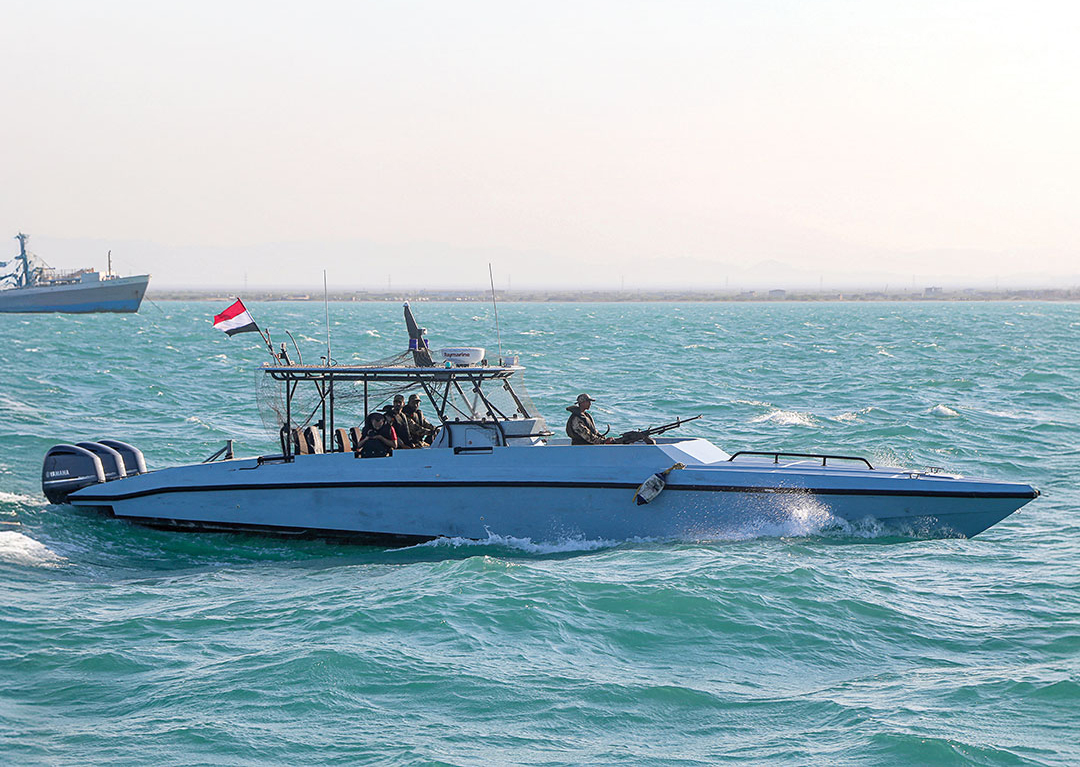
The main mission of the Coast Guard is to combat all forms of smuggling, particularly of weapons, ammunition, narcotics, fuel and human beings. These crimes threaten not only Yemen’s security, but also that of the entire region. The Coast Guard also plays an important role in protecting commercial vessels from piracy that threatens international trade passing through the Red Sea and the Gulf of Aden.
The Coast Guard and its partners — which include the National Resistance Forces on the western coast and the U.S. Navy’s 5th Fleet — achieved successes in 2025. The most notable of these was intercepting an Iranian ship carrying drugs off the coast of Al-Mahra and three other ships in the southern Red Sea region carrying large quantities of fertilizers and advanced weapons en route to Houthi militias. The partners also seized hundreds of kilograms of narcotics and foiled attempts to smuggle hundreds of migrants into Yemen. These successes confirm the effectiveness of interdiction efforts and the ability of the Coast Guard to operate in complex environments.
Equipment and training needs
The Coast Guard realizes that continuous training for its personnel with access to necessary equipment is the best guarantor of high performance. That’s why it is keen to participate in international exercises, especially with partner navies, to gain practical experience and learn about the latest methods of surveillance, interception and rescue. These exercises improve operational coordination and speed up response times to threats.
Through the use of liaison officers, the Yemeni Coast Guard has close working relationships with Combined Maritime Forces, the 47-nation naval coalition based in Bahrain, and the U.S. 5th Fleet Task Force. This relationship enhances maritime intelligence sharing, improves coordination for search and rescue operations, and strengthens maritime security in the Red Sea and the Gulf of Aden. The Coast Guard also welcomes support from multinational partners in the form of modern vessels, surveillance systems, advanced communications equipment, and sustainable training and maintenance programs.
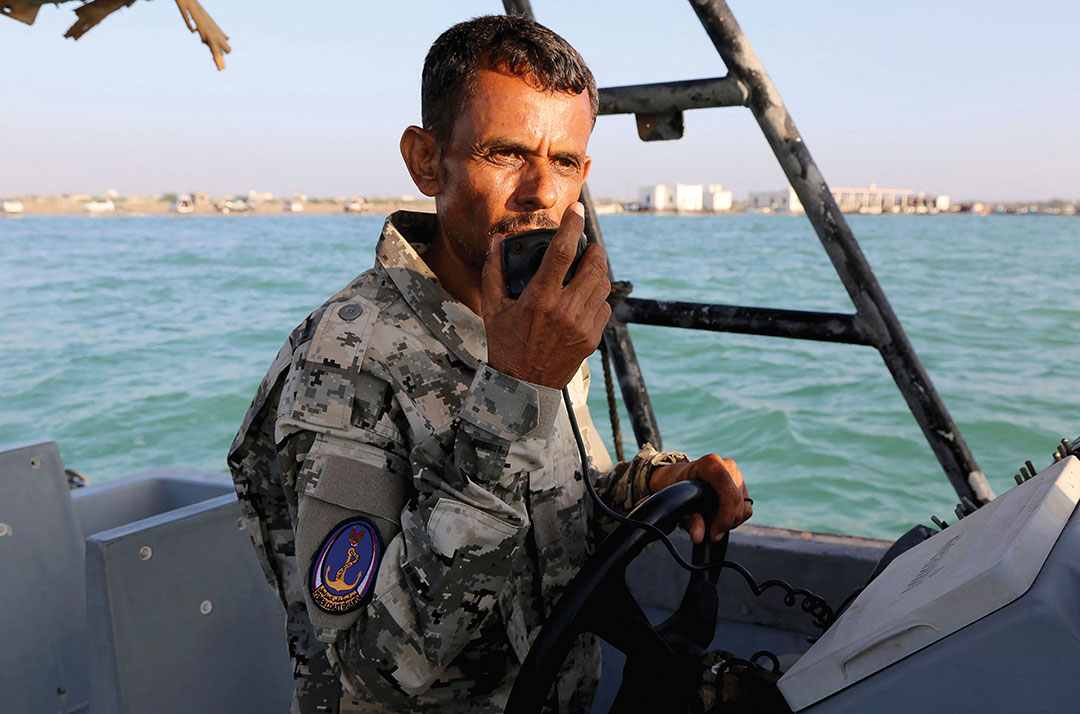
Although the Coast Guard has several thousand personnel and a fleet of small boats, the length of the coastline and the scale of the challenges exceed its current capabilities. The leadership has adopted a comprehensive plan to train more of its personnel in specialized fields, modernize boats, and expand the surveillance and control network to ensure effective coverage of the entire coastline.
Cooperation is not limited to the United States and Europe. Regional neighbors bordering the Red Sea and the Gulf of Aden also help by sharing intelligence, coordinating maritime operations and inviting Yemeni troops to joint exercises.
Conclusion
In a world where maritime threats are increasing and organized crime is evolving, the Yemeni Coast Guard continues to perform its role with determination and resolve, drawing on deep field experience, strong partnerships, and a clear vision for development. Protecting the coastline benefits not just Yemen but also international maritime security and regional stability.