

Close Menu
Unipath
    Facebook X (Twitter) Instagram
    Facebook X (Twitter) Instagram
    Unipath
    • English
      • Русский (Russian)
      • العربية (Arabic)
      • Kurdish
    Subscribe
    • Home
    • Features

      Multinational Forces Prepare for modern Missions

      December 3, 2025

      An Invincible Team

      December 2, 2025

      The Power of the U.S. Department of War Rewards Program

      October 28, 2025

      Cohesion in a Crisis

      October 23, 2025

      Many Countries, One Mission

      September 19, 2025
    • Departments
      1. Senior Leader Profile
      2. Around the Region
      3. Key Leader’s Message
      4. View All

      Professionalism in the Service of Counter-Terrorism

      August 11, 2025

      A Special Soldier to Command Special Forces

      April 9, 2025

      A Forceful Voice Against Violent Extremists

      October 18, 2024

      Service to the State

      January 24, 2024

      Egypt Plays Pivotal Role in Stabilizing the Middle East

      August 11, 2025

      Pakistan’s Air Force Supports Iraqi Counterparts

      August 11, 2025

      Arabian Gulf States Uphold Kuwaiti Sovereignty Over Offshore Gas Field

      August 11, 2025

      Tajikistan Strengthens Security Partnership with Kuwait

      August 11, 2025

      Key Leader’s Message

      August 15, 2025

      Key Leader’s Message

      April 11, 2025

      Key Leader’s Message

      January 13, 2025

      Key Leader’s Message

      August 6, 2024

      Key Leader’s Message

      August 15, 2025

      Professionalism in the Service of Counter-Terrorism

      August 11, 2025

      Egypt Plays Pivotal Role in Stabilizing the Middle East

      August 11, 2025

      Pakistan’s Air Force Supports Iraqi Counterparts

      August 11, 2025
    • About Unipath
      • About Us
      • Subscribe
      • Contact
    • Contribute
    • Archive
    • English
      • Русский (Russian)
      • العربية (Arabic)
      • Kurdish
    Unipath
    Home»Features»Multinational Forces Prepare for modern Missions
    Features

    Multinational Forces Prepare for modern Missions

    More than 8,600 troops engage at the Egyptian-U.S.-sponsored Bright Star military exercise
    UnipathBy UnipathDecember 3, 2025No Comments11 Mins Read
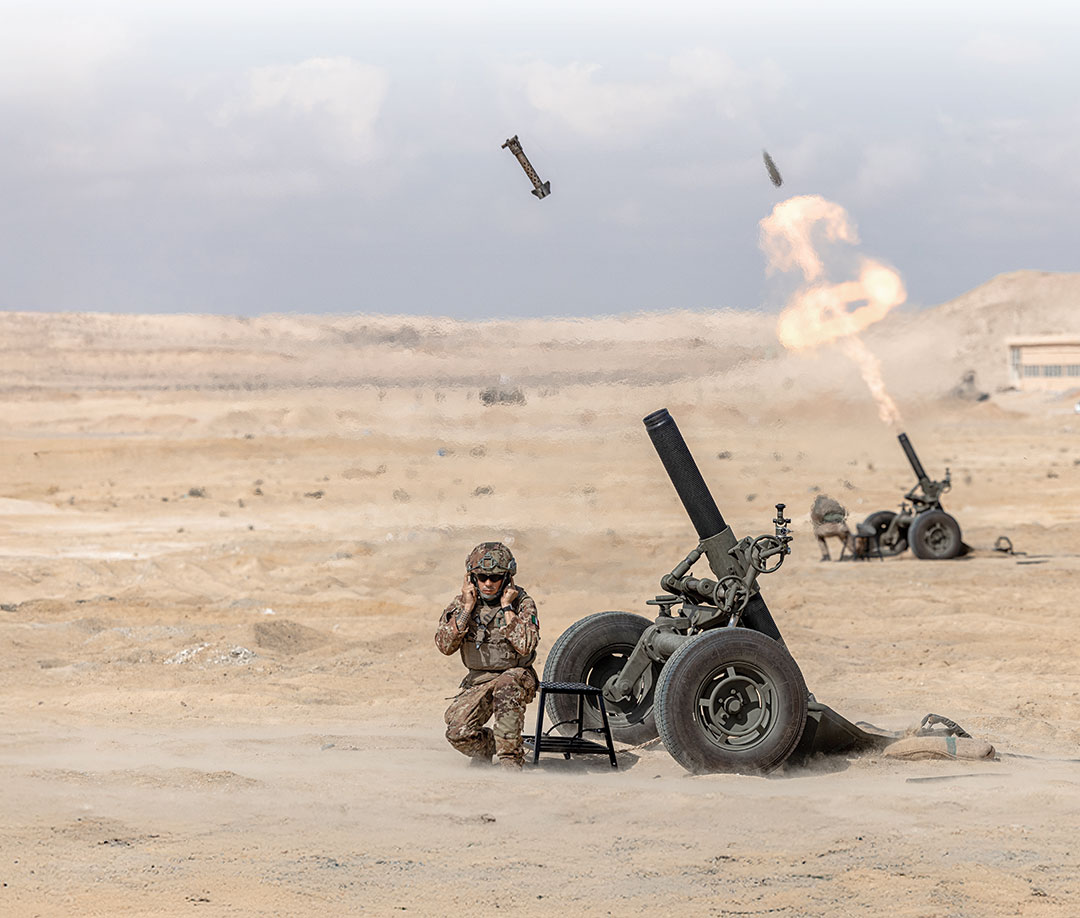
    Troops at Bright Star 2025 take gunnery practice at Mohamed Naguib Military Base. JOSEPH KUMZAK/U.S. ARMY
    Share
    Facebook Twitter Telegram WhatsApp Copy Link

    A small, unmanned quadcopter drone — something available on the commercial market for a few hundred dollars — crashes near a village.

    Green smoke streams from a canister affixed to the body of the drone. A yell shatters the morning air: “Gas!”

    Five villagers collapse on the ground, gagging and writhing. It’s a sign of exposure to a chemical warfare agent that, left untreated, can asphyxiate its victims.

    A multinational team of Egyptian, Qatari and Indian Soldiers arrives on the scene.

    “Deploy the robot!” a Soldier shouts as a remote-controlled vehicle rolls up to investigate the drone wreckage. Qatari troops expert in identifying chemical, biological and radiological agents take samples from the scene. They suspect the gas is a nerve agent called VX.

    In a quickly assembled mass casualty decontamination center, Egyptians and Indians wearing hazardous material suits scour victims clean of contaminants before ambulances rush them to a hospital.
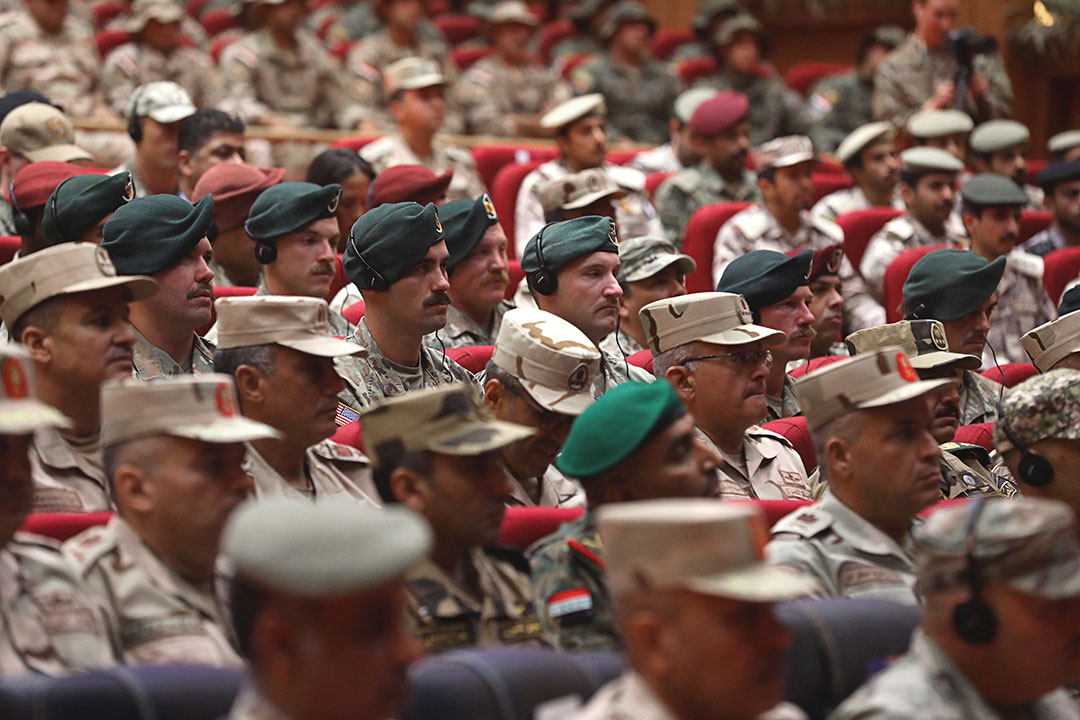
    Multinational service members attend the Bright Star 2025 opening ceremony. STAFF SGT. ANDREW VALENZA/U.S. ARMY

    A focus on teamwork across military organizations — units that in some cases had never worked together before — brought more than 8,600 multinational troops to Egypt to train at the Bright Star 25 military exercise.

    Running August 28 to September 10, 2025, Bright Star focused on modern hybrid threats requiring land, sea and air forces to operate as partners to uphold regional security. Many of these threats are stealthy operations meant to bypass direct confrontation with superior forces, but Bright Star shaped its training scenarios for the demands of such contemporary warfare.

    Fourteen nations supplied the training audience for Bright Star. In addition to large contingents from Egypt and the United States, training events engaged forces from Jordan, Kuwait, the Kyrgyz Republic, Qatar, Saudi Arabia, Yemen, Cyprus, Greece, India, Italy, South Africa and the United Kingdom. Thirty-four countries sent observers. 

    Lt. Gen. Ahmed Khalifa, chief of staff of the Egyptian Armed Forces, praised Bright Star as one of the largest joint military exercises in the world. Since first holding Bright Star in 1980, Egypt and the U.S. have held the exercise 19 times.

    “I would like to emphasize the importance of joint exercises, especially Bright Star, given the large number of participating countries and the exchange of expertise and knowledge they provide to all parties involved,”Lt. Gen. Khalifa said as he presided over preparations for the exercise.
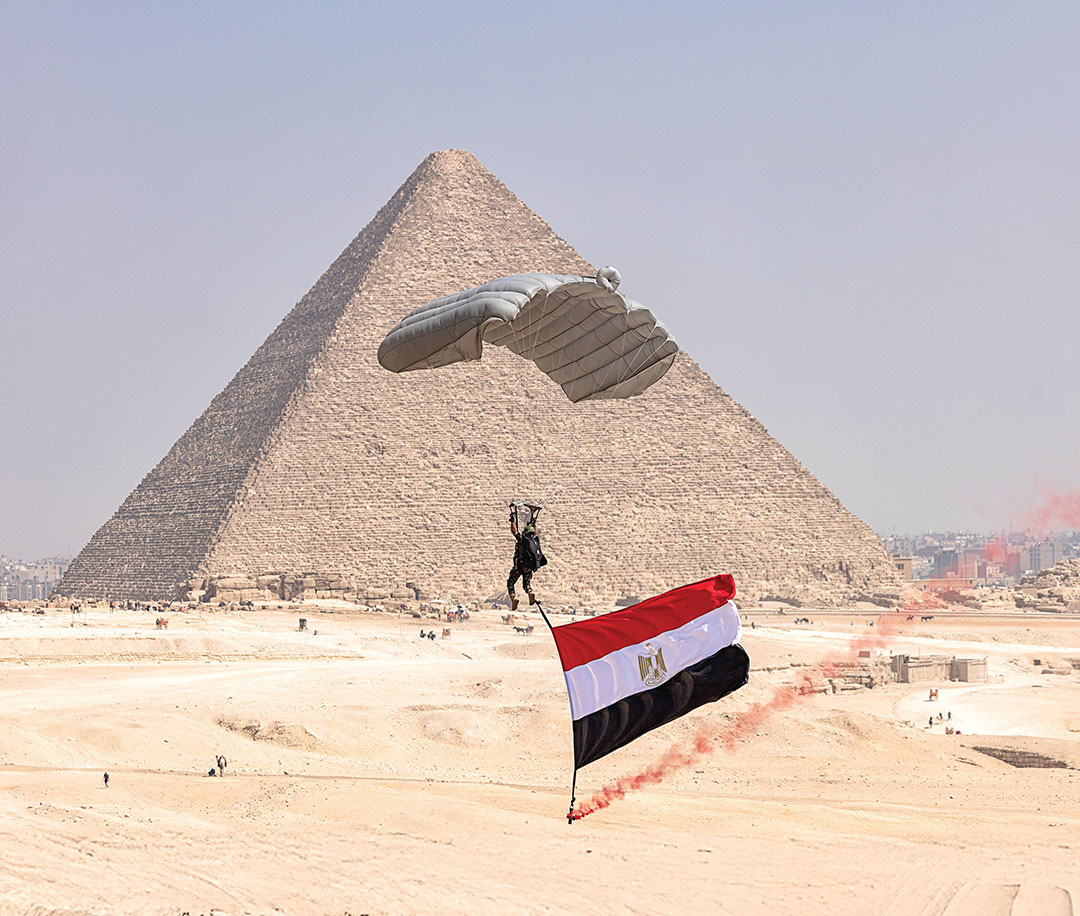
    An Egyptian parachutist finishes an airborne jump at Giza that engaged dozens of troops from 13 countries. JOSEPH KUMZAK/U.S. ARMY

    “Such joint training enhances our future operations. I have previously participated in Bright Star exercises, and they have had a significant and lasting impact — benefits I continue to draw on to this day.”

    A naval squadron of 10 ships from Egypt, Qatar, Saudi Arabia, the United States, Greece and Italy — divided into three task forces — patrolled the coast of northern Egypt. In addition to traditional missions like gunnery practice, the task forces demonstrated detonating underwater mines, escorting amphibious forces to shore, delivering humanitarian relief and seizing boats at sea that harbored terrorists and smugglers.

    This diversity represents a competitive advantage compared to exercises that focus on a single activity, making it an excellent platform for testing and developing integration across various military branches.” ~ Egyptian Brig. Gen. Garib Abdulhafez Garib

    Multinational air squadrons flew together in formation, conducted precise aerial refueling operations, dispensed airborne troops and practiced airlifting casualties.

    Infantry, armored and artillery troops shot down enemy drones and repulsed border incursions while, inside tents equipped with computer banks, cyber warriors defended command, control and communications systems from cyberattacks.

    Special operations forces wearing the uniforms of many nations retook a terrorist-occupied village after parachuting rapidly to Earth.

    “This diversity represents a competitive advantage compared to exercises that focus on a single activity, making it an excellent platform for testing and developing integration across various military branches,” said Egyptian Military Spokesman Brig. Gen. Garib Abdulhafez Garib.

    An Egyptian F-16 Fighting Falcon approaches a U.S. Air Force KC-135 Stratotanker to refuel over northern Egypt.  SENIOR AIRMAN NATALIE JONES/U.S. AIR FORCE

    “Bright Star provides a good opportunity to develop the capabilities of the American and Egyptian forces to carry out joint and bilateral missions that deal with all forms of regular and irregular threats.”

    Shoulder-to-shoulder cooperation exemplified the specialized training that occurred at small outposts in the desert terrain of Mohamed Naguib Military Base in northern Egypt. Here troops learned to disarm improvised explosive devices, stabilize battlefield wounds, repel drones, clear border tunnels and hit targets with sniper rifles.

    In a tent at midday, U.S. medics demonstrated lifesaving techniques to Kyrgyz and Egyptian troops, including stanching bleeding from battlefield wounds.

    As he demonstrated applying tourniquets to slow blood streaming from a severed leg artery, Staff Sgt. Joshua Ames of the Tennessee U.S. Army National Guard highlighted the need for speed despite the mayhem of battle.

    “This stops the bleeding,” Staff Sgt. Ames said as he secured a tourniquet. “But if I keep it on two, three or four hours, he may not keep his leg.”

    The Kyrgyz Republic — the only nation from Central Asia to attend the U.S.-Egyptian exercise — sent 14 medical troops.
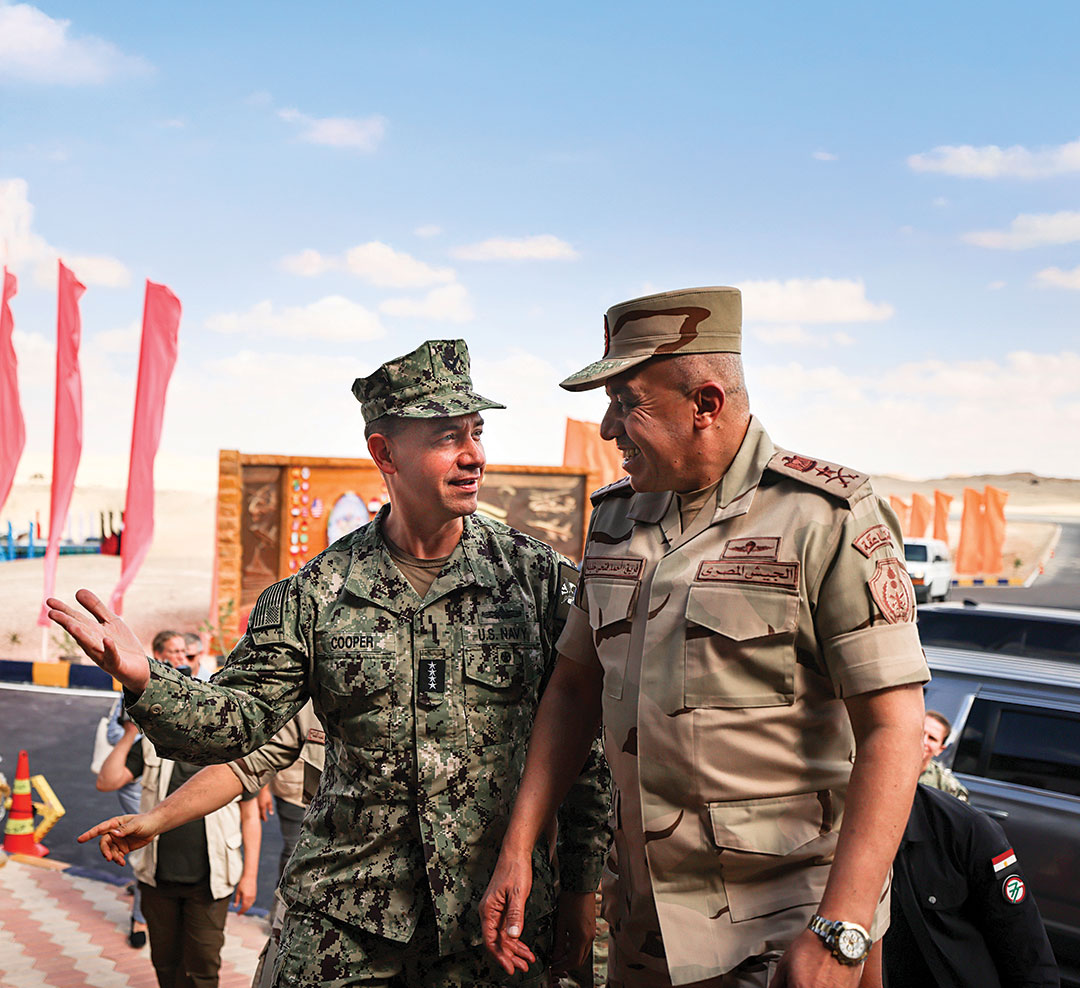
    U.S. Navy Adm. Brad Cooper, left, commander of U.S. Central Command, and Lt. Gen. Ahmed Fathy Khalifa, chief of the General Staff of the Egyptian Armed Forces, attend a combined arms live-fire event at Bright Star. SGT. ANGELA WILCOX/U.S. MARINE CORPS

    “Training with U.S., Egyptian and Middle Eastern troops gives us experience in organizing medical support on the battlefield,” said Lt. Col. Ismailov Ulukbek, chief of the Military Medical Department, Kyrgyz Ministry of Defense. “We are currently preparing a military field hospital for deployment to a peacekeeping operation, and the experience gained at Bright Star will definitely benefit us.”

    Special operations forces received cutting-edge training at Bright Star, from rescuing hostages in lightning raids to shooting down unmanned aerial vehicles (UAV) with missiles. Special operations forces also coordinated a demonstration jump over the pyramids of Giza. They were some of nearly 90 troops making the airdrop. Many unfurled their national flags as they descended by parachute to the famous monuments.

    Lt. Col. Waleed Abu Alghanam, lead officer for the 50 Jordanian special operations forces troops at Bright Star, highlighted the chance to train with partners like the U.S.

    “Partnership with the United States helps Jordanian Special Forces develop tools to deal with modern threats such as cyberwarfare, drone attacks and asymmetric operations. This adaptation is essential in a rapidly changing and unpredictable security environment,” Lt. Col. Alghanam said.

    One of the largest groups of trainees came from the Indian Armed Forces, which sent about 600 troops, including 137 from the Army, 137 from the Air Force, 302 from the Navy and 23 from the Integrated Headquarters of the Ministry of Defence. Indian troops appeared at nearly every event at Bright Star, including intricate aerial maneuvers with U.S. and Egyptian fighter jets.

    The Indian contingent operated under the concept of Vasudaiva Kutumbakam, which means “the whole world is a family,” said Indian Army Col. Karan Khurana, commander of Indian forces at the exercise.
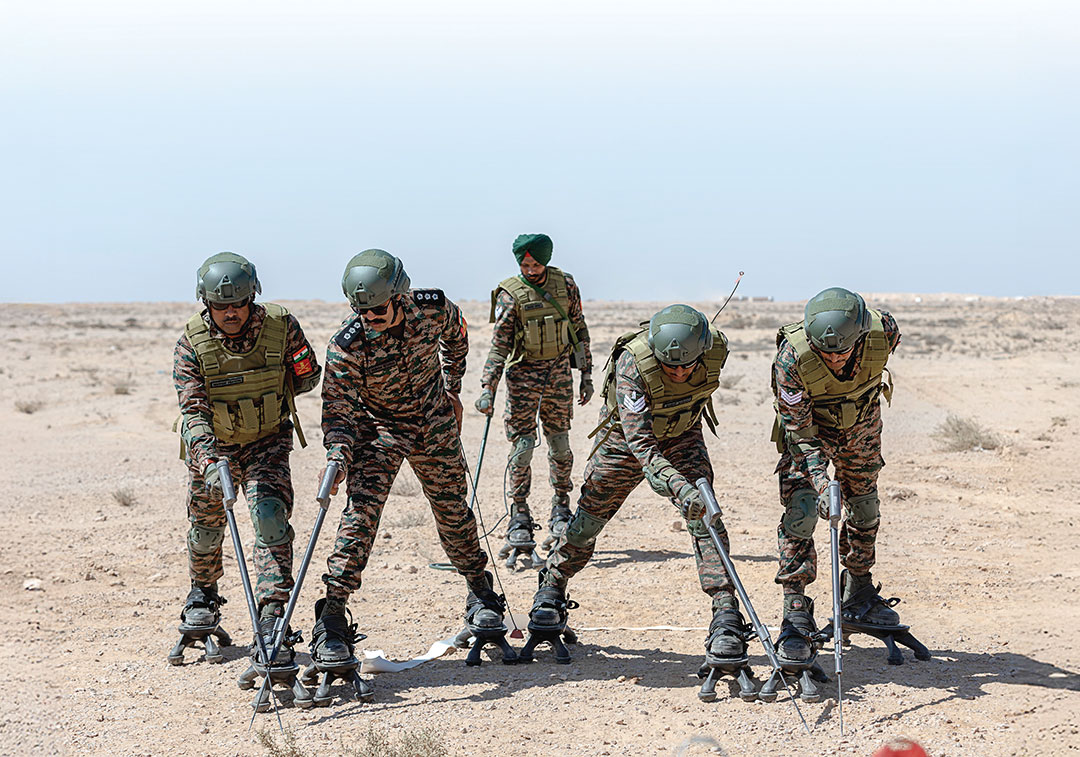
    Indian Soldiers demonstrate using mine detection equipment
    in the desert of Mohamed Naguib Military Base. SPC. CYNTHIA GOMEZ BELTRAN/U.S. ARMY

    “Bright Star is the largest and oldest multilateral exercise in the Middle East and North Africa region, which provides an excellent platform for integration and peer learning to all participants,” Col. Khurana said. “Achieving interoperability with partner nations, developing joint capabilities and ensuring seamless coordination with our partner nations are the reasons that the Indian Armed Forces are enthusiastically participating in Bright Star 2025.”

    Indians were among the 96 participants at the Bright Star Forum, along with Egyptians, Qataris, Saudis and Americans. It was a five-day symposium that discussed prominent security issues such as artificial intelligence, drones, cybersecurity, humanitarian aid/disaster response and international humanitarian law.

    Although much of Bright Star’s field training focused on countering enemy drones, forum participants raised the equally important issue of equipping friendly forces with the same technology.

    “Utilizing UAVs and drones is better not only for personnel but also financially. Drones give us, as leaders, options,” one officer said.

    Regarding Bright Star as a whole — 14 nations contributed forces to land, sea and air components — commanders like Lt. Gen. Patrick Frank, commander of U.S. Army Central Command, were enthusiastic about the display of skill and teamwork.

    “These soldiers and all of these staff officers will go back to their own armies and take back a better set of skills based on coming to Bright Star and being part of this great exercise we have every two years,” Lt. Gen. Frank said.   


    Yemeni Forces return to Bright Star Exercise

    MAJ. GEN. ISMAIL HASSAN ZAHZOUH, COMMANDER OF SPECIAL OPERATIONS FORCES, REPUBLIC OF YEMEN

    Yemen’s attendance at Bright Star 2025 in the form of Yemeni Special Operations Forces is more than just participation in a traditional military exercise. Rather, it represents a homecoming for Yemen as it reengages with regional and international partners after years of isolation imposed by war and internal conflict resulting from the coup by terrorist Houthi militias.

    This participation after a long absence confirms that Yemen is regaining its natural position alongside more than 44 countries, including Egypt, the United States and Saudi Arabia, in the strongest joint military exercise in the region.

    I extend my thanks to our brothers in the Arab Republic of Egypt for their generous hospitality, warm welcome and the attention they have shown us. We also extend our thanks to our counterparts in U.S. Central Command for hosting us and giving us the opportunity, after years of absence, to participate in this important international exercise, and for the support they have provided throughout our journey from Yemen to our arrival in Egypt.

    Yemen’s return to Bright Star has profound political and security dimensions: It reflects Yemen’s commitment to its pivotal role in securing international shipping lanes and protecting global trade from terrorist threats, including aggressive acts carried out by the Houthi terrorists supported by Iran.

    Yemen’s presence within the framework of regional and international cooperation is a safety valve for the stability of the region. The engagement of our forces has added value through joint training with allies, particularly in the areas of counterterrorism, combat in urban and desert environments, cyber defense, intelligence and unmanned systems.

    This engagement not only enhances the capabilities of the Yemeni Armed Forces but also sends a message of confidence to the Yemeni people that their country is capable of rising again and confronting terrorism side by side with its partners.

    The Yemeni people receive the good news that we are striving to eliminate the terrorist Houthi militias that weigh on them and occupy a swath of the territory of the Republic of Yemen. God willing, and with the cooperation of our brothers and international partners, we will eradicate this terrorist hotbed.

    We are partners in the region; our enemy is the same, and we all share a desire to stabilize the region so that it can enjoy prosperity and progress. Of course, we look forward, along with our partners in the United States, to expanding the horizons and areas of military cooperation beyond training and exercises. We hope to resume cooperation in all aspects of military support.

    Bright Star is a great step forward in that regard. During the exercise, we were able to absorb the experiences and expertise of friendly countries headed by the U.S. We also witnessed the performance of our brothers from Egypt and other countries, which benefited us greatly.

    We keep abreast of the latest technologies and tactics to enhance the readiness of our forces, as well as allowing our troops to make rapid decisions in various environments — land, sea and air.

    Cyberwarfare has become one of the most important elements of fifth-generation warfare. It’s one of the first weapons used in modern battles. Throughout Bright Star, we learned advanced technology and training in this field.

    There is undoubtedly much information that we can benefit from, especially since our enemy uses advanced cyber techniques and technologies from Iran and other countries that aim to undermine security in the region. We must possess these technologies to confront this threat.

    We hope that Yemen will participate from the initial stages of future exercises, including planning, logistics and equipment procurement. We also hope that we will participate with greater strength and specialization and in more than one field.

    Most of the countries participating in Bright Star are from the Middle East and share common security challenges. Therefore, this exercise provides an opportunity for joint action, whether in counterterrorism, maritime security or air operations. The exercise, which simulates real-world scenarios, is a great opportunity to enhance work in a joint operational environment for regional security.

    Yemen’s return to Bright Star and other international military exercises after more than a decade is not merely a return to training programs but represents a strategic repositioning that places the country once again within regional and international partnerships working to protect regional stability, confronting the terrorism and chaos that threaten international navigation.

    Share. Facebook Twitter Pinterest LinkedIn Tumblr Email
    Previous ArticleAn Invincible Team

    Related Posts

    An Invincible Team

    December 2, 2025

    The Power of the U.S. Department of War Rewards Program

    October 28, 2025

    Cohesion in a Crisis

    October 23, 2025

    Comments are closed.

    V13N2

    Subscribe Today

    Subscribe to our mailing list to get the latest edition of Unipath.

    Unipath
    Facebook X (Twitter) Instagram
    © 2025 Unipath. All Rights Reserved.

    Type above and press Enter to search. Press Esc to cancel.