

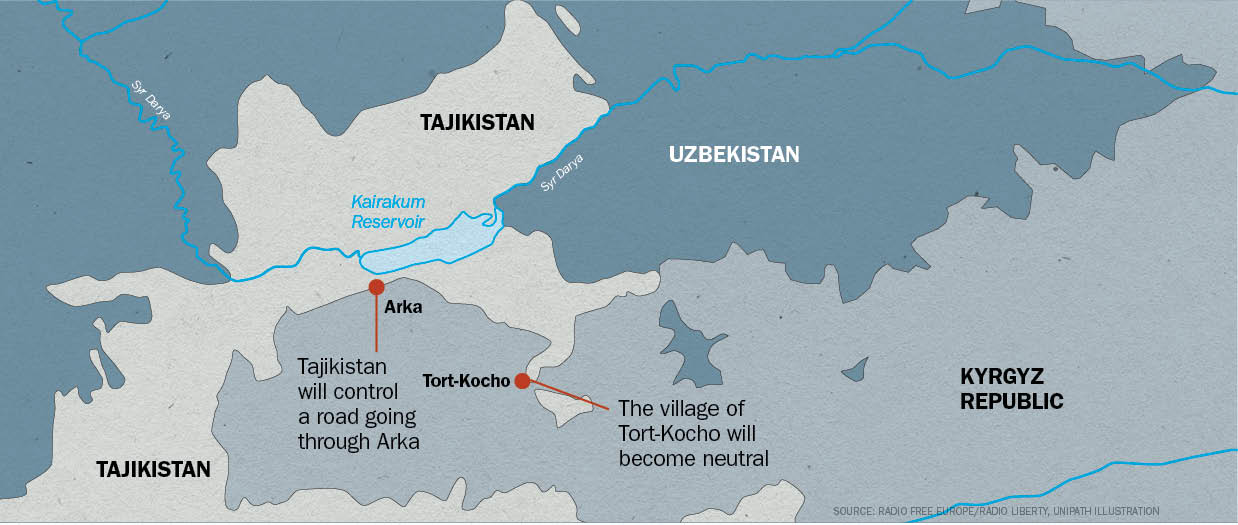
On March 13, 2025, in the Kyrgyz capital of Bishkek, Tajik President Emomali Rahmon and Kyrgyz President Sadyr Japarov signed an agreement to resolve a decades-long dispute over border demarcation and the control of water resources. Both countries’ parliaments ratified the deal a week later.
For many months, the Kyrgyz Republic and Tajikistan worked to settle their differences peacefully to the benefit of the people of both countries and those of the entire region.
The talks, which Kyrgyz national security chief Kamchybek Tashiev described as “very difficult,” bore fruit. Tashiev and his Tajik counterpart, Saimumin Yatimov, signed a protocol on February 21 to prepare for the meeting of the two presidents three weeks later.
The negotiations required big concessions from both sides, including important exchanges of territory and the designation of neutral roads through neutral territories.
In this densely populated but arid region, of no lesser importance was an agreement to share water from the Isfara River.
Tajikistan and the Kyrgyz Republic share a 970-kilometer border, about half of which has been disputed since the two nations gained independence from the Soviet Union in 1991.
As with other post-Soviet border disputes, the problem stems from the Soviet era, when Moscow drew borders to divide territory among ethnic groups, the main aim being to strengthen central control over the far-flung reaches of the Soviet empire.
However, in places like the Fergana Valley, ethnic settlements sometimes intermingle and overlap. When the lines were drawn, the Stalin-era Politburo never intended for the Central Asian states to become independent, sovereign nations with national borders.
This agreement could lead to greater cooperation in the region. On March 31, 2025, Presidents Rahmon and Japarov attended a trilateral summit in Khujand, Tajikistan, with President Shavkat Mirziyoyev of Uzbekistan, a neighbor to both Tajikistan and the Kyrgyz Republic that also has negotiated about borders and resources.
The Khujand Declaration, officially signed and ratified by the three presidents on March 31, demarcates the tristate border and establishes a formal declaration of friendship.
“These agreements mark a major turning point in regional politics,” according to the United Nations, which hails the Central Asian nations’ readiness to find solutions to conflicts on their own, especially given the destabilizing effects of “shifting global dynamics.”
Though risks remain, including potential resistance among local populations and political interference from traditional powers in the region-at-large, the U.N. lauded the agreements for creating greater opportunities for economic cooperation.
Sources: Radio Azattyk, Radio Free Europe/Radio Liberty, United Nations