

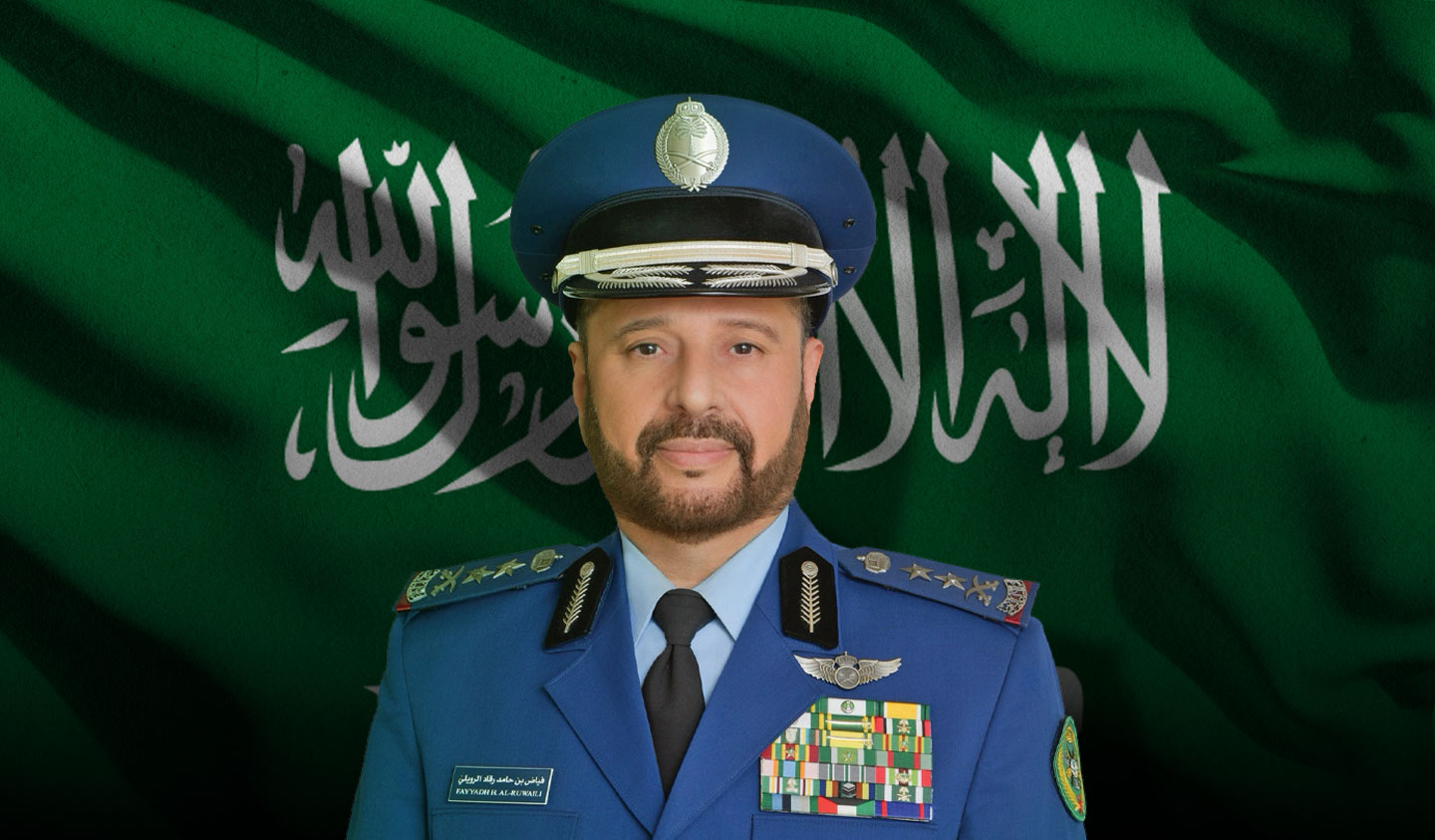
Saudi Arabia is a cornerstone of regional and global stability, based on its strategic location, leadership vision, economic strength, and its king’s role as Custodian of the Two Holy Mosques. The Saudi Armed Forces fulfill this responsibility through credible deterrence, high readiness and enduring partnerships, guided by a clear commitment to professionalism and humanitarian principles.
As part of a shared responsibility for regional and global security, Saudi Arabia remains committed to developing joint capabilities to enable close coordination to operate with allies and partners. Therefore future force integration, integrated deterrence and collective actions are essential to sustain stability and protect regional and international interests, especially in our complex operational environment.
Under Vision 2030, Saudi Arabia continues to modernize its Armed Forces to safeguard sovereignty and national interests while contributing to collective security. Our military doctrine prioritizes operational readiness, joint integration, technological superiority, rapid response and future force integration with partner nations to remain effective across an evolving threat spectrum.
Modern deterrence extends beyond hardware. It depends on national resilience, domestic defense industries, skilled human capital and readiness across all operational domains, including cyber and space. These efforts ensure the Saudi Armed Forces remain prepared to operate alongside partners in complex and contested environments.
One of the core pillars of the kingdom’s approach is strengthening air and missile defense, advancing a multi-layered Integrated Air and Missile Defense network that enhances early warning, improves threat detection, and reduces the risk of miscalculation and escalation. Investments in systems such as Terminal High Altitude Area Defense (THAAD) reinforce a defensive posture designed to protect critical infrastructure and support regional stability.
Partnerships are central to collective security, joint exercises and interoperability. Also, defense cooperation is essential to improve operational effectiveness and strengthen mutual trust, through security cooperation plans, and expand our partnerships with allies, such as the State Partnership Program with U.S. National Guard units from Indiana and Oklahoma. These efforts reflect a long-term commitment to shared security objectives and practical military collaboration.
The geostrategic environment in the Middle East is characterized by complexity and instability, as reflected in Yemen, Iran, Gaza, Syria, Lebanon and ongoing tensions around the Bab el-Mandeb. Additionally, the conflict in Sudan continues to harm unity and stability, as well as the security of the Red Sea. This demonstrates how localized aggression can threaten global trade, energy flows and maritime security.
Saudi Arabia’s and the world’s maritime security are inseparable from the overall stability of international sea lanes. Accordingly, the kingdom works closely with U.S. Central Command and international partners to secure strategic waterways, counter maritime threats, and combat illicit trafficking and smuggling.
Nontraditional threats continue to undermine regional stability. Support for armed groups operating outside legitimate state institutions poses a direct challenge to the rules-based international order. Addressing these challenges demands coalition unity, consistent enforcement of international norms and a shared commitment to denying space for destabilizing behavior.
Saudi Arabia’s role has been and will continue to be combating terrorism and violent extremism. The fight against extremism cannot rely on kinetic operations alone. The Islamic Military Counter Terrorism Coalition, founded in Riyadh in 2015, provides a practical framework to coordinate joint efforts, enhance information sharing and strengthen collective effectiveness among partner nations. Our main efforts are to counter online extremist ideology and radicalization and disrupt terrorist financing networks that enable transnational threats.
Considering the scale of threats surrounding the kingdom’s security environment, its Armed Forces are at a high level of readiness to conduct full spectrum military operations in accordance with international law and the rules of armed conflict. The kingdom remains committed to humane conduct, justice and the protection of human dignity. These principles are an integral part of our Armed Forces.
Finally, security is inseparable from humanitarian responsibility. Through the King Salman Relief and Humanitarian Aid Centre, Saudi Arabia has delivered large-scale humanitarian assistance worldwide in accordance with the principles of impartiality and nondiscrimination. In Yemen alone, more than 1,900 projects have addressed critical needs in food security, water, health care and education, helping to mitigate the impact of prolonged conflict.
Saudi Arabia will continue to pursue a balanced and responsible approach to security, one that integrates military capability, modernization, strategic communication, strong partnerships, humanitarian engagement and future-oriented force development. Through this approach, the kingdom seeks to strengthen stability, support collective security, and contribute to the resilience of the regional and international system.
Gen. Fayyadh bin Hamed Alruwaili
Chief of the General Staff, Saudi Armed Forces