

I would like to thank our friends at United States Central Command for inviting us to write for this issue of Unipath magazine, which focuses on international cooperation to combat terrorism. Iraqi security forces have gained a great deal of experience in fighting terrorist organizations.
Over the past two decades, Iraq has suffered multiple terrorist attacks by armed groups and organizations targeting the democratic project and trying to lock Iraq into a cycle of conflict and violence. Some of these groups are backed by countries with their own malicious agendas and intentions, while others feed on sectarian conflict.
Terrorist organizations are no longer what they were during the first battle of Fallujah in 2004 or the battles of Tal Afar in 2005-2006. Rather, they have become more complex and adopted new tactics related to asymmetric or hybrid warfare, which are more dangerous and complex, with less direct confrontation, far from the eyes of the security services. The names of most of the groups that operated two decades ago have disappeared. New names and independent networks of cells with decentralized command and control have emerged.
Terrorist gangs have exploited technological developments such as social media and turned them into weapons to recruit and spread misleading propaganda. Just as security forces are becoming more sophisticated and experienced in pursuing terrorists, terrorist groups are acquiring and using technologies to aid movement, communication and concealment.
The saying of a German philosopher — “What doesn’t kill you makes you stronger”— comes to mind when I recall how Daesh invaded Mosul and took control of a section of Iraqi territory. That painful era put Iraq at a crossroads and threatened its existence as a state. Our true friends emerged at that difficult time and rushed to support our security forces to expel the terrorist gangs. The fall of the city of Mosul would not have been possible without instability in Syria, as terrorist groups always take advantage of internal conflicts and the lack of security in border areas to threaten neighboring countries.
The destruction left by Daesh in Mosul and Al Anbar was vast. The terrorists detonated car bombs in alleys of the old city and destroyed cultural and historic monuments, places of worship for different religions and sects, and other features of civilization. This was in addition to their more devious goal of unraveling the religiously and ethnically diverse fabric of Iraqi society and stoking conflict and division among segments of the population. The enslavement, killing and displacement of Yazidis and Christians and the looting of their property is perhaps the clearest evidence of this.
Iraq has triumphed through the valor and sacrifice of its people and the support of its friends, partners and good people in the world. Iraq is the cradle of civilization and a land of tolerance and diversity and cannot be defeated by fanatics and extremists.
After emerging from the darkness of Daesh, we began rebuilding and rehabilitating society. We remain vigilant as we track and pursue terrorist networks operating in remote areas. Terrorist organizations have extended tentacles into many countries. A terrorist group hiding in the caves of the Hamrin Mountains in Iraq is not isolated from the world. It has contact with, or receives instructions or general directions from, others hiding in the Sinai desert, and it works with other groups in Afghanistan, Libya, Somalia and Yemen.
These groups have sleeper cells and promoters in African, European, and North and South American countries. They may also be run by intelligence services in certain countries working to undermine security in the region. These organizations also benefit from a complex network of illegal moneymaking activities such as human trafficking, drug manufacturing, oil smuggling, kidnapping and extortion.
Terrorists in Iraq can no longer easily acquire and use drones and car bombs or launch attacks on vital targets, nor are they able to plan and recruit to increase their numbers. But given the nature of the new asymmetric wars and guerrilla wars, Daesh might develop the ability to launch cyberattacks on security facilities and sensitive state installations. Friendly and allied countries must work together and share intelligence to deny these groups access to technology, cut off their funding, and target their leaders so that the tragedy of Mosul is not repeated in neighboring countries.
Furthering Iraq’s commitment to counterterrorism, Baghdad hosted the 34th Ordinary Session of the Council of the League of Arab States at the Summit Level. Presidents, kings and emirs of brotherly countries attended the summit. Before that, Iraq hosted the Arab Gulf Cup football tournament, conferences, workshops, seminars, symposiums, and regional and international meetings to consolidate and materialize the concept of comprehensive security.
This progress is thanks to the sacrifices, determination, patriotism and professionalism of security forces and an ensuing economic recovery. We also participate in multinational military exercises such as Eager Lion in Jordan, Bright Star in Egypt, and bilateral exercises with partners. Iraq hosted a bilateral air exercise with the French Air Force in 2024 and a joint air exercise with U.S. forces in 2025. We are marching steadily toward a bright future free from violence and terrorism.
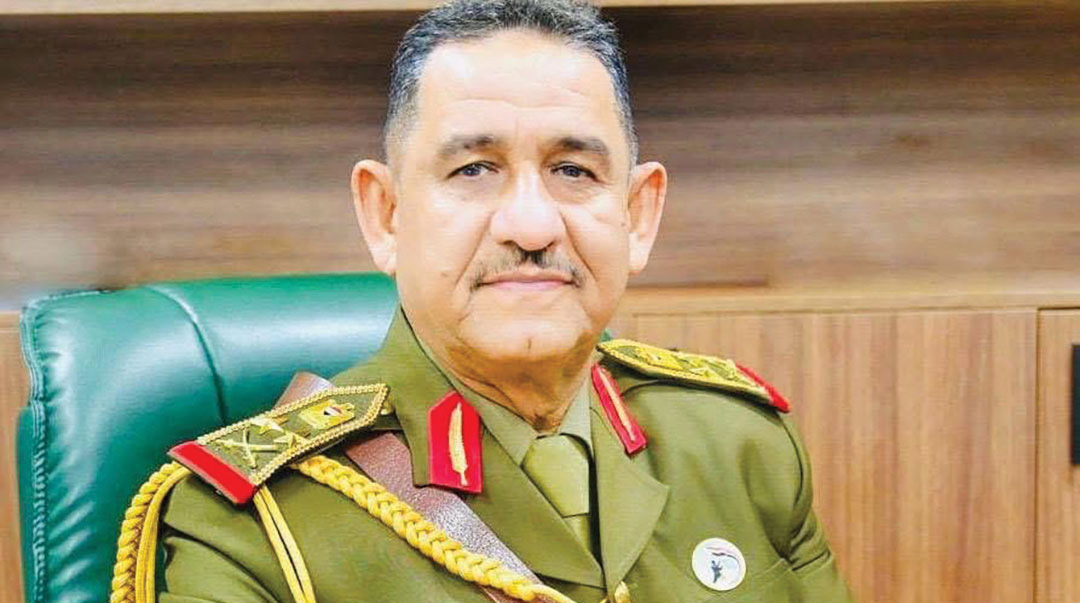
Gen. Qais Khalaf Al-Mahmedawi, deputy commander, Joint Operations Command-Iraq