

The Chinese Communist Party has systematically expanded its partnership with the Iranian regime, leveraging economic agreements and dual-use technology transfers to enhance Tehran’s ballistic missile and space launch vehicle (SLV) capabilities. China’s culpable activities likely have also contributed to the deaths of civilians across the Middle East during the conflict that began in late February 2026.
China’s military collusion with Iran, rooted in their 2021 Comprehensive Strategic Partnership agreement, intensified in the year preceding military operations against the Iranian regime that began in February 2026, significantly shaping the regional security environment.
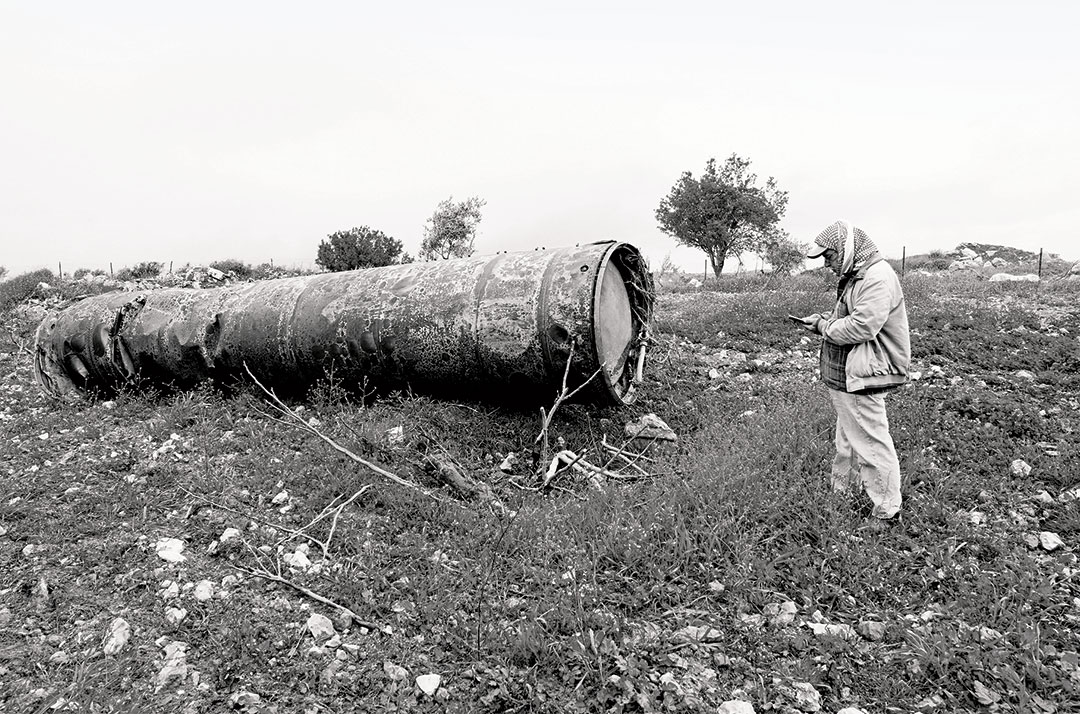
United States experts are examining whether fragments from Iranian missiles recently launched toward several Gulf states contain Chinese technology and components.
Central to recent developments is China’s provision of dual-use materials, technology transfers, satellite navigation system and expertise critical to solid-fuel missile production. Solid rocket motors — offering faster launch times, improved survivability and greater storage stability — underpin Iran’s medium-range ballistic missiles and emerging SLV systems.
Chinese firms reportedly have exported large volumes of precursor chemicals, including ammonium perchlorate, to Iranian entities linked to the Islamic Revolutionary Guard Corps, which oversees Iran’s ballistic missile arsenal and supports militant groups across the region. These transfers, often routed through complex logistics networks, circumvent international sanctions and export controls using Chinese tactics like shadow fleets, front companies and money laundering while raising persistent end-use verification concerns.
China’s support of Iran’s weapons development continues. In early March 2026, for example, China allowed two ships owned by an Iranian company that the U.S. says supplied material to Tehran’s ballistic missile program to depart for Iran from a chemical storage port on China’s southeastern coast. The vessel likely carried sodium perchlorate, a key precursor for solid rocket fuel, The Washington Post newspaper reported.
“With missiles and drones raining down on [Gulf] states, any show of support like this towards Iran risks souring China’s relations with a number of [Gulf] countries,” Grant Rumley, a senior fellow at the Washington Institute for Near East Policy, told the newspaper.
Beyond chemicals, China’s support to the Iranian regime has included advanced composites, precision machine tools and guidance components such as gyroscopes and accelerometers. Such technology significantly improves missile accuracy and reliability while lowering barriers to long-range strike capabilities. Technical assistance in propulsion systems and payload integration further accelerates Iran’s weapons development.
China also likely provided Iran access to its BeiDou Navigation Satellite System, which provides worldwide positioning and timing services, to target U.S. military assets in the Middle East, intelligence analysts said. Iran’s targeting in the current conflict is much more accurate than during the 12-day war in June 2025, Al Jazeera reported.
Parallel to these transfers, the Iranian regime has pursued direct procurement of advanced Chinese weapons systems. Notably, Tehran has sought supersonic anti-ship cruise missiles that can threaten critical waterways such as the Strait of Hormuz.
Days before the conflict erupted in February, Iran was nearing a deal to buy Chinese-made CM-302 missiles, which one analyst called a game changer, the Reuters News Agency reported.
Logistics networks form the backbone of China-Iran collaboration. Chinese shipping firms and intermediaries use transshipment hubs, shell companies and false documents to obscure the movement of sensitive materials. Incidents such as the deadly 2025 explosion at an Iranian port near Bandar Abbas — reportedly involving missile-related components from China — highlight the scale and risk of these clandestine supply chains.
Iran’s space program provides additional cover for military advancement. While publicly framed as civilian, SLV development shares key technologies with intercontinental ballistic missile systems, including propulsion, staging and guidance. Tehran’s recent launches demonstrate progress in these areas, reinforcing concerns over dual-use applications. After U.S. strikes in 2025 that targeted Iran’s missile infrastructure, the regime reconstituted critical production capabilities, which suggests it was receiving external support.
China’s support has advanced Iran’s missile and SLV capabilities. The results of such support could alter the strategic balance in the Middle East.