

 Rear Adm. Ahmed Mohammed Ibrahim Al Bin Ali gazes toward the horizon as if discerning the masts of distant ships, the mark of an experienced sea captain. Knowledgeable in maritime sciences, the commander of the Royal Bahrain Naval Force (RBNF) recognizes friendly boats from those that troll in troubled waters.
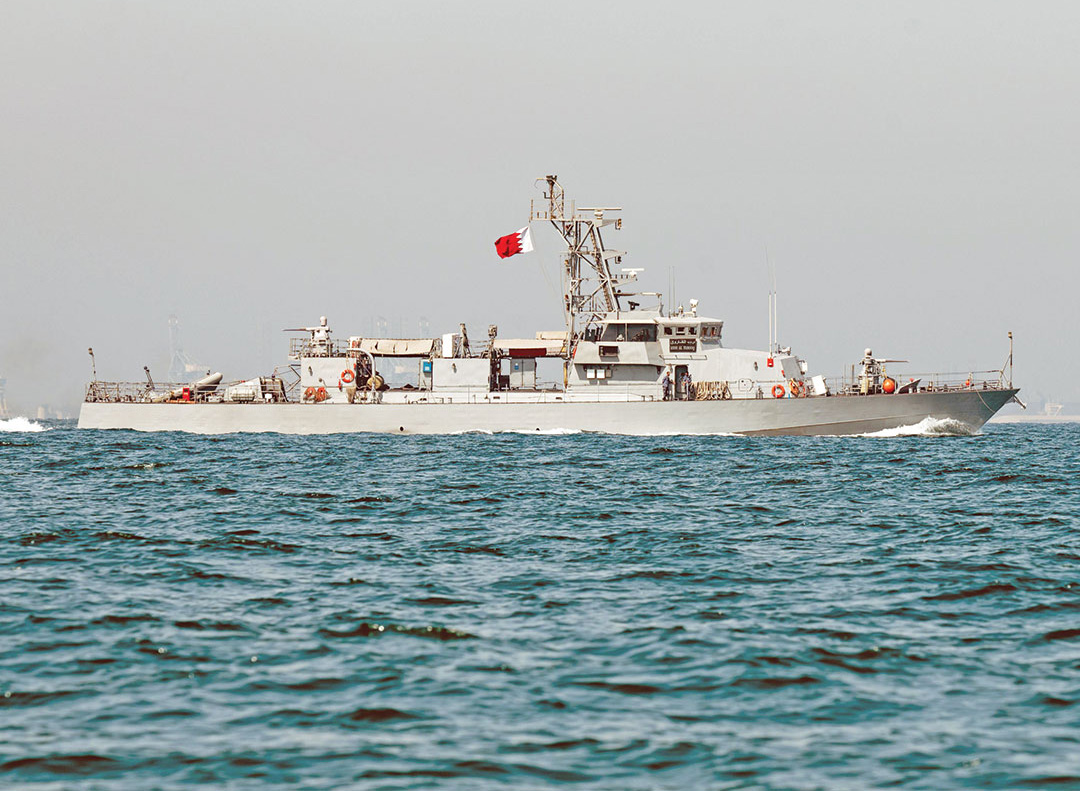
Knowledge, experience and discernment are important qualities to command the RBNF. Its 35 ships and boats patrol a region rife with instability caused by malicious actors that threaten shipping in the Arabian Gulf, the Arabian Sea and the Red Sea.
Rear Adm. Ahmed is a quiet man who chooses his words carefully as he describes his background and that of the force he is proud to command.
“My goal in commanding the Navy is in line with the vision of His Majesty King Hamad bin Isa Al Khalifa, the Supreme Commander of the Armed Forces. That is to establish an advanced Navy with advanced capabilities for protecting the kingdom’s interests, territorial waters and economic resources, ensuring the safety of its citizens and ships, protecting coastal facilities, and maintaining the security of the Arabian Gulf, in cooperation with the naval forces of brotherly and friendly countries,” the rear admiral said.
Years spent confronting evolving threats in the region have given him a realistic assessment of what his Navy needs to maintain an edge over the enemy.
“We have a long-term strategy to develop the RBNF, and we must keep up with the rapid technical and technological developments the world is witnessing. We must always be two steps ahead of the enemy to counter threats. We are building a generation of officers and sailors with technical capabilities in line with modern technology, equipping ships with modern systems and modern weaponry to combat boats and drones, and deploying artificial intelligence in monitoring, surveillance and threat identification systems. We are also introducing drone technologies on large ships for reconnaissance and monitoring suspicious activities.”
Aside from protecting Bahrain, Rear Adm. Ahmed is focused on the overall security of this interconnected region dependent on the free flow of commerce through strategic waterways. Security requires a naval force capable of
protecting ships and their crews so that they can fulfill their duties. Because of the increasing cyber threat, one of his priorities is cybersecurity training for ship crews.
“Cybersecurity is very important to the Navy. The attacker may be able to hack into a ship’s computer network, enabling them to change the ship’s course and disable it,” he said. “Therefore, we focus on cybersecurity by educating our personnel about cyber prevention, holding regular workshops and sending young officers to specialized courses in countries around the world. There are advanced centers of technology such as that of the Kingdom of Jordan, and we work in this field alongside several brotherly countries in the region. Cybersecurity starts with the individual securing his own
cellphone and PC.”
Rear Adm. Ahmed’s philosophy on building a highly capable naval force involves not only acquiring modern ships but also developing the talents of the hundreds of sailors and officers who make up the RBNF.
Training in Bahrain starts with basic seafaring. To develop the required skills to operate a modern Navy, Rear Adm. Ahmed sends many officers and sailors to Saudi Arabia, Jordan and Pakistan for advanced naval training.
“They return within three years fully proficient in maritime technologies, with multiple specializations in electricity, mechanics and communications. This isn’t just academic knowledge, but hands-on experience,” he said.
“As for command-level officers, we send them to defense and war colleges in countries around the world, especially defense colleges that prepare them for their roles in command, planning and management. These specialized missions are sent to countries with which we have relations. We have certain criteria for selecting commanders and colleges that are of the greatest benefit to the RBNF.”
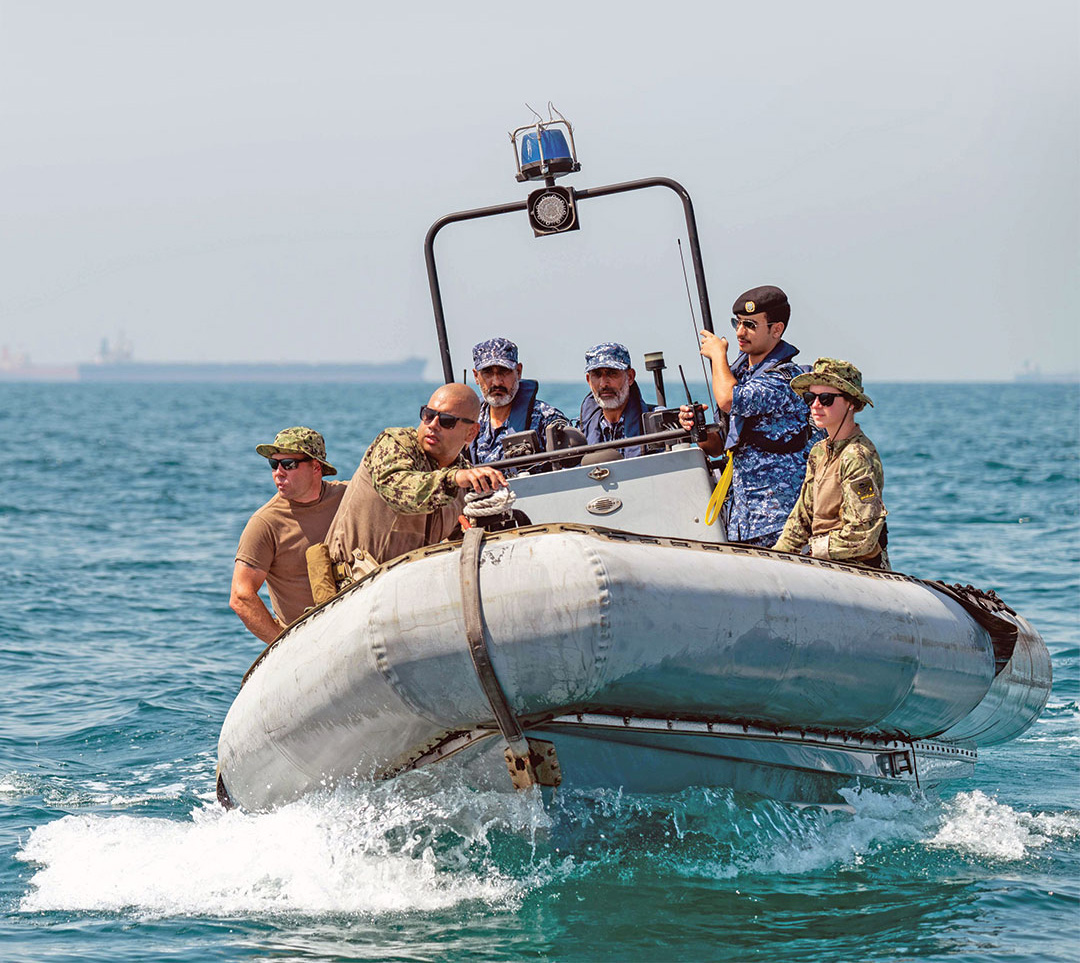
Rear Adm. Ahmed also believes that experience is honed through continuous exercises, be they bilateral with countries like those of the Gulf Cooperation Council or large-scale multinational exercises involving dozens of navies.
“Naval academies are important for preparing sailors and officers through study and learning maritime sciences, but they cannot provide students with experience at sea. So continuous training and participation in exercises is important,” Rear Adm. Ahmed said.
“We hold regular exercises with Saudi naval forces as well as with U.S. naval forces. We also participate along with large numbers of sailors in the International Maritime Exercise (IMX), hosted by Bahrain and led by the U.S. We hope to take command of one of the main areas within the exercise, which requires commanders on shore and ships at sea to form a cohesive, integrated team.”
Multinational exercises like IMX reinforce Rear Adm. Ahmed’s conviction that maritime security is a combined effort requiring naval coalitions. International and regional partnerships are key to patrolling the seas to benefit a global economy reliant on maritime trade.
Bahrain is the home base for Combined Maritime Forces, under whose overarching command several multinational combined task forces (CTF) operate.
“We have been witnessing repeated attacks by terrorist groups aimed at disrupting freedom of navigation in the Red Sea. These include the Houthis in Yemen and al-Shabaab in Somalia, who have been hijacking and targeting commercial ships and oil tankers. These attacks affect the global economy as a whole and therefore citizens are also impacted,” he said.
“International maritime alliances have become an urgent necessity, enabling us to work together in a joint operational environment to defeat terrorism and establish security and stability in the region. Our leadership sensed the threat of maritime piracy, and the Kingdom of Bahrain was the first Arabian Gulf country to lead Combined Task Force 152, and after the formation of CTF 150, 151 and 153, we were one of the first nations to participate, because we strongly believe in the importance of these missions.”
Rear Adm. Ahmed prides himself on his personal touch in developing an effective naval force. He counsels officers facing challenges, be they family- or work-related, to maintain the high performance of the RBNF.
“Through my experience, I noticed that in most countries there are smart and successful officers, but unfortunately, some are drawn down the wrong path. So I am careful with our young people and focus on their development and education,” he said.
His message to young officers and sailors is firm: Uphold military honor. Apply yourself to your education and training because you won’t develop capabilities without effort. Do not limit experience to books and academics but explore technological developments in your field that seem to outpace what is available in the classroom.
“I like to tell young officers, especially those who excel, that your success is a source of pride for you and your family, because you persevered,” Rear Adm. Ahmed said. “You may not get an award because you excel but remember that excellence itself is its own reward.”