

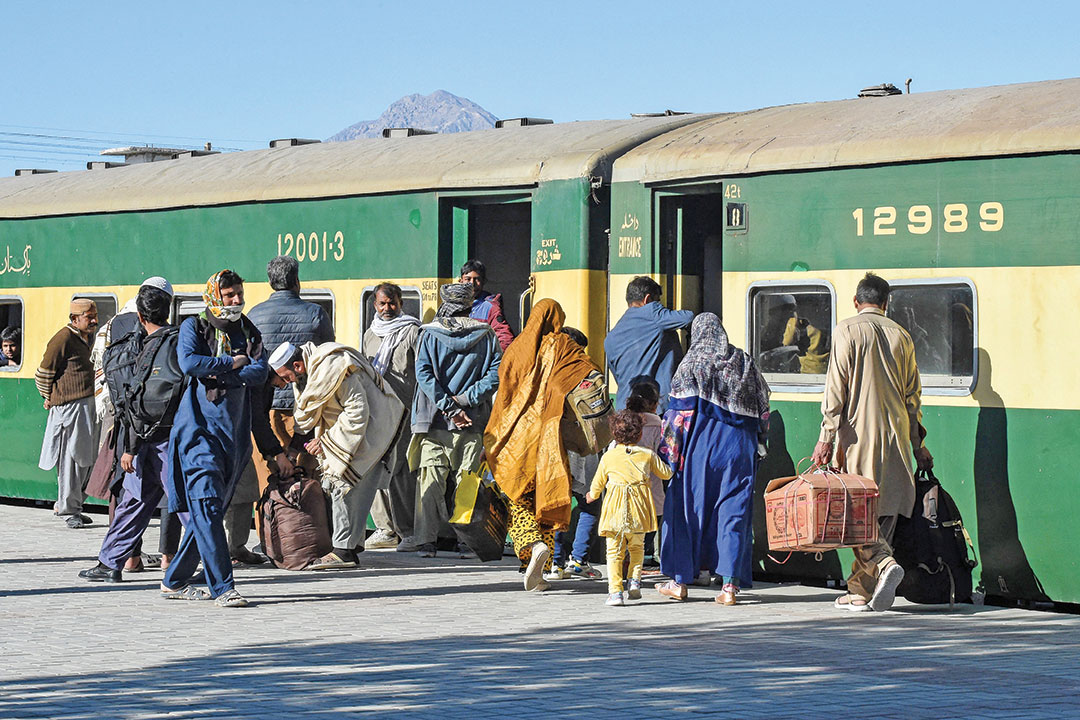
Dozens of terrorists were eliminated and hundreds of hostages rescued from a train carrying 440 passengers in a March 2025 military operation led by Pakistan’s special operations forces.
The rescue operation was grounded in a new approach. In 2024, after several years of increased terrorist attacks, Pakistan’s Prime Minister Shehbaz Sharif announced a “reinvigorated” national counterterrorism strategy that would include intensified intelligence operations to undermine violent extremists.
A terrorist group called the Balochistan Liberation Army (BLA) ambushed the Jaffar Express, which was headed to the city of Peshawar, by blowing up railroad tracks in front of the locomotive. Several people were killed — mostly Soldiers and railway employees — as the train was forced to halt in a remote area.
The Pakistani Army, Air Force and Frontier Corps arrived on the scene within 36 hours. The main mission of stopping the terrorists and rescuing the passengers fell to Pakistan’s Special Services Group’s Zarrar Company.
These highly trained troops picked off some of the terrorists from a distance and then stormed the train, advancing railcar by railcar until the train was cleared of terrorists.
All 33 BLA extremists were killed.
“They had to plan the operation very carefully because of suicide bombers, who could detonate their vests and kill the maximum number of people,” said Lt. Gen. Ahmed Sharif Chaudhry, director general of Inter-Services Public Relations. “Not even a single casualty was recorded among the hostages during this entire operation.”
National Action Plan
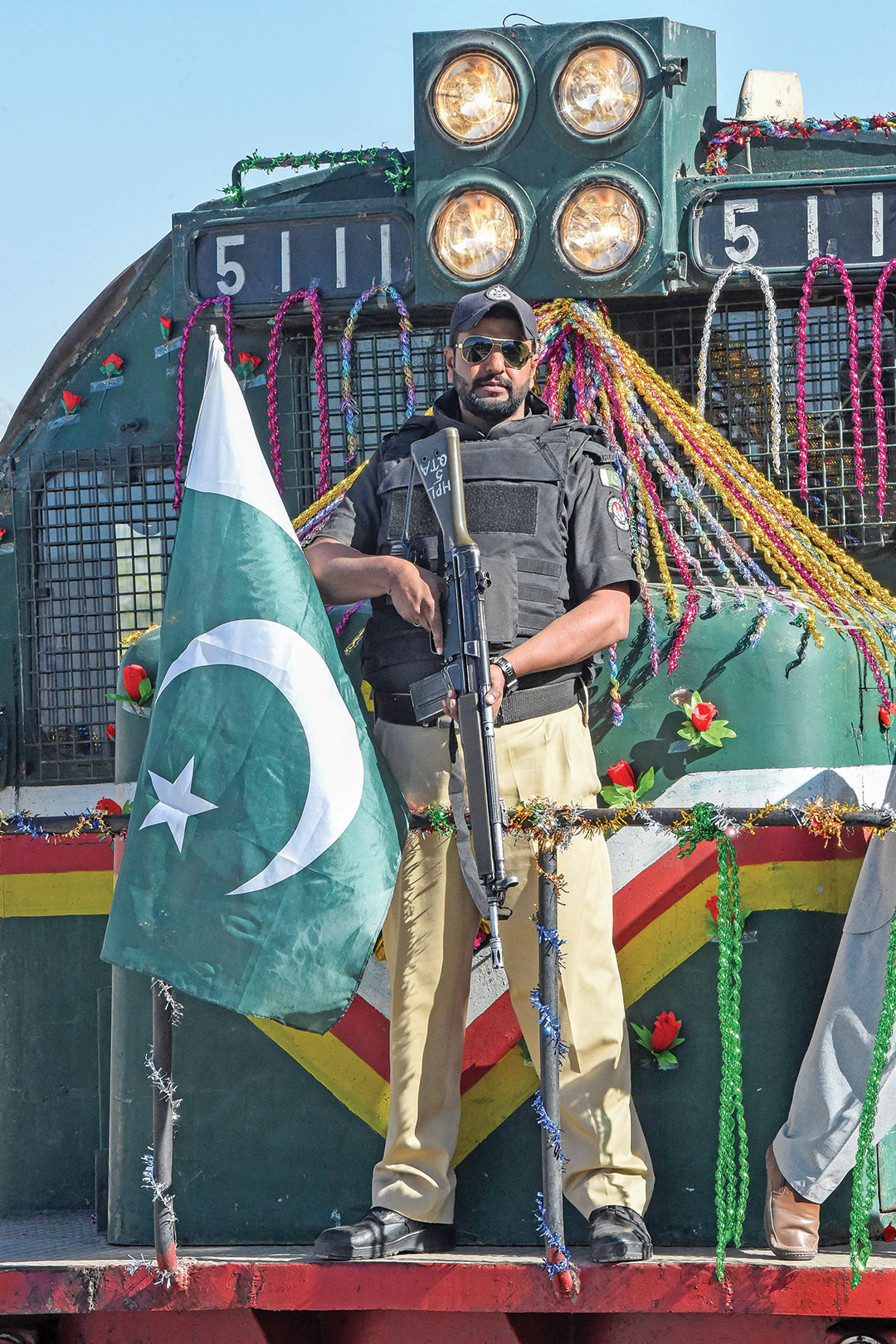
Pakistan has adopted a 14-point National Action Plan to counter terrorism. Although military action is a critical component of the struggle against terrorists, the plan stresses the need for judicial reform to arrest and prosecute violent extremists, and for media and educational campaigns to lessen the extremists’ appeal.
Prime Minister Sharif’s proposed updates to the country’s counterterrorism strategy include an increased focus on preempting attacks through improved intelligence gathering.
Lt. Gen. Chaudhry urged faster implementation of the National Action Plan. After the successful completion of the train rescue mission, he noted that Pakistan’s law enforcement agencies conducted 59,775 intelligence-based operations in 2024, with another 11,654 launched in the first couple of months of 2025.
Nearly 1,250 terrorists were “sent to hell” in 2024 and 2025, Lt. Gen. Chaudhry said, while
563 security personnel were killed in the line of duty.
“We will deal with them as they deserve,” he said. “We will take them on, their facilitators, their abettors, whether inside Pakistan or outside Pakistan.”
A call for unity
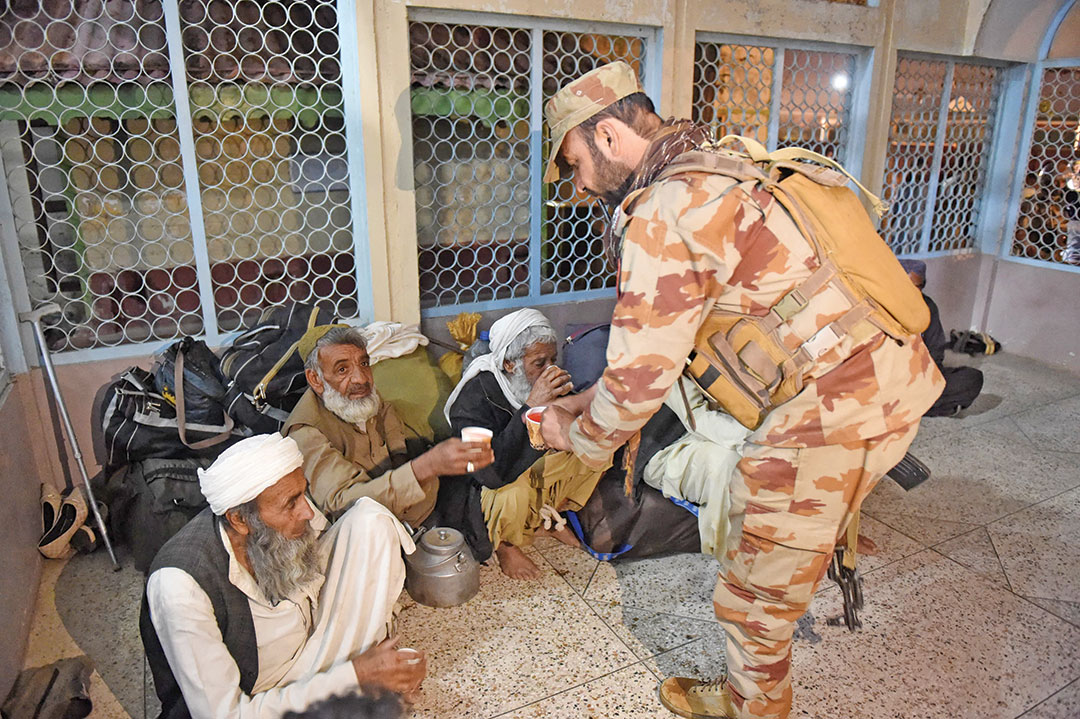
The past several years have seen an increase in terrorist violence in Pakistan, some stemming from the BLA and some from extremist groups operating in the borderlands to the north.
In November 2024, the BLA killed 26 people in a suicide bombing at Quetta Railway Station. Soldiers and government officials were among the victims of other attacks and assassinations. The United States and Pakistan have designated the BLA a terrorist organization.
In light of the train attacks, Prime Minister Sharif and Chief of Army Staff Gen. Syed Asim Munir vowed to crush attempts by extremists to destabilize Pakistan. The prime minister called for national unity in the fight against terrorist violence.
The U.S. government extended sympathies to the
victims of the Jaffar Express attack and expressed support for Pakistan.
“The Pakistani people deserve to live free from violence and fear. The United States will remain a steadfast partner of Pakistan in its efforts to ensure the safety and security of all its citizens. We stand in solidarity with Pakistan during this difficult time,” the U.S. Embassy in Islamabad announced.
Lt. Gen. Chaudhry praised the operation as one of the military’s most noteworthy, reiterating that none of the hundreds of train passengers were harmed during the rescue.
“In terms of operations carried out on trains,” he said, “this can very rightly be put out as the most successful hostage operation conducted.”
Pakistan’s National Counter Terrorism Authority’s National Action Plan
- Intolerance for militancy and armed groups
- Action against the spread of terrorism through media and communications and
cyber networks - Effective measures against religious and sectarian persecution and terrorism
- Choking off terror financing and proscribed organizations
- Curbing narcotics, weapons and human trafficking
- Accelerating the prosecution of terrorists in courts
- Financing and strengthening regional counterterrorism departments
- Formulation, institutionalization and implementation of a policy countering violent extremism
- Regulation and registration of religious seminaries and madrassas
- Continuation of the Balochistan Reconciliation Process
- Merging efforts to improve governance in Pakistan’s Khyber Pakhtunkhwa region
- Reforming the criminal justice system
- Legislative and legal oversight for espionage and subversion
- Repatriation of Afghan refugees