

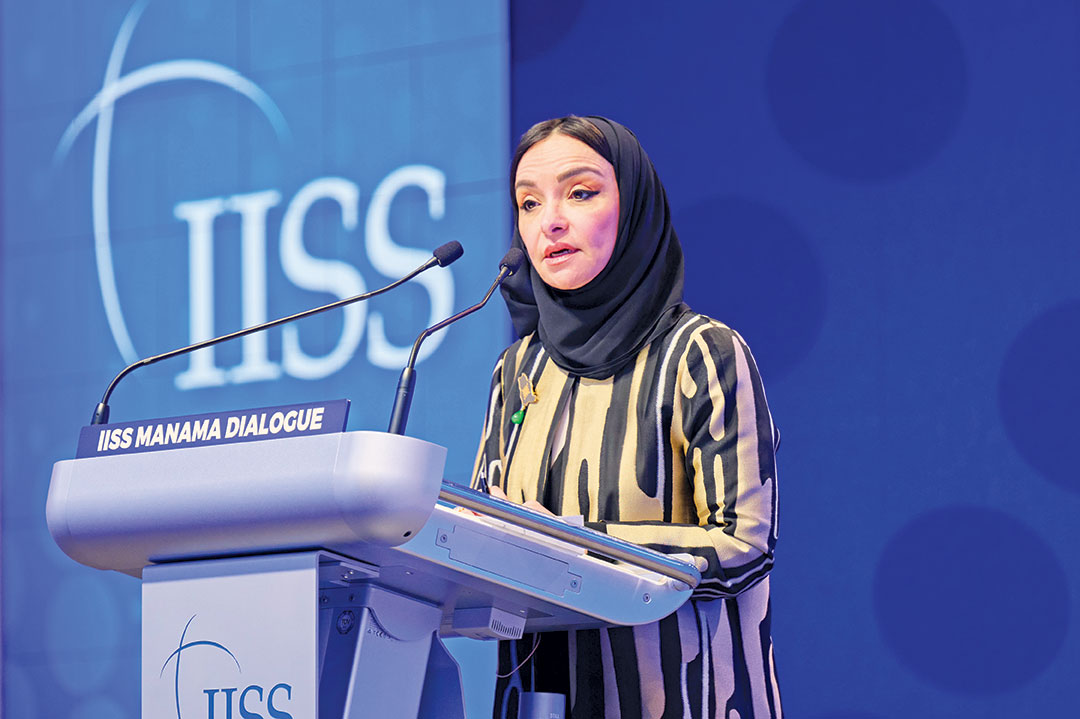
When it comes to political transition in the Levant, our region has been governed for too long by the politics of management, not of transformation, of postponing the inevitable, not confronting the unsustainable.
At times, we have repeated failed experiments, blaming the nature or culture of the region, rather than the circumstances that produced such failures. We have sought to contain fires rather than extinguish them, to pause wars rather than resolve them, to manage despair rather than restore hope. It must be different this time.
Management sustains the status quo; transformation changes it. Transformation requires political courage, moral clarity, collective responsibility and, above all, regional agency to rebuild legitimacy, to renew the social contract between citizen and state, to restore trust between states themselves, to tackle conflicts at their grassroots, and to allow for genuine introspection.
Nowhere is this lesson more urgent than in the situation surrounding the Gaza conflict. We have condemned repeatedly all attacks against civilians, including those of October 7, 2023. But attacks against civilians since Ocober 8 must not be legitimized either.
In the West Bank, violence takes a different but equally chilling form. Armed settler groups, often operating under army protection, terrorize civilians. Afaf Abu Alia, a 50-year-old woman harvesting olives in her village, was beaten unconscious by a masked settler. Harvesting olives, a simple act of livelihood and continuity, has become an act of defiance.
Such violence is not isolated. As long as impunity replaces accountability, injustice will fester and radicalization deepen. No amount of narratives of peace will resolve this. No amount of reform in educational curriculum will resolve this. Violence and disregard for human life breed not security but endless conflict.
Amid the despair of the past two years, under the leadership of U.S. President Donald Trump and with active regional diplomacy led by the Kingdom of Saudi Arabia, the state of Qatar, Egypt and Türkiye, a ceasefire was achieved based on principles that must now define the political path forward.
Let me highlight some of them: no annexation of the West Bank or Gaza in whole or in part; no transfer or displacement of Gazans; those who fled must be allowed to return. These were conditions upon which the ceasefire was based.
Now is the time to move to the next phase, to pursue something the Palestinians have requested for years: the deployment of an International Stabilization Force to protect Palestinians, empower the Palestinian Authority and support the Palestinian national police. On November 17, 2025, the United Nations Security Council authorized the creation of such an international force.
These steps are not the end goal. As the U.N. Security Council noted in its resolution, stabilization must evolve into a pathway to Palestinian self-determination and statehood in Gaza and the West Bank, leading ultimately to regional integration based on security, stability and shared prosperity for all people and states of the region. Palestinian self-determination is a prerequisite for regional integration.
Concerning other places in the region, a united Syria free from external interference remains essential for the stability of the Levant. Saudi Arabia’s approach is anchored in investment: political, financial, but above all, investment in the people of Syria, their resilience, creativity, entrepreneurship, excellence and love of country.
In Lebanon, we continue to support reform, the strengthening of state institutions and the empowerment of the Lebanese Armed Forces as the backbone of national sovereignty. Stability in Lebanon depends on leadership and accountability at home and restraint from abroad. We are confident in the Lebanese leadership and must ensure support for them.
In Iran, the opportunity exists to resolve conflict. Iran can still choose to correct past grievances by restoring diplomatic relations with Bahrain and joining the Gulf Cooperation Council vision for regional security grounded in the Beijing Declaration. The Kingdom of Saudi Arabia will continue to offer its good offices to promote de-escalation, confidence-building and cooperation.